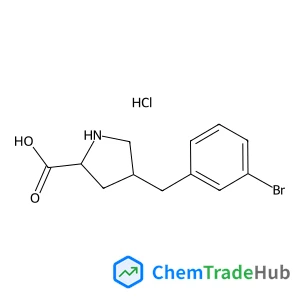
(2S,4R)-4-(3-Bromobenzyl)pyrrolidine-2-carboxylic acid hydrochloride
CAS Number:
1049734-10-2
Molecular Formula:
C12H15BrClNO2
Weicheng Huang, Jinxin Wang, Lang Bian, Chaoyue Zhao, Danqing Liu, Bin Yang
A WO3−x/TiO2−x nanotube array (NTA) heterojunction photoanode was strategically designed to improve photoelectrocatalytic (PEC) performance by establishing a synergistic vacancy-induced self-doping effect and localized surface plasmon resonance (LSPR) effect of metalloid non-stoichiometric tungsten suboxide. The WO3−x/TiO2−x NTA heterojunction photoanode was synthesized through a successive process of anodic oxidation to form TiO2 nanotube arrays, magnetron sputtering to deposit metalloid WO3−x, and post-hydrogen reduction to engender oxygen vacancy in TiO2−x as well as crystallization. On the merits of such a synergistic effect, WO3−x/TiO2−x shows higher light-harvesting ability, stronger photocurrent response, and resultant improved photoelectrocatalytic performance than the contrast of WO3−x/TiO2, WO3/TiO2 and TiO2, confirming the importance of oxygen vacancies in improving PEC performance. Theoretical calculation based on density functional theory was applied to investigate the electronic structural features of samples and reveal how the oxygen vacancy determines the optical property. The carrier density tuning mechanism and charge transfer model were considered to be associated with the synergistic effect of self-doping and metalloid LSPR effect in the WO3−x/TiO2−x NTA.

Photochemical & Photobiological Sciences

Foundations of Chemistry

Coloration Technology

Current Pharmaceutical Biotechnology

Mini-Reviews in Medicinal Chemistry

Angewandte Chemie International Edition

European Journal of Organic Chemistry

Green Chemistry

Journal of Enzyme inhibition and Medicinal Chemistry

Nature Reviews Drug Discovery
Chunhui Shan, Kangbao Zhong, Xiaotian Qi, Dongdong Xu, Ling-Bo Qu, Ruopeng Bai
DOI: 10.1039/C8QO00699G
Giada Arena, Elena Cini, Elena Petricci, Rosario Randino, Maurizio Taddei
DOI: 10.1039/C5QO00025D
John S. Fossey, William D. G. Brittain
DOI: 10.1039/C4QO90045F
Wan-Min Cheng, Xi Lu, Jing Shi, Lei Liu
DOI: 10.1039/C8QO00765A
Hongming Jin, Zhengbo Zhu, Ning Jin, Jin Xie, Yixiang Cheng
DOI: 10.1039/C4QO00329B
Kamil Kupietz, Michał J. Białek, Agata Białońska, Bartosz Szyszko, Lechosław Latos-Grażyński
DOI: 10.1039/C8QO00751A
Yechun Ding, Xiaona Fan
DOI: 10.1039/C8QO00965A
Jinwei Yuan, Junhao Fu, Jihong Yin, Zhenhua Dong, Yongmei Xiao, Pu Mao
DOI: 10.1039/C8QO00731D
Coralie Duchemin, Nicolai Cramer
DOI: 10.1039/C8QO01179F
2-(2-Chloroacetamido)-3-phenylpropanoic acid (CAS: 7765-11-9) is generally consi...
2-(Benzyloxy)-5-bromobenzoic acid can be handled safely if appropriate precautio...
(4-Methyl-1,2,5-oxadiazol-3-yl)methanamine hydrochloride is a chemical compound ...
2-(5-Hexylthiophen-2-yl)-4,4,5,5-tetramethyl-1,3,2-dioxaborolane (CAS: 917985-54...
While 4-(8-Methyl-9H-1,3-dioxolo[4,5-h][2,3]benzodiazepin-5-yl)benzenamine (CAS:...
The market for tert-butyl 3-hydroxy-4,5,7,8-tetrahydro-2H-pyrazolo[3,4-d]azepine...
Waste containing 3,5-Diamino-1H-pyrazole-4-carbonitrile (CAS: 6844-58-2) should ...
(6-Fluoro-3-pyridinyl)boronic acid can be synthesized through the reaction of 6-...
Dibenzyl carbonimidoylbiscarbamate (CAS: 10065-79-9) finds applications in vario...
The market for (beta,beta,2,3,4,5,6-~2~H_7_)Phenylalanine (CAS: 74228-83-4) is g...

Physical Chemistry Chemical Physics (PCCP) is an international journal co-owned by 19 physical chemistry and physics societies from around the world. This journal publishes original, cutting-edge research in physical chemistry, chemical physics and biophysical chemistry. To be suitable for publication in PCCP, articles must include significant innovation and/or insight into physical chemistry; this is the most important criterion that reviewers and Editors will judge against when evaluating submissions. The journal has a broad scope and welcomes contributions spanning experiment, theory, computation and data science. Topical coverage includes spectroscopy, dynamics, kinetics, statistical mechanics, thermodynamics, electrochemistry, catalysis, surface science, quantum mechanics, quantum computing and machine learning. Interdisciplinary research areas such as polymers and soft matter, materials, nanoscience, energy, surfaces/interfaces, and biophysical chemistry are welcomed if they demonstrate significant innovation and/or insight into physical chemistry. Joined experimental/theoretical studies are particularly appreciated when complementary and based on up-to-date approaches.
![{3-[Bis(4-hydroxyphenyl)methyl]-1-[2-(dimethylamino)ethyl]-1H-indol-2-yl}[4-(2-chlorophenyl)-1-piperazinyl]methanone structure](https://static.chemtradehub.com/structs/170/170365-25-0-e4d7.webp "{3-[Bis(4-hydroxyphenyl)methyl]-1-[2-(dimethylamino)ethyl]-1H-indol-2-yl}[4-(2-chlorophenyl)-1-piperazinyl]methanone structure")