












Maximum bonding fragment orbitals for deciphering complex chemical interactions
Literature Information
Publication Date
2018-05-01
DOI
10.1039/C8CP01808A
Impact Factor
3.676
Authors
View Original
Abstract
An optimal set of fragment orbitals is proposed that offers a simple and general way to describe complex bonding situations. The idea is based on the unique decomposition of the total bond order between fragments. Each resulting component corresponds to the bonding between a pair of optimal fragment orbitals. These pairs further form a set of exactly doubly occupied bond orbitals, which fully describes the chemical bonding between two fragments. Thereby, complex bonding interactions can be separated into a few well-defined pairwise orbital interactions. A remarkable feature of the theory is that one can build up a quantitative and clearly correlated orbital interaction diagram. Explicit analytical expressions are also presented for bond orders, bond polarities, occupancies, and orbital interaction energies, providing new insights into the bond order concept and the fundamental principles of molecular orbital theory. Through illustrative examples, this new approach is shown to be a simple and powerful tool for analyzing different kinds of chemical interactions, including covalent, ionic and noncovalent bonding.
Related Literature
Adsorption of polycyclic aromatic hydrocarbons at the air–water interface: Molecular dynamics simulations and experimental atmospheric observations
Robert Vácha, Pavel Jungwirth, Jing Chen, Kalliat Valsaraj
2006-09-12
Paper
DOI: 10.1039/B610253K
Toward an integrated computational approach to CW-ESR spectra of free radicals
Antonino Polimeno
2006-08-08
Invited Article
DOI: 10.1039/B607998A
Electronic spectra of uranyl chloride complexes in acetone: a CASSCF/CASPT2 investigation
Els van Besien, Kristine Pierloot, Christiane Görller-Walrand
2006-08-23
Paper
DOI: 10.1039/B607026D
Proteinadsorption on the hydrophilic surface of a glassy polymer: a computer simulation study
Giuseppina Raffaini, Fabio Ganazzoli
2006-05-19
Paper
DOI: 10.1039/B604540E
Electropolishing of stainless steels in a choline chloride based ionic liquid: an electrochemical study with surface characterisation using SEM and atomic force microscopy
Andrew P. Abbott, Glen Capper, Katy J. McKenzie, Andrew Glidle, Karl S. Ryder
2006-08-03
Paper
DOI: 10.1039/B607763N
An FT-IRRAS study of nitrophenyl mono- and multilayers electro-deposited on gold by reduction of the diazonium salt
Alejandra Ricci, Cecilia Bonazzola, Ernesto J. Calvo
2006-08-24
Communication
DOI: 10.1039/B609497J
Comparison of complex coacervate core micelles from two diblock copolymers or a single diblock copolymer with a polyelectrolyte
Bas Hofs, Ilja K. Voets, Arie de Keizer, Martien A. Cohen Stuart
2006-08-09
Paper
DOI: 10.1039/B605695D
Treating dispersion effects in extended systems by hybrid MP2:DFT calculations—protonation of isobutene in zeolite ferrierite‡§
Christian Tuma, Joachim Sauer
2006-07-14
Paper
DOI: 10.1039/B608262A
Self-assembly of (perfluoroalkyl)alkanes on a substrate surface from solutions in supercritical carbon dioxide
Marat O. Gallyamov, Ahmed Mourran, Bernd Tartsch, Rostislav A. Vinokur, Lev N. Nikitin, Kjeld Schaumburg, Martin Möller
2006-05-04
Paper
DOI: 10.1039/B602959K
You might also like
Compound Q&A
How is Ethyl 4-chlorothieno[2,3-b]pyridine-5-carboxylate (CAS: 59713-58-5) typically synthesized?
Ethyl 4-chlorothieno[2,3-b]pyridine-5-carboxylate (CAS: 59713-58-5) can be synth...
59713-58-5Ethyl 4-chlorothieno...
Compound Q&A
What regulatory guidelines apply to 5-Methyl-1H-indole-3-carbaldehyde (CAS: 52562-50-2)?
5-Methyl-1H-indole-3-carbaldehyde (CAS: 52562-50-2) is subject to various regula...
52562-50-25-Methyl-1H-indole-3...
Compound Q&A
What are the physical and chemical properties of (1,3-Dimethyl-2,4-dioxo-1,2,3,4-tetrahydro-5-pyrimidinyl)boronic acid (CAS: 223418-73-3)?
(1,3-Dimethyl-2,4-dioxo-1,2,3,4-tetrahydro-5-pyrimidinyl)boronic acid is a white...
223418-73-3(1,3-Dimethyl-2,4-di...
Compound Q&A
How should waste containing Sulfocostunolide A (CAS: 1016983-51-9) be handled?
Waste containing Sulfocostunolide A (CAS: 1016983-51-9) should be handled with c...
1016983-51-9Sulfocostunolide A
Compound Q&A
What precautions should be taken when handling Murraxocin (CAS: 88478-44-8)?
When handling Murraxocin (CAS: 88478-44-8), ensure proper personal protective eq...
88478-44-8Murraxocin
Compound Q&A
What are the physical and chemical properties of Formvar (CAS: 63148-64-1)?
Formvar (CAS: 63148-64-1) is an alkyd resin characterized by a high molecular we...
63148-64-1Formvar(R)
Compound Q&A
Is (S)-4-benzyl-2-((benzyloxy)methyl)morpholine (CAS: 205242-66-6) safe?
(S)-4-benzyl-2-((benzyloxy)methyl)morpholine is generally safe when handled with...
205242-66-6(S)-4-benzyl-2-((ben...
Compound Q&A
What industries use Methyl 1-(5-bromo-2-pyrimidinyl)cyclopropanecarboxylate (CAS: 1447607-69-3)?
Methyl 1-(5-bromo-2-pyrimidinyl)cyclopropanecarboxylate (CAS: 1447607-69-3) is p...
1447607-69-3Methyl 1-(5-bromo-2-...
Compound Q&A
Is 2-Methyl-1-phenyl-1-propanamine hydrochloride (CAS: 24290-47-9) safe?
2-Methyl-1-phenyl-1-propanamine hydrochloride (CAS: 24290-47-9) is generally con...
24290-47-92-Methyl-1-phenyl-1-...
Compound Q&A
How is 3-(4-Bromophenyl)-2-methylpropanoic acid (CAS: 66735-01-1) typically synthesized?
3-(4-Bromophenyl)-2-methylpropanoic acid is synthesized through a multi-step pro...
66735-01-13-(4-Bromophenyl)-2-...
Source Journal
Physical Chemistry Chemical Physics

CiteScore:
5.5
Self-citation Rate:
10.3%
Articles per Year:
3036
Physical Chemistry Chemical Physics (PCCP) is an international journal co-owned by 19 physical chemistry and physics societies from around the world. This journal publishes original, cutting-edge research in physical chemistry, chemical physics and biophysical chemistry. To be suitable for publication in PCCP, articles must include significant innovation and/or insight into physical chemistry; this is the most important criterion that reviewers and Editors will judge against when evaluating submissions. The journal has a broad scope and welcomes contributions spanning experiment, theory, computation and data science. Topical coverage includes spectroscopy, dynamics, kinetics, statistical mechanics, thermodynamics, electrochemistry, catalysis, surface science, quantum mechanics, quantum computing and machine learning. Interdisciplinary research areas such as polymers and soft matter, materials, nanoscience, energy, surfaces/interfaces, and biophysical chemistry are welcomed if they demonstrate significant innovation and/or insight into physical chemistry. Joined experimental/theoretical studies are particularly appreciated when complementary and based on up-to-date approaches.
Recommended Compounds
![9,9'-Spirobi[fluoren]-2-amine structure](https://static.chemtradehub.com/structs/118/118951-68-1-0d14.webp "9,9'-Spirobi[fluoren]-2-amine structure")
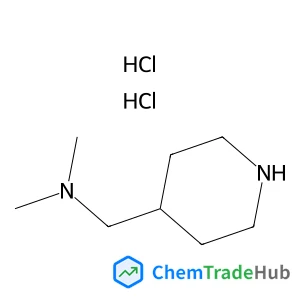
N,N-dimethyl(piperidin-4-yl)methanamine hydrochloride
CAS Number:
172281-72-0
Molecular Formula:
C8H20Cl2N2
Recommended Suppliers



Disclaimer
This page provides academic journal information for reference and research purposes only. We are not affiliated with any journal publishers and do not handle publication submissions. For publication-related inquiries, please contact the respective journal publishers directly.
If you notice any inaccuracies in the information displayed, please contact us at support@chemtradehub.com. We will promptly review and address your concerns.