












Mechanism and modeling of poly[vinylpyrrolidone] (PVP) facilitated synthesis of silver nanoplates
Literature Information
Publication Date
2018-05-16
DOI
10.1039/C8CP01610K
Impact Factor
3.676
Authors
Neethu Thomas, Ethayaraja Mani
View Original
Abstract
Silver triangular nanoplates (AgTNP) present unique surface plasmonic and catalytic properties depending upon the thickness and edge length. AgTNP are synthesized in a kinetically controlled growth process, by and large, using the polymer poly-vinylpyrrolidone (PVP) as a reductant. In this work, we present a systematic study to uncover the effect of the molecular weight (MW) of PVP and the PVP to silver salt (AgNO3) molar ratio ([P : S]) on the physical dimensions of AgTNP. The edge length of AgTNP shows a non-monotonic variation with respect to [P : S] for all MWs. Based on several control experiments, a kinetic mechanism is proposed and a mathematical model is developed to explain the formation of AgTNP. The elementary processes of the model include the reduction of Ag+ by the –OH group in PVP, followed by instantaneous nucleation. This phase is then followed by a slow reduction of Ag+ and growth of the nuclei to AgTNP. The model shows a reasonable agreement with experiments on the non-monotonic variation of edge length of AgTNP with respect to [P : S], as well as on the temporal evolution of the edge length.
Related Literature
Effect of defect clustering on the high-pressure behaviour of wüstite. High-pressure X-ray diffraction and lattice energy simulations
Camilla Haavik, Svein Stølen, Michael Hanfland, C. Richard A. Catlow
2000-10-26
Paper
DOI: 10.1039/B006026G
Infrared spectroscopic studies of the low temperature interconversion of sulfuric acid hydrates
Karen L. Nash, K. Jessica Sully, Andrew B. Horn
2000-10-10
Paper
DOI: 10.1039/B005531J
Modelling of a fuel-rich premixed propene–oxygen–argon flame and comparison with experiments
H. Böhm, A. Lamprecht, B. Atakan, K. Kohse-Höinghaus
2000-10-06
Paper
DOI: 10.1039/B005252N
Probing the size of Pluronic® P84 block copolymer micelles in aqueous solution by means of positron annihilation lifetime spectroscopy
Frédéric Bockstahl, Gilles Duplâtre, Maria da Graça Miguel, Hugh D. Burrows
2000-09-28
Paper
DOI: 10.1039/B002969F
Two desorption components of product CO2 in steady-state CO oxidation on Pd(110)
Paper
DOI: 10.1039/A903458G
Characterization of the interactions between various hexadecylmannoside–phospholipid model membranes with the lectin Concanavalin A
Udo Bakowsky, Willi Rettig, Gerd Bendas, Jan Vogel, Heike Bakowsky, Catalin Harnagea, Ulrich Rothe
2000-09-22
Paper
DOI: 10.1039/B003727N
Interaction of thiophene with a molybdenum disulfide catalyst—an inelastic neutron scattering study
Paper
DOI: 10.1039/A902617G
Friction and adhesion of mixed self-assembled monolayers studied by chemical force microscopy
Paper
DOI: 10.1039/A809994D
You might also like
Compound Q&A
What precautions should be taken when handling 4-(2-Furylmethyl)thiomorpholine 1,1-dioxide (CAS: 79206-94-3)?
When handling 4-(2-Furylmethyl)thiomorpholine 1,1-dioxide (CAS: 79206-94-3), it ...
79206-94-34-(2-Furylmethyl)thi...
Compound Q&A
What precautions should be taken when handling 4-Chloro-N-[2-(4-morpholinyl)ethyl]benzamide (CAS: 71320-77-9)?
When handling 4-Chloro-N-[2-(4-morpholinyl)ethyl]benzamide (CAS: 71320-77-9), it...
71320-77-94-Chloro-N-[2-(4-mor...
Compound Q&A
How should waste containing 2-[2-(2-Methoxyethoxy)ethoxy]ethyl 4-methylbenzenesulfonate (CAS: 62921-74-8) be handled?
Waste containing this compound (CAS: 62921-74-8) should be handled according to ...
62921-74-82-[2-(2-Methoxyethox...
Compound Q&A
How should waste containing (S)-Methyl 2-amino-3-cyclohexylpropanoate be handled?
Waste containing (S)-Methyl 2-amino-3-cyclohexylpropanoate should be collected i...
40056-18-6(S)-Methyl 2-amino-3...
Compound Q&A
How is 5-({4-[(2S,4R)-4-Hydroxy-2-methyltetrahydro-2H-pyran-4-yl]-2-thienyl}sulfanyl)-1-methyl-1,3-dihydro-2H-indol-2-one (CAS: 166882-70-8) typically synthesized?
This compound can be synthesized using a multi-step process involving the conjug...
166882-70-85-({4-[(2S,4R)-4-Hyd...
Compound Q&A
Are there alternatives to (2E)-3-(3,4-Dichlorophenyl)acrylic acid (CAS: 7312-27-8) in synthesis?
There are several alternatives to (2E)-3-(3,4-Dichlorophenyl)acrylic acid in syn...
7312-27-8(2E)-3-(3,4-Dichloro...
Compound Q&A
How should Ethyl 6-(2-nitrophenyl)imidazo[2,1-b][1,3]thiazole-3-carboxylate (CAS: 925437-84-9) be stored?
Ethyl 6-(2-nitrophenyl)imidazo[2,1-b][1,3]thiazole-3-carboxylate (CAS: 925437-84...
925437-84-9Ethyl 6-(2-nitrophen...
Compound Q&A
How should waste containing 2-(1,3-Thiazol-2-yl)ethanamine (CAS: 18453-07-1) be handled?
Waste containing 2-(1,3-Thiazol-2-yl)ethanamine (CAS: 18453-07-1) should be coll...
18453-07-12-(1,3-Thiazol-2-yl)...
Compound Q&A
How is Methyl 5-iodo-2-methylbenzoate (CAS: 103440-54-6) typically synthesized?
Methyl 5-iodo-2-methylbenzoate can be synthesized through the iodination of meth...
103440-54-6Methyl 5-iodo-2-meth...
Compound Q&A
How is 5-Chloro[1,2,4]triazolo[1,5-a]pyridine (CAS: 1427399-34-5) typically synthesized?
5-Chloro[1,2,4]triazolo[1,5-a]pyridine is commonly synthesized via the condensat...
1427399-34-55-Chloro[1,2,4]triaz...
Source Journal
Physical Chemistry Chemical Physics

CiteScore:
5.5
Self-citation Rate:
10.3%
Articles per Year:
3036
Physical Chemistry Chemical Physics (PCCP) is an international journal co-owned by 19 physical chemistry and physics societies from around the world. This journal publishes original, cutting-edge research in physical chemistry, chemical physics and biophysical chemistry. To be suitable for publication in PCCP, articles must include significant innovation and/or insight into physical chemistry; this is the most important criterion that reviewers and Editors will judge against when evaluating submissions. The journal has a broad scope and welcomes contributions spanning experiment, theory, computation and data science. Topical coverage includes spectroscopy, dynamics, kinetics, statistical mechanics, thermodynamics, electrochemistry, catalysis, surface science, quantum mechanics, quantum computing and machine learning. Interdisciplinary research areas such as polymers and soft matter, materials, nanoscience, energy, surfaces/interfaces, and biophysical chemistry are welcomed if they demonstrate significant innovation and/or insight into physical chemistry. Joined experimental/theoretical studies are particularly appreciated when complementary and based on up-to-date approaches.
Recommended Compounds
![1,2-Diphenyl-4-[2-(phenylsulfinyl)ethyl]-3,5-pyrazolidinedione structure](https://static.chemtradehub.com/structs/57-/57-96-5-efcc.webp "1,2-Diphenyl-4-[2-(phenylsulfinyl)ethyl]-3,5-pyrazolidinedione structure")
1,2-Diphenyl-4-[2-(phenylsulfinyl)ethyl]-3,5-pyrazolidinedione
CAS Number:
57-96-5
Molecular Formula:
C23H20N2O3S
![N-[(Benzyloxy)carbonyl]serine structure](https://static.chemtradehub.com/structs/276/2768-56-1-77f7.webp "N-[(Benzyloxy)carbonyl]serine structure")
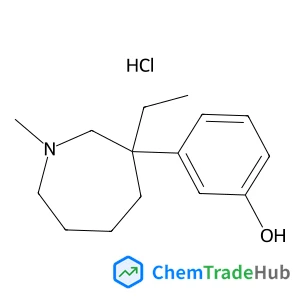
3-(3-Ethyl-1-methyl-3-azepanyl)phenol hydrochloride (1:1)
CAS Number:
59263-76-2
Molecular Formula:
C15H24ClNO
Recommended Suppliers






Disclaimer
This page provides academic journal information for reference and research purposes only. We are not affiliated with any journal publishers and do not handle publication submissions. For publication-related inquiries, please contact the respective journal publishers directly.
If you notice any inaccuracies in the information displayed, please contact us at support@chemtradehub.com. We will promptly review and address your concerns.