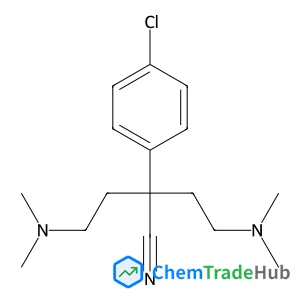
2-(4-Chlorophenyl)-4-(dimethylamino)-2-(2-(dimethylamino)ethyl)butanenitrile
CAS Number:
1246816-57-8
Molecular Formula:
C16H24ClN3
Zhongxu Wang, Zhigang Yu, Jingxiang Zhao
The nitrogen reduction reaction (NRR) under ambient conditions using renewable energy is a green and sustainable strategy for the synthesis of NH3, which is one of the most important chemicals and carbon-free carriers. Thus, the search for low-cost, highly efficient, and stable NRR electrocatalysts is critical to achieve this goal. Herein, using comprehensive density functional theory (DFT) computations, we design a new class of NRR electrocatalysts based on a single transition metal (TM) atom supported on the experimentally feasible two-dimensional C2N monolayer (TM@C2N). Based on the computed free energies of each elementary pathway, Mo@C2N is predicted to exhibit the best catalytic activity among the TM@C2N, in which the proton-coupled electron transfer of the NH2* species to NH3(g) is the potential-determining step. Especially, the computed onset potential of the NRR on Mo@C2N is −0.17 V, which is even lower than that for the well-established stepped Ru(0001) surface (−0.43 V). Furthermore, the NRR catalytic performance of these TM@C2N can be well explained by their adsorption strength with N2H* species. Our findings open a new avenue for optimizing the TM catalytic performance for the NRR with the lowest number of metal atoms on porous low-dimensional materials.
Yi Man, Shaomin Fu, Juan Chen, Bo Liu
DOI: 10.1039/C8OB01168K
Wei Yang, Jingyi Wang, He Wang, Lei Li, Yuekai Guan, Xianxiu Xu, Dayu Yu
DOI: 10.1039/C8OB01938J
Satheesh Ellipilli, John D. Phillips, Jennifer M. Heemstra
DOI: 10.1039/C8OB00626A
Hang-Fei Tu
DOI: 10.1039/C8OB02592D
Tao Li, Guangmiao Wu, Shangbiao Feng, Zemin Wang, Xingang Xie, Xuegong She
DOI: 10.1039/C8OB02495B
Guotao Liu, Weijie Chen, Zhiqiang Xu, Fengying Ye, Yingle Pan, Xiaoqiang Chen, Sheng Hua Liu, Lintao Zeng, Jun Yin
DOI: 10.1039/C8OB01258J
Seong Nam, David C. Ware
DOI: 10.1039/C8OB00957K
Rhydian H. Beddoe, Helen F. Sneddon, Ross M. Denton
DOI: 10.1039/C8OB01929K
Xinying Zhang, Xuesen Fan
DOI: 10.1039/C8OB01846D
Changduo Pan, Zhenkun Yang, Du Gao, Jin-Tao Yu
DOI: 10.1039/C8OB01329B
This compound is mainly used as an intermediate in the synthesis of antipsychoti...
Waste containing 1-(D-Ribofuranosyl)-1,4-dihydro-3-pyridinecarboxamide (CAS: 191...
2-Methyl-2-propanyl 3-bromo-3-(hydroxymethyl)-1-azetidinecarboxylate (CAS: 20079...
N-(4-Chloro-2-pyridinyl)acetamide (CAS: 245056-66-0) is a chemical compound with...
5-Chloro-2-hydroxybenzoic acid, also known as 5-chlorosalicylic acid, is an arom...
When handling 1,1-Dichloro-1-fluoroethane (CAS: 1717-00-6), it is important to u...
Fmoc-(2S,3R)-3-phenylpyrrolidine-2-carboxylic acid is a white crystalline solid ...
4-Amino-5-bromo-2-pyridinecarboxylic acid is primarily used as a precursor in th...
Handling this compound should be done with personal protective equipment (PPE) i...
When handling 8-bromo-2,2-dimethyl-3,4-dihydro-2H-1,4-benzoxazin-3-one, use prop...

Physical Chemistry Chemical Physics (PCCP) is an international journal co-owned by 19 physical chemistry and physics societies from around the world. This journal publishes original, cutting-edge research in physical chemistry, chemical physics and biophysical chemistry. To be suitable for publication in PCCP, articles must include significant innovation and/or insight into physical chemistry; this is the most important criterion that reviewers and Editors will judge against when evaluating submissions. The journal has a broad scope and welcomes contributions spanning experiment, theory, computation and data science. Topical coverage includes spectroscopy, dynamics, kinetics, statistical mechanics, thermodynamics, electrochemistry, catalysis, surface science, quantum mechanics, quantum computing and machine learning. Interdisciplinary research areas such as polymers and soft matter, materials, nanoscience, energy, surfaces/interfaces, and biophysical chemistry are welcomed if they demonstrate significant innovation and/or insight into physical chemistry. Joined experimental/theoretical studies are particularly appreciated when complementary and based on up-to-date approaches.