


Palladium-atom catalyzed formic acid decomposition and the switch of reaction mechanism with temperature
Literature Information
Publication Date
2016-03-07
DOI
10.1039/C6CP00186F
Impact Factor
3.676
Authors
Nan He, Zhen Hua Li
View Original
Abstract
Formic acid decomposition (FAD) reaction has been an innovative way for hydrogen energy. Noble metal catalysts, especially palladium-containing nanoparticles, supported or unsupported, perform well in this reaction. Herein, we considered the simplest model, wherein one Pd atom is used as the FAD catalyst. With high-level theoretical calculations of CCSD(T)/CBS quality, we investigated all possible FAD pathways. The results show that FAD catalyzed by one Pd atom follows a different mechanism compared with that catalyzed by surfaces or larger clusters. At the initial stage of the reaction, FAD follows a dehydration route and is quickly poisoned by CO due to the formation of very stable PdCO. PdCO then becomes the actual catalyst for FAD at temperatures approximately below 1050 K. Beyond 1050 K, there is a switch of catalyst from PdCO to Pd atom. The results also show that dehydration is always favoured over dehydrogenation on either the Pd-atom or PdCO catalyst. On the Pd-atom catalyst, neither dehydrogenation nor dehydration follows the formate mechanism. In contrast, on the PdCO catalyst, dehydrogenation follows the formate mechanism, whereas dehydration does not. We also systematically investigated the performance of 24 density functional theory methods. We found that the performance of the double hybrid mPW2PLYP functional is the best, followed by the B3LYP, B3PW91, N12SX, M11, and B2PLYP functionals.
Recommended Journals

Molecular Diversity

Photochemical & Photobiological Sciences

Angewandte Chemie International Edition

Environmental Toxicology and Pharmacology

Green Chemistry

Journal of Enzyme inhibition and Medicinal Chemistry

Molecules

Current Pharmaceutical Biotechnology

Mini-Reviews in Medicinal Chemistry

Faraday Discussions
Related Literature
1,2,3-Trimethoxypropane, a glycerol-based solvent with low toxicity: new utilization for the reduction of nitrile, nitro, ester, and acid functional groups with TMDS and a metal catalyst
Marc Sutter, Leyla Pehlivan, Romain Lafon, Wissam Dayoub, Yann Raoul, Estelle Métay, Marc Lemaire
2013-08-14
Communication
DOI: 10.1039/C3GC41082J
An extremely stable and highly active periodic mesoporous Lewis acid catalyst in water-medium Mukaiyama-aldol reaction
Fang Zhang, Chao Liang, Mingzheng Chen, Haibing Guo, Huangyong Jiang, Hexing Li
2013-07-16
Paper
DOI: 10.1039/C3GC41020J
Synthesis of thioesters through copper-catalyzed coupling of aldehydes with thiols in water
Chih-Lun Yi, Yu-Ting Huang, Chin-Fa Lee
2013-06-28
Paper
DOI: 10.1039/C3GC40946E
An effective, cost-efficient extraction method of biomass from wet microalgae with a functional polymeric membrane
Gursong Yoo, Youngmin Yoo, Jong-Hee Kwon, Cornelius Darpito, Sanjiv K. Mishra, Kwanyong Pak
2013-10-02
Paper
DOI: 10.1039/C3GC41695J
Self-floating ability and initiating gradient photopolymerization of acrylamide aqueous solution of a water-soluble polysiloxane benzophenone photoinitiator
Jiansheng Wang, Jiye Cheng, Jiancheng Liu, Yanjing Gao
2013-06-24
Paper
DOI: 10.1039/C3GC40704G
Metal-free arylations via photochemical activation of the Ar–OSO2R bond in aryl nonaflates
Carlotta Raviola, Veronica Canevari, Stefano Protti, Angelo Albini, Maurizio Fagnoni
2013-07-22
Communication
DOI: 10.1039/C3GC41009A
Synthesis of acetylenic alcohols with calcium carbide as the acetylene source
Yin Ngai Sum, Dingyi Yu, Yugen Zhang
2013-08-14
Communication
DOI: 10.1039/C3GC41269E
Pd nanoparticle-silica nanotubes (Pd@SNTs) as an efficient catalyst for Suzuki–Miyaura coupling and sp2 C–H arylation in water
Ginam Park, Sanghee Lee, Sang Jun Son, Seunghoon Shin
2013-10-03
Paper
DOI: 10.1039/C3GC41672K
You might also like
Compound Q&A
What are the main uses of 1-(3-Aminophenyl)-3-[(3R)-1-(3,3-dimethyl-2-oxobutyl)-2-oxo-5-(2-pyridinyl)-2,3-dihydro-1H-1,4-benzodiazepin-3-yl]urea (CAS: 155412-88-7)?
This compound is mainly used as an intermediate in the synthesis of antipsychoti...
155412-88-71-(3-Aminophenyl)-3-...
Compound Q&A
How should waste containing 1-(D-Ribofuranosyl)-1,4-dihydro-3-pyridinecarboxamide (CAS: 19132-12-8) be handled?
Waste containing 1-(D-Ribofuranosyl)-1,4-dihydro-3-pyridinecarboxamide (CAS: 191...
19132-12-81-(D-Ribofuranosyl)-...
Compound Q&A
What regulatory guidelines apply to 2-Methyl-2-propanyl 3-bromo-3-(hydroxymethyl)-1-azetidinecarboxylate (CAS: 2007919-81-3)?
2-Methyl-2-propanyl 3-bromo-3-(hydroxymethyl)-1-azetidinecarboxylate (CAS: 20079...
2007919-81-32-Methyl-2-propanyl ...
Compound Q&A
What is N-(4-Chloro-2-pyridinyl)acetamide (CAS: 245056-66-0)?
N-(4-Chloro-2-pyridinyl)acetamide (CAS: 245056-66-0) is a chemical compound with...
245056-66-0N-(4-Chloro-2-pyridi...
Compound Q&A
What is 5-Chloro-2-hydroxybenzoic acid (CAS: 321-14-2)?
5-Chloro-2-hydroxybenzoic acid, also known as 5-chlorosalicylic acid, is an arom...
321-14-25-Chloro-2-hydroxybe...
Compound Q&A
What precautions should be taken when handling 1,1-Dichloro-1-fluoroethane (CAS: 1717-00-6)?
When handling 1,1-Dichloro-1-fluoroethane (CAS: 1717-00-6), it is important to u...
1717-00-61,1-Dichloro-1-fluor...
Compound Q&A
What are the physical and chemical properties of Fmoc-(2S,3R)-3-phenylpyrrolidine-2-carboxylic acid (CAS: 281655-32-1)?
Fmoc-(2S,3R)-3-phenylpyrrolidine-2-carboxylic acid is a white crystalline solid ...
281655-32-1Fmoc-(2S,3R)-3-pheny...
Compound Q&A
What are the main uses of 4-Amino-5-bromo-2-pyridinecarboxylic acid (CAS: 1363381-01-4)?
4-Amino-5-bromo-2-pyridinecarboxylic acid is primarily used as a precursor in th...
1363381-01-44-Amino-5-bromo-2-py...
Compound Q&A
What precautions should be taken when handling (S)-tert-butyl 2-((2-(4-bromophenyl)-2-oxoethyl)carbamoyl)pyrrolidine-1-carboxylate (CAS: 1007881-98-2)?
Handling this compound should be done with personal protective equipment (PPE) i...
1007881-98-2(S)-tert-butyl 2-((2...
Compound Q&A
What precautions should be taken when handling 8-bromo-2,2-dimethyl-3,4-dihydro-2H-1,4-benzoxazin-3-one (CAS: 688363-73-7)?
When handling 8-bromo-2,2-dimethyl-3,4-dihydro-2H-1,4-benzoxazin-3-one, use prop...
688363-73-78-bromo-2,2-dimethyl...
Source Journal
Physical Chemistry Chemical Physics

CiteScore:
5.5
Self-citation Rate:
10.3%
Articles per Year:
3036
Physical Chemistry Chemical Physics (PCCP) is an international journal co-owned by 19 physical chemistry and physics societies from around the world. This journal publishes original, cutting-edge research in physical chemistry, chemical physics and biophysical chemistry. To be suitable for publication in PCCP, articles must include significant innovation and/or insight into physical chemistry; this is the most important criterion that reviewers and Editors will judge against when evaluating submissions. The journal has a broad scope and welcomes contributions spanning experiment, theory, computation and data science. Topical coverage includes spectroscopy, dynamics, kinetics, statistical mechanics, thermodynamics, electrochemistry, catalysis, surface science, quantum mechanics, quantum computing and machine learning. Interdisciplinary research areas such as polymers and soft matter, materials, nanoscience, energy, surfaces/interfaces, and biophysical chemistry are welcomed if they demonstrate significant innovation and/or insight into physical chemistry. Joined experimental/theoretical studies are particularly appreciated when complementary and based on up-to-date approaches.
Recommended Compounds
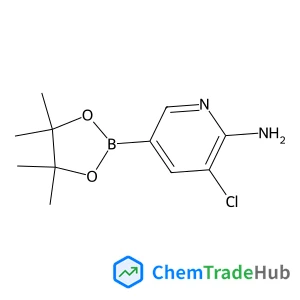
3-Chloro-5-(4,4,5,5-tetramethyl-1,3,2-dioxaborolan-2-yl)-2-pyridinamine
CAS Number:
1032758-99-8
Molecular Formula:
C11H16BClN2O2
Recommended Suppliers




Disclaimer
This page provides academic journal information for reference and research purposes only. We are not affiliated with any journal publishers and do not handle publication submissions. For publication-related inquiries, please contact the respective journal publishers directly.
If you notice any inaccuracies in the information displayed, please contact us at support@chemtradehub.com. We will promptly review and address your concerns.