













Phase transition dynamics of single optically trapped aqueous potassium carbonate particles
Literature Information
Publication Date
2018-04-05
DOI
10.1039/C8CP00599K
Impact Factor
3.676
Authors
Kıvanç Esat, Grégory David, Theodoros Poulkas, Mikhail Shein, Ruth Signorell
View Original
Abstract
Fast dynamics (down to 10 ms) during exposure to changing relative humidity of single optically trapped K2CO3 particles were observed in the submicron to micron size range with time-resolved broadband light scattering and Raman spectroscopy. The study shows that complex multiple processes accompany efflorescence and deliquescence of unsupported aerosol particles. Efflorescence can occur in a single process in less than 10 ms (prompt) or proceed via multiple successive processes (multistep) that can last up to more than 10 seconds. The efflorescence relative humidity lies in the range of 9 to 25%. Raman spectra of the effloresced particles reveal that the final state of the particle is independent of the pathway. Deliquescence cycles start with an initial uptake of water followed by multiple complex processes which end at the deliquescence relative humidity (44–50%). The study reveals that complex multiple processes during phase transitions are not limited to deposited particles where heterogeneous processes may occur or large particles in the upper micrometer size range as previously observed.
Related Literature
Computational determination of the dominant triplet population mechanism in photoexcited benzophenone
Ria Broer, Daniel Roca-Sanjuán
2014-09-30
Paper
DOI: 10.1039/C4CP03277B
Uniaxial tension-induced fracture in gold nanowires with the dependence on size and atomic vacancies
Fenying Wang, Yanfeng Dai, Jianwei Zhao, Qianjin Li
2014-10-02
Paper
DOI: 10.1039/C4CP03556A
Predicting bond strength from a single Hartree–Fock ground state using the localized pair model
Dylan C. Hennessey, Brendan J. H. Sheppard, Dalton E. C. K. Mackenzie, Jason K. Pearson
2014-10-24
Paper
DOI: 10.1039/C4CP02669A
In situ back-side illumination fluorescence XAFS (BI-FXAFS) studies on platinum nanoparticles deposited on a HOPG surface as a model fuel cell: a new approach to the Pt-HOPG electrode/electrolyte interface
Hiromitsu Uehara, Yohei Uemura, Takafumi Ogawa, Kentaro Kono, Ryoichi Ueno, Yasuhiro Niwa, Hiroaki Nitani, Hitoshi Abe, Satoru Takakusagi, Masaharu Nomura, Yasuhiro Iwasawa, Kiyotaka Asakura
2014-04-09
Paper
DOI: 10.1039/C4CP00265B
Full cLR-PCM calculations of the solvatochromic effects on emission energies
Siwar Chibani, Šimon Budzák, Miroslav Medved', Benedetta Mennucci
2014-10-13
Paper
DOI: 10.1039/C4CP03919J
Correction: Polymer nanofibers: preserving nanomorphology in ternary blend organic photovoltaics
Teddy Salim, Jun Yan Lek, Björn Bräuer, Yeng Ming Lam
2014-10-30
Correction
DOI: 10.1039/C4CP90162B
Magnetic exchange in {GdIII–radical} complexes: method assessment, mechanism of coupling and magneto-structural correlations
Tulika Gupta, Thayalan Rajeshkumar, Gopalan Rajaraman
2014-02-20
Paper
DOI: 10.1039/C4CP00214H
The mutual interactions based on amphipathic tetraoxacalix[2]arene[2]triazine: recognition cases of anion and cation investigated by a computational study
Zhi-Feng Li, Hui-Xue Li, Xiao-Ping Yang
2014-10-14
Paper
DOI: 10.1039/C4CP03551H
The photoformation of a phthalide: a ketene intermediate traced by FSRS
Sascha Fröbel, Laura Buschhaus, Torben Villnow, Oliver Weingart, Peter Gilch
2014-11-12
Paper
DOI: 10.1039/C4CP03351E
Spectroscopic and microscopic studies of self-assembled nc-Si/a-SiC thin films grown by low pressure high density spontaneous plasma processing
Debajyoti Das, Debjit Kar
2014-10-03
Paper
DOI: 10.1039/C4CP03374D
You might also like
Compound Q&A
What are the main uses of 1-(3-Aminophenyl)-3-[(3R)-1-(3,3-dimethyl-2-oxobutyl)-2-oxo-5-(2-pyridinyl)-2,3-dihydro-1H-1,4-benzodiazepin-3-yl]urea (CAS: 155412-88-7)?
This compound is mainly used as an intermediate in the synthesis of antipsychoti...
155412-88-71-(3-Aminophenyl)-3-...
Compound Q&A
How should waste containing 1-(D-Ribofuranosyl)-1,4-dihydro-3-pyridinecarboxamide (CAS: 19132-12-8) be handled?
Waste containing 1-(D-Ribofuranosyl)-1,4-dihydro-3-pyridinecarboxamide (CAS: 191...
19132-12-81-(D-Ribofuranosyl)-...
Compound Q&A
What regulatory guidelines apply to 2-Methyl-2-propanyl 3-bromo-3-(hydroxymethyl)-1-azetidinecarboxylate (CAS: 2007919-81-3)?
2-Methyl-2-propanyl 3-bromo-3-(hydroxymethyl)-1-azetidinecarboxylate (CAS: 20079...
2007919-81-32-Methyl-2-propanyl ...
Compound Q&A
What is N-(4-Chloro-2-pyridinyl)acetamide (CAS: 245056-66-0)?
N-(4-Chloro-2-pyridinyl)acetamide (CAS: 245056-66-0) is a chemical compound with...
245056-66-0N-(4-Chloro-2-pyridi...
Compound Q&A
What is 5-Chloro-2-hydroxybenzoic acid (CAS: 321-14-2)?
5-Chloro-2-hydroxybenzoic acid, also known as 5-chlorosalicylic acid, is an arom...
321-14-25-Chloro-2-hydroxybe...
Compound Q&A
What precautions should be taken when handling 1,1-Dichloro-1-fluoroethane (CAS: 1717-00-6)?
When handling 1,1-Dichloro-1-fluoroethane (CAS: 1717-00-6), it is important to u...
1717-00-61,1-Dichloro-1-fluor...
Compound Q&A
What are the physical and chemical properties of Fmoc-(2S,3R)-3-phenylpyrrolidine-2-carboxylic acid (CAS: 281655-32-1)?
Fmoc-(2S,3R)-3-phenylpyrrolidine-2-carboxylic acid is a white crystalline solid ...
281655-32-1Fmoc-(2S,3R)-3-pheny...
Compound Q&A
What are the main uses of 4-Amino-5-bromo-2-pyridinecarboxylic acid (CAS: 1363381-01-4)?
4-Amino-5-bromo-2-pyridinecarboxylic acid is primarily used as a precursor in th...
1363381-01-44-Amino-5-bromo-2-py...
Compound Q&A
What precautions should be taken when handling (S)-tert-butyl 2-((2-(4-bromophenyl)-2-oxoethyl)carbamoyl)pyrrolidine-1-carboxylate (CAS: 1007881-98-2)?
Handling this compound should be done with personal protective equipment (PPE) i...
1007881-98-2(S)-tert-butyl 2-((2...
Compound Q&A
What precautions should be taken when handling 8-bromo-2,2-dimethyl-3,4-dihydro-2H-1,4-benzoxazin-3-one (CAS: 688363-73-7)?
When handling 8-bromo-2,2-dimethyl-3,4-dihydro-2H-1,4-benzoxazin-3-one, use prop...
688363-73-78-bromo-2,2-dimethyl...
Source Journal
Physical Chemistry Chemical Physics

CiteScore:
5.5
Self-citation Rate:
10.3%
Articles per Year:
3036
Physical Chemistry Chemical Physics (PCCP) is an international journal co-owned by 19 physical chemistry and physics societies from around the world. This journal publishes original, cutting-edge research in physical chemistry, chemical physics and biophysical chemistry. To be suitable for publication in PCCP, articles must include significant innovation and/or insight into physical chemistry; this is the most important criterion that reviewers and Editors will judge against when evaluating submissions. The journal has a broad scope and welcomes contributions spanning experiment, theory, computation and data science. Topical coverage includes spectroscopy, dynamics, kinetics, statistical mechanics, thermodynamics, electrochemistry, catalysis, surface science, quantum mechanics, quantum computing and machine learning. Interdisciplinary research areas such as polymers and soft matter, materials, nanoscience, energy, surfaces/interfaces, and biophysical chemistry are welcomed if they demonstrate significant innovation and/or insight into physical chemistry. Joined experimental/theoretical studies are particularly appreciated when complementary and based on up-to-date approaches.
Recommended Compounds
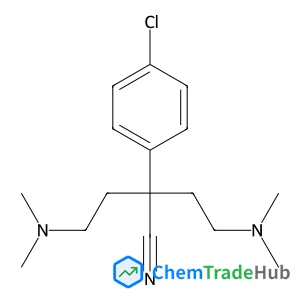
2-(4-Chlorophenyl)-4-(dimethylamino)-2-(2-(dimethylamino)ethyl)butanenitrile
CAS Number:
1246816-57-8
Molecular Formula:
C16H24ClN3



Recommended Suppliers





Disclaimer
This page provides academic journal information for reference and research purposes only. We are not affiliated with any journal publishers and do not handle publication submissions. For publication-related inquiries, please contact the respective journal publishers directly.
If you notice any inaccuracies in the information displayed, please contact us at support@chemtradehub.com. We will promptly review and address your concerns.