













Influence of Ce3+ polarons on grain boundary space-charge in proton conducting Y-doped BaCeO3
Literature Information
Publication Date
2018-06-04
DOI
10.1039/C8CP00168E
Impact Factor
3.676
Authors
Jonathan M. Polfus, Mehdi Pishahang, Rune Bredesen
View Original
Abstract
Defect segregation and space-charge formation were investigated for a (0 2 1)[1 0 0] symmetric tilt grain boundary in Y-doped BaCeO3. Density functional theory calculations according to the PBE+U formalism were used to calculate segregation energies for protons, oxygen vacancies and Y-acceptor dopants from the bulk to the grain boundary core. Defect concentration and potential profiles across the grain boundary were obtained from thermodynamic space-charge models. Oxygen vacancies were found to exhibit a particularly exothermic segregation energy of up to −1.66 eV while protons exhibited segregation energies in the range of −0.47 eV to −0.93 eV. The grain boundary was determined to be predominated by protons below 800 K in 3% H2O and the corresponding space-charge potential was 0.4–0.7 V under the Mott–Schottky approximation. The role of electronic defects in the space-charge properties was evaluated, and it was substantiated that electron conduction along the grain boundary could become evident under reducing conditions.
Related Literature
Structure/property relationships in copolymers comprising renewable isosorbide, glucarodilactone, and 2,5-bis(hydroxymethyl)furan subunits
Leon M. Lillie, William B. Tolman, Theresa M. Reineke
2017-06-12
Paper
DOI: 10.1039/C7PY00575J
Facile synthesis of optically active helical poly(phenyl isocyanide) brushes on a silicon surface and their chiral resolution ability
Ben-Fa Chu, Jia-Hong Chu, Song-Qing Zhao, Na Liu, Zong-Quan Wu
2018-02-28
Communication
DOI: 10.1039/C8PY00097B
Phosphazene/triisobutylaluminum-promoted anionic ring-opening polymerization of 1,2-epoxybutane initiated by secondary carbamates
L. Hassouna, N. Illy, P. Guégan
2017-06-13
Paper
DOI: 10.1039/C7PY00675F
Co-delivery of doxorubicin and methotrexate by dendritic chitosan-g-mPEG as a magnetic nanocarrier for multi-drug delivery in combination chemotherapy
Mahdi Rahimi, Kazem D. Safa, Roya Salehi
2017-11-03
Paper
DOI: 10.1039/C7PY01701D
One-pot blue-light triggered tough interpenetrating polymeric network (IPN) using CuAAC and methacrylate reactions
Abhishek U. Shete
2017-05-08
Communication
DOI: 10.1039/C7PY00623C
Novel conjugated polymers based on bis-dithieno[3,2-b;2′,3′-d]pyrrole vinylene donor and diketopyrrolopyrrole acceptor: side chain engineering in organic field effect transistors
Song-Di Lin, Chih-Hao Chin, Wei-Tsung Chuang, Chain-Shu Hsu
2017-11-17
Paper
DOI: 10.1039/C7PY01340J
A sustainable photocontrolled ATRP strategy: facile separation and recycling of a visible-light-mediated catalyst fac-[Ir(ppy)3]
Xiaodong Liu, Yuanyuan Ni, Jian Wu, Hongjuan Jiang, Zhengbiao Zhang, Lifen Zhang, Zhenping Cheng
2018-01-03
Paper
DOI: 10.1039/C7PY02008B
Reporting pH-sensitive drug release via unpaired spin fluorescence silencing
Bettina Olshausen, Kathryn E. Fairfull-Smith, Ute Schepers
2018-01-10
Paper
DOI: 10.1039/C7PY01942D
Control of the alignment of liquid crystal molecules on a sequence-polymerized film by surface migration and polarized light irradiation
Feng Cai, Feng Zheng, Xuemin Lu, Qinghua Lu
2017-10-30
Paper
DOI: 10.1039/C7PY01576C
You might also like
Compound Q&A
What precautions should be taken when handling 4-(2-Furylmethyl)thiomorpholine 1,1-dioxide (CAS: 79206-94-3)?
When handling 4-(2-Furylmethyl)thiomorpholine 1,1-dioxide (CAS: 79206-94-3), it ...
79206-94-34-(2-Furylmethyl)thi...
Compound Q&A
What precautions should be taken when handling 4-Chloro-N-[2-(4-morpholinyl)ethyl]benzamide (CAS: 71320-77-9)?
When handling 4-Chloro-N-[2-(4-morpholinyl)ethyl]benzamide (CAS: 71320-77-9), it...
71320-77-94-Chloro-N-[2-(4-mor...
Compound Q&A
How should waste containing 2-[2-(2-Methoxyethoxy)ethoxy]ethyl 4-methylbenzenesulfonate (CAS: 62921-74-8) be handled?
Waste containing this compound (CAS: 62921-74-8) should be handled according to ...
62921-74-82-[2-(2-Methoxyethox...
Compound Q&A
How should waste containing (S)-Methyl 2-amino-3-cyclohexylpropanoate be handled?
Waste containing (S)-Methyl 2-amino-3-cyclohexylpropanoate should be collected i...
40056-18-6(S)-Methyl 2-amino-3...
Compound Q&A
How is 5-({4-[(2S,4R)-4-Hydroxy-2-methyltetrahydro-2H-pyran-4-yl]-2-thienyl}sulfanyl)-1-methyl-1,3-dihydro-2H-indol-2-one (CAS: 166882-70-8) typically synthesized?
This compound can be synthesized using a multi-step process involving the conjug...
166882-70-85-({4-[(2S,4R)-4-Hyd...
Compound Q&A
Are there alternatives to (2E)-3-(3,4-Dichlorophenyl)acrylic acid (CAS: 7312-27-8) in synthesis?
There are several alternatives to (2E)-3-(3,4-Dichlorophenyl)acrylic acid in syn...
7312-27-8(2E)-3-(3,4-Dichloro...
Compound Q&A
How should Ethyl 6-(2-nitrophenyl)imidazo[2,1-b][1,3]thiazole-3-carboxylate (CAS: 925437-84-9) be stored?
Ethyl 6-(2-nitrophenyl)imidazo[2,1-b][1,3]thiazole-3-carboxylate (CAS: 925437-84...
925437-84-9Ethyl 6-(2-nitrophen...
Compound Q&A
How should waste containing 2-(1,3-Thiazol-2-yl)ethanamine (CAS: 18453-07-1) be handled?
Waste containing 2-(1,3-Thiazol-2-yl)ethanamine (CAS: 18453-07-1) should be coll...
18453-07-12-(1,3-Thiazol-2-yl)...
Compound Q&A
How is Methyl 5-iodo-2-methylbenzoate (CAS: 103440-54-6) typically synthesized?
Methyl 5-iodo-2-methylbenzoate can be synthesized through the iodination of meth...
103440-54-6Methyl 5-iodo-2-meth...
Compound Q&A
How is 5-Chloro[1,2,4]triazolo[1,5-a]pyridine (CAS: 1427399-34-5) typically synthesized?
5-Chloro[1,2,4]triazolo[1,5-a]pyridine is commonly synthesized via the condensat...
1427399-34-55-Chloro[1,2,4]triaz...
Source Journal
Physical Chemistry Chemical Physics

CiteScore:
5.5
Self-citation Rate:
10.3%
Articles per Year:
3036
Physical Chemistry Chemical Physics (PCCP) is an international journal co-owned by 19 physical chemistry and physics societies from around the world. This journal publishes original, cutting-edge research in physical chemistry, chemical physics and biophysical chemistry. To be suitable for publication in PCCP, articles must include significant innovation and/or insight into physical chemistry; this is the most important criterion that reviewers and Editors will judge against when evaluating submissions. The journal has a broad scope and welcomes contributions spanning experiment, theory, computation and data science. Topical coverage includes spectroscopy, dynamics, kinetics, statistical mechanics, thermodynamics, electrochemistry, catalysis, surface science, quantum mechanics, quantum computing and machine learning. Interdisciplinary research areas such as polymers and soft matter, materials, nanoscience, energy, surfaces/interfaces, and biophysical chemistry are welcomed if they demonstrate significant innovation and/or insight into physical chemistry. Joined experimental/theoretical studies are particularly appreciated when complementary and based on up-to-date approaches.
Recommended Compounds
![5-Acetyl-2,3-dihydrobenzo[b]furan structure](https://static.chemtradehub.com/structs/908/90843-31-5-eea4.webp "5-Acetyl-2,3-dihydrobenzo[b]furan structure")
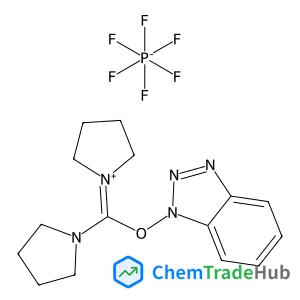
(1H-Benzotriazol-1-yloxy)(di-1-pyrrolidinyl)methylium hexafluorophosphate
CAS Number:
105379-24-6
Molecular Formula:
C15H21F6N5OP
Recommended Suppliers




Disclaimer
This page provides academic journal information for reference and research purposes only. We are not affiliated with any journal publishers and do not handle publication submissions. For publication-related inquiries, please contact the respective journal publishers directly.
If you notice any inaccuracies in the information displayed, please contact us at support@chemtradehub.com. We will promptly review and address your concerns.