












Aptamer immobilization on amino-functionalized metal–organic frameworks: an ultrasensitive platform for the electrochemical diagnostic of Escherichia coli O157:H7
Literature Information
Publication Date
2018-06-05
DOI
10.1039/C8AN00725J
Impact Factor
4.616
Authors
Saba Ranjbar
View Original
Abstract
Herein, we report the development of an electrochemical biosensor for Escherichia coli O157:H7 diagnostic based on amino-functionalized metal–organic frameworks (MOFs) as a new generation of organic–inorganic hybrid nanocomposites. The electrical and morphological properties of MOFs were enhanced by interweaving each isolated MOF crystal with polyaniline (PANI). Subsequent attachment of the amine-modified aptamer to the polyanilinated MOFs was accomplished using glutaraldehyde (GA) as a cross-linking agent. The prepared biocompatible platform was carefully characterized by means of field-emission scanning electron microscopy (FESEM), energy-dispersive spectroscopy (EDS), Fourier transform infrared spectroscopy (FT-IR), and X-ray powder diffraction (XRD) techniques. The biosensor fabrication and its electrochemical characterizations were monitored by cyclic voltammetry (CV) and electrochemical impedance spectroscopy (EIS) techniques. Differential pulse voltammetry (DPV) was applied to monitoring and quantitation of the interaction between the aptamer and E. coli O157:H7 using methylene blue (MB) as an electrochemical indicator. Changes in the reduction peak current of MB in the presence of E. coli O157:H7 was recorded as an analytical signal and indicated a relationship with the logarithm of the E. coli O157:H7 concentration in the range of 2.1 × 101 to 2.1 × 10⁷ CFU mL−1 with a LOQ of 21 CFU mL−1 and LOD of 2 CFU mL−1. The electrochemical aptasensor displayed good recovery values for the detection of E. coli O157:H7 in environmental real samples and also could act as a smart device to investigate the effects of antibacterial agents against E. coli O157:H7.
Related Literature
Impact of intrinsic framework flexibility for selective adsorption of sarin in non-aqueous solvents using metal–organic frameworks
Jongwoo Park, Mayank Agrawal, Dorina F. Sava Gallis, Jacob A. Harvey, Jeffery A. Greathouse, David S. Sholl
2020-02-28
Paper
DOI: 10.1039/C9CP06788D
Theoretical study on the stability and aromaticity in silapentafulvenes towards triplet ground state species
Jiashun Wu, Alvi Muhammad Rouf, Yuanyuan Huang, Danling Zhuang, Jun Zhu
2020-02-03
Paper
DOI: 10.1039/C9CP06506G
How flexible is the water molecule structure? Analysis of crystal structures and the potential energy surface
Milan R. Milovanović, Jelena M. Živković, Dragan B. Ninković, Ivana M. Stanković
2020-01-28
Paper
DOI: 10.1039/C9CP07042G
Is the origin of green fluorescence in unsymmetrical four-ring bent-core liquid crystals single or double proton transfer?
Venkatesh Gude, Manobina Karmakar, Avishek Dey, Prasanta Kumar Datta, Kumar Biradha
2020-02-03
Paper
DOI: 10.1039/C9CP06307B
Correction: Isomer-specific cryogenic ion vibrational spectroscopy of the D2 tagged Cs+(HNO3)(H2O)n=0–2 complexes: ion-driven enhancement of the acidic H-bond to water
Sayoni Mitra, Chinh H. Duong, Mark A. Johnson
2020-03-04
Correction
DOI: 10.1039/D0CP90054K
Synchrotron-based Mössbauer spectroscopy characterization of sublimated spin crossover molecules
Alberto Cini, Lorenzo Poggini, Alexander I. Chumakov, Rudolf Rüffer, Gabriele Spina, Alain Wattiaux, Mathieu Duttine, Mathieu Gonidec, Maria Fittipaldi, Patrick Rosa, Matteo Mannini
2020-02-26
Paper
DOI: 10.1039/C9CP04464G
Interfacial structure in the liquid–liquid extraction of rare earth elements by phosphoric acid ligands: a molecular dynamics study
Balarama Sridhar Dwadasi, Sriram Goverapet Srinivasan, Beena Rai
2020-02-05
Paper
DOI: 10.1039/C9CP05719F
Electronic structure, ion diffusion and cation doping in the Na4VO(PO4)2 compound as a cathode material for Na-ion batteries
Pablo A. Aparicio
2020-03-03
Paper
DOI: 10.1039/C9CP05559B
You might also like
Compound Q&A
What is the market or research trend for N-(4-Methoxybenzyl)-2-pyridinamine (CAS: 52818-63-0)?
N-(4-Methoxybenzyl)-2-pyridinamine (CAS: 52818-63-0) is increasingly being used ...
52818-63-0N-(4-Methoxybenzyl)-...
Compound Q&A
What precautions should be taken when handling Ethyl 4-(2-chlorophenyl)-1,3-thiazole-2-carboxylate (CAS: 1050507-06-6)?
When handling Ethyl 4-(2-chlorophenyl)-1,3-thiazole-2-carboxylate, appropriate p...
1050507-06-6Ethyl 4-(2-chlorophe...
Compound Q&A
What regulatory guidelines apply to diethyldiselane (CAS: 628-39-7)?
Diethyldiselane (CAS: 628-39-7) is classified under the Globally Harmonized Syst...
628-39-7Diethyldiselane
Compound Q&A
What is the market or research trend for oxocopper (CAS: 12053-18-8)?
The market for oxocopper (CAS: 12053-18-8) is primarily driven by its use in cat...
12053-18-8oxocopper; oxo-(oxoc...
Compound Q&A
What is the market or research trend for 5-{[(2-Methyl-2-propanyl)oxy]carbonyl}-5-azaspiro[2.4]heptane-7-carboxylic acid?
The market for 5-{[(2-Methyl-2-propanyl)oxy]carbonyl}-5-azaspiro[2.4]heptane-7-c...
1268519-54-55-{[(2-Methyl-2-prop...
Compound Q&A
What is 2-(1-Pyrrolidinyl)-4-pyridinamine (CAS: 35981-63-6)?
2-(1-Pyrrolidinyl)-4-pyridinamine is a chemical compound with the CAS number 359...
35981-63-62-(1-Pyrrolidinyl)-4...
Compound Q&A
What are the physical and chemical properties of 2-(3-Pyridinyl)-1-azabicyclo[2.2.2]octane (CAS: 91556-75-1)?
2-(3-Pyridinyl)-1-azabicyclo[2.2.2]octane (CAS: 91556-75-1) is a crystalline sol...
91556-75-12-(3-Pyridinyl)-1-az...
Compound Q&A
How is (S)-Alpha-allyl-proline hydrochloride (CAS: 129704-91-2) typically synthesized?
(S)-Alpha-allyl-proline hydrochloride is usually synthesized via a Wittig reacti...
129704-91-2(S)-Alpha-allyl-prol...
Compound Q&A
What is 3-Methyl-1,2-oxazole-5-carboxylic acid (CAS: 4857-42-5)?
3-Methyl-1,2-oxazole-5-carboxylic acid (CAS: 4857-42-5) is an organic compound w...
4857-42-53-Methyl-1,2-oxazole...
Compound Q&A
How is Lys-SMCC-DM1 (CAS: 1281816-04-3) typically synthesized?
Lys-SMCC-DM1 is synthesized via a multi-step process involving the coupling of S...
1281816-04-3Lys-SMCC-DM1
Source Journal
Analyst

CiteScore:
7.8
Self-citation Rate:
5.6%
Articles per Year:
653
Analyst publishes analytical and bioanalytical research that reports premier fundamental discoveries and inventions, and the applications of those discoveries, unconfined by traditional discipline barriers.
Recommended Compounds
![(4aR,5S,6R,8aS)-5-[2-(3-Furyl)ethyl]-8a-(hydroxymethyl)-5,6-dimethyl-3,4,4a,5,6,7,8,8a-octahydro-1-naphthalenecarboxylic acid structure](https://static.chemtradehub.com/structs/184/18411-75-1-d4cd.webp "(4aR,5S,6R,8aS)-5-[2-(3-Furyl)ethyl]-8a-(hydroxymethyl)-5,6-dimethyl-3,4,4a,5,6,7,8,8a-octahydro-1-naphthalenecarboxylic acid structure")
(4aR,5S,6R,8aS)-5-[2-(3-Furyl)ethyl]-8a-(hydroxymethyl)-5,6-dimethyl-3,4,4a,5,6,7,8,8a-octahydro-1-naphthalenecarboxylic acid
CAS Number:
18411-75-1
Molecular Formula:
C20H28O4
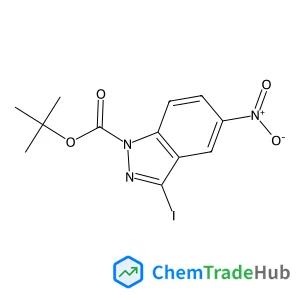
Tert-butyl 3-iodo-5-nitro-1H-indazole-1-carboxylate
CAS Number:
459133-69-8
Molecular Formula:
C12H12IN3O4
Recommended Suppliers





Disclaimer
This page provides academic journal information for reference and research purposes only. We are not affiliated with any journal publishers and do not handle publication submissions. For publication-related inquiries, please contact the respective journal publishers directly.
If you notice any inaccuracies in the information displayed, please contact us at support@chemtradehub.com. We will promptly review and address your concerns.