


![1-[6-(1H-Imidazol-1-yl)-3-pyridinyl]methanamine structure](https://static.chemtradehub.com/structs/914/914637-08-4-8825.webp "1-[6-(1H-Imidazol-1-yl)-3-pyridinyl]methanamine structure")
An asymmetric fitting function for condensed-phase Raman spectroscopy
Literature Information
Publication Date
2018-05-09
DOI
10.1039/C8AN00710A
Impact Factor
4.616
Authors
Vitaly I. Korepanov, Daria M. Sedlovets
View Original
Abstract
Asymmetric lineshapes are experimentally observed in the Raman spectra of different classes of condensed matter. Determination of the peak parameters, typically done with symmetric pseudo-Voigt functions, in such situations yields unreliable results. While a wide choice of asymmetric fitting functions is possible, for the function to be practically useful, it should satisfy several criteria: simple analytic form, minimum parameters, description of the symmetric shape as “zero case”, estimation of the desired peak parameters in a straightforward way and, above all, adequate description of the experimental data. In this work we formulate the asymmetric pseudo-Voigt function by damped perturbation of the original symmetric shapes with one asymmetry-related parameter. The damped character of the perturbation ensures by construction consistent behavior of the line tails. We test the asymmetric function by fitting the experimental Raman spectra. The results show that the function is able to describe a wide range of experimentally observed asymmetries for different natures of asymmetric broadening, including 3D and 2D crystals, nanoparticles, polymers, and molecular solids and liquids.
Recommended Journals

Australian Journal of Chemistry

Cement and Concrete Research

Anti-Corrosion Methods and Materials

Biopolymers

Advances in Colloid and Interface Science

Chemical Reviews

Chemistry of Heterocyclic Compounds

Canadian Metallurgical Quarterly

Journal of the Chinese Chemical Society

Journal of the American Chemical Society
Related Literature
Entropic analysis of bistability and the general evolution criterion
David Hochberg, Josep M. Ribó
2021-06-01
Paper
DOI: 10.1039/D1CP01236C
Atmospheric oxidation of fluoroalcohols initiated by ˙OH radicals in the presence of water and mineral dusts: mechanism, kinetics, and risk assessment
Feng-Yang Bai, Ming-Shuai Deng, Mei-Yan Chen, Lian Kong, Shuang Ni, Xiu-Mei Pan
2021-04-29
Paper
DOI: 10.1039/D1CP01324F
Glass transition and dynamics of semiflexible polymer brushes
Jian-Hua Huang, Dan-Dan Sun, Rong-Xing Lu
2021-05-28
Paper
DOI: 10.1039/D1CP00089F
Perspective of structural flexibility on selective inhibition towards CYP1B1 over CYP1A1 by α-naphthoflavone analogs
Ying Wang, Yupeng Zhang, Dong Wang, Zhaohu Luo, Fengjiao Zhang
2021-09-02
Paper
DOI: 10.1039/D1CP02541D
Simple lattice model of self-assembling metal–organic layers of pyridyl-substituted porphyrins and copper on Au(111) surface
Anastasiia I. Fadeeva, Vitaly A. Gorbunov, Alexander V. Myshlyavtsev
2021-08-20
Paper
DOI: 10.1039/D1CP03111B
Absorption of self-propelled particles into a dense porous medium
Bing-shuang Qian, Wen-de Tian
2021-08-20
Paper
DOI: 10.1039/D1CP01234G
Mechanistic implications of Li–S cell function through modification of organo-sulfur cathode architectures
Lisa Djuandhi, Neeraj Sharma, Bruce C. C. Cowie, Thanh V. Nguyen, Aditya Rawal
2021-06-14
Paper
DOI: 10.1039/D1CP01838H
Dynamics of photodissociation of nitric oxide from S-nitrosylated cysteine and N-acetylated cysteine derivatives in water
Hojeong Yoon, Seongchul Park, Manho Lim
2021-06-09
Paper
DOI: 10.1039/D1CP01743H
Quantitative analysis of ACE2 binding to coronavirus spike proteins: SARS-CoV-2 vs. SARS-CoV and RaTG13
Zhendong Li
2021-05-28
Paper
DOI: 10.1039/D1CP01075A
You might also like
Compound Q&A
What is the market or research trend for N-(4-Methoxybenzyl)-2-pyridinamine (CAS: 52818-63-0)?
N-(4-Methoxybenzyl)-2-pyridinamine (CAS: 52818-63-0) is increasingly being used ...
52818-63-0N-(4-Methoxybenzyl)-...
Compound Q&A
What precautions should be taken when handling Ethyl 4-(2-chlorophenyl)-1,3-thiazole-2-carboxylate (CAS: 1050507-06-6)?
When handling Ethyl 4-(2-chlorophenyl)-1,3-thiazole-2-carboxylate, appropriate p...
1050507-06-6Ethyl 4-(2-chlorophe...
Compound Q&A
What regulatory guidelines apply to diethyldiselane (CAS: 628-39-7)?
Diethyldiselane (CAS: 628-39-7) is classified under the Globally Harmonized Syst...
628-39-7Diethyldiselane
Compound Q&A
What is the market or research trend for oxocopper (CAS: 12053-18-8)?
The market for oxocopper (CAS: 12053-18-8) is primarily driven by its use in cat...
12053-18-8oxocopper; oxo-(oxoc...
Compound Q&A
What is the market or research trend for 5-{[(2-Methyl-2-propanyl)oxy]carbonyl}-5-azaspiro[2.4]heptane-7-carboxylic acid?
The market for 5-{[(2-Methyl-2-propanyl)oxy]carbonyl}-5-azaspiro[2.4]heptane-7-c...
1268519-54-55-{[(2-Methyl-2-prop...
Compound Q&A
What is 2-(1-Pyrrolidinyl)-4-pyridinamine (CAS: 35981-63-6)?
2-(1-Pyrrolidinyl)-4-pyridinamine is a chemical compound with the CAS number 359...
35981-63-62-(1-Pyrrolidinyl)-4...
Compound Q&A
What are the physical and chemical properties of 2-(3-Pyridinyl)-1-azabicyclo[2.2.2]octane (CAS: 91556-75-1)?
2-(3-Pyridinyl)-1-azabicyclo[2.2.2]octane (CAS: 91556-75-1) is a crystalline sol...
91556-75-12-(3-Pyridinyl)-1-az...
Compound Q&A
How is (S)-Alpha-allyl-proline hydrochloride (CAS: 129704-91-2) typically synthesized?
(S)-Alpha-allyl-proline hydrochloride is usually synthesized via a Wittig reacti...
129704-91-2(S)-Alpha-allyl-prol...
Compound Q&A
What is 3-Methyl-1,2-oxazole-5-carboxylic acid (CAS: 4857-42-5)?
3-Methyl-1,2-oxazole-5-carboxylic acid (CAS: 4857-42-5) is an organic compound w...
4857-42-53-Methyl-1,2-oxazole...
Compound Q&A
How is Lys-SMCC-DM1 (CAS: 1281816-04-3) typically synthesized?
Lys-SMCC-DM1 is synthesized via a multi-step process involving the coupling of S...
1281816-04-3Lys-SMCC-DM1
Source Journal
Analyst

CiteScore:
7.8
Self-citation Rate:
5.6%
Articles per Year:
653
Analyst publishes analytical and bioanalytical research that reports premier fundamental discoveries and inventions, and the applications of those discoveries, unconfined by traditional discipline barriers.
Recommended Compounds
![N-{[(2-Methyl-2-propanyl)oxy]carbonyl}-L-methionylglycine structure](https://static.chemtradehub.com/structs/234/23446-03-9-e1e5.webp "N-{[(2-Methyl-2-propanyl)oxy]carbonyl}-L-methionylglycine structure")
N-{[(2-Methyl-2-propanyl)oxy]carbonyl}-L-methionylglycine
CAS Number:
23446-03-9
Molecular Formula:
C12H22N2O5S
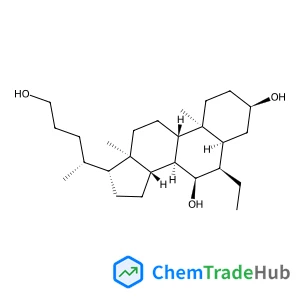
(3alpha,5beta,6alpha,7alpha)-6-Ethylcholane-3,7,24-triol
CAS Number:
1537866-49-1
Molecular Formula:
C26H46O3
Recommended Suppliers





Disclaimer
This page provides academic journal information for reference and research purposes only. We are not affiliated with any journal publishers and do not handle publication submissions. For publication-related inquiries, please contact the respective journal publishers directly.
If you notice any inaccuracies in the information displayed, please contact us at support@chemtradehub.com. We will promptly review and address your concerns.