











An enzymatic reaction mediated glucose sensor activated by MnO2 nanosheets acting as an oxidant and catalyst
Literature Information
Publication Date
2018-05-01
DOI
10.1039/C8AN00657A
Impact Factor
4.616
Authors
Guanwen Yan, Yuan Zhang, Weihua Di
View Original
Abstract
A self-regulated smart system would be highly desirable for analyte detection, in which a specific environment for detection could be self-modulated and the required reagents could also be in situ generated without further addition. Here, we have designed an intelligent glucose detection system composed of glucose, glucose oxidase (GOx), MnO2 and 3,3′,5,5′-tetramethylbenzidine (TMB), based on the enzymatic oxidation of glucose and dual roles of synthesized MnO2 nanosheets acting as both an oxidant and catalyst. Upon the addition of glucose/GOx, the MnO2 nanosheets partially decompose due to H2O2in situ generated via glucose oxidation. Following the addition of TMB, a typical color reaction occurs under slightly acidic conditions, thereby enabling the colorimetric determination of glucose. For this system, the specific conditions and the required reagents for glucose detection can be self-modulated and self-generated via the enzymatic oxidation of glucose to gluconic acid and H2O2, performing smart self-regulated functions. This is an outstanding advantage of our designed glucose sensing system. Moreover, the present sensing system responds to glucose quickly and sensitively with a detection limit of 100 nM, and is stable and specific toward glucose detection.
Related Literature
Imaging intramolecular hydrogen migration with time- and momentum-resolved photoelectron diffraction
Fukiko Ota, Shigeru Abe, Keisuke Hatada, Kiyoshi Ueda
2021-07-30
Paper
DOI: 10.1039/D1CP02055B
Probing reaction processes and reversibility in Earth-abundant Na3FeF6 for Na-ion batteries
Anthony Wong, Gabriel Ménard
2021-07-01
Paper
DOI: 10.1039/D1CP02763H
Second harmonic generation theory for a helical macromolecule with high sensitivity to structural disorder
Darius Abramavicius
2021-05-25
Paper
DOI: 10.1039/D1CP00694K
Mode-specific dynamics in multichannel reaction NH+ + H2
Weiliang Shi, Kun Wang, Ping Zhang, Le Yu, Anyang Li
2021-08-20
Paper
DOI: 10.1039/D1CP02603H
Effects of molecular shape on alcohol aggregation and water hydrogen bond network behavior in butanol isomer solutions
Seungeui Choi, Saravanan Parameswaran, Jun-Ho Choi
2021-05-18
Paper
DOI: 10.1039/D1CP00634G
Computational discovery of PtS2/GaSe van der Waals heterostructure for solar energy applications
Rui Xiong, Rong Hu, Yinggan Zhang, Xuhui Yang, Peng Lin, Cuilian Wen, Baisheng Sa, Zhimei Sun
2021-08-12
Paper
DOI: 10.1039/D1CP02436A
Resistive switching on individual V2O5 nanoparticles encapsulated in fluorinated graphene films
Artem I. Ivanov, Victor Ya. Prinz, Irina V. Antonova, Anton K. Gutakovskii
2021-08-19
Paper
DOI: 10.1039/D1CP02930D
Relating the structure and dynamics of ionic liquids under shear by means of reverse non-equilibrium molecular dynamics simulations
Kalil Bernardino, Mauro C. C. Ribeiro
2021-06-04
Paper
DOI: 10.1039/D1CP01205C
Quantitative analysis of ACE2 binding to coronavirus spike proteins: SARS-CoV-2 vs. SARS-CoV and RaTG13
Zhendong Li
2021-05-28
Paper
DOI: 10.1039/D1CP01075A
You might also like
Compound Q&A
What is the market or research trend for N-(4-Methoxybenzyl)-2-pyridinamine (CAS: 52818-63-0)?
N-(4-Methoxybenzyl)-2-pyridinamine (CAS: 52818-63-0) is increasingly being used ...
52818-63-0N-(4-Methoxybenzyl)-...
Compound Q&A
What precautions should be taken when handling Ethyl 4-(2-chlorophenyl)-1,3-thiazole-2-carboxylate (CAS: 1050507-06-6)?
When handling Ethyl 4-(2-chlorophenyl)-1,3-thiazole-2-carboxylate, appropriate p...
1050507-06-6Ethyl 4-(2-chlorophe...
Compound Q&A
What regulatory guidelines apply to diethyldiselane (CAS: 628-39-7)?
Diethyldiselane (CAS: 628-39-7) is classified under the Globally Harmonized Syst...
628-39-7Diethyldiselane
Compound Q&A
What is the market or research trend for oxocopper (CAS: 12053-18-8)?
The market for oxocopper (CAS: 12053-18-8) is primarily driven by its use in cat...
12053-18-8oxocopper; oxo-(oxoc...
Compound Q&A
What is the market or research trend for 5-{[(2-Methyl-2-propanyl)oxy]carbonyl}-5-azaspiro[2.4]heptane-7-carboxylic acid?
The market for 5-{[(2-Methyl-2-propanyl)oxy]carbonyl}-5-azaspiro[2.4]heptane-7-c...
1268519-54-55-{[(2-Methyl-2-prop...
Compound Q&A
What is 2-(1-Pyrrolidinyl)-4-pyridinamine (CAS: 35981-63-6)?
2-(1-Pyrrolidinyl)-4-pyridinamine is a chemical compound with the CAS number 359...
35981-63-62-(1-Pyrrolidinyl)-4...
Compound Q&A
What are the physical and chemical properties of 2-(3-Pyridinyl)-1-azabicyclo[2.2.2]octane (CAS: 91556-75-1)?
2-(3-Pyridinyl)-1-azabicyclo[2.2.2]octane (CAS: 91556-75-1) is a crystalline sol...
91556-75-12-(3-Pyridinyl)-1-az...
Compound Q&A
How is (S)-Alpha-allyl-proline hydrochloride (CAS: 129704-91-2) typically synthesized?
(S)-Alpha-allyl-proline hydrochloride is usually synthesized via a Wittig reacti...
129704-91-2(S)-Alpha-allyl-prol...
Compound Q&A
What is 3-Methyl-1,2-oxazole-5-carboxylic acid (CAS: 4857-42-5)?
3-Methyl-1,2-oxazole-5-carboxylic acid (CAS: 4857-42-5) is an organic compound w...
4857-42-53-Methyl-1,2-oxazole...
Compound Q&A
How is Lys-SMCC-DM1 (CAS: 1281816-04-3) typically synthesized?
Lys-SMCC-DM1 is synthesized via a multi-step process involving the coupling of S...
1281816-04-3Lys-SMCC-DM1
Source Journal
Analyst

CiteScore:
7.8
Self-citation Rate:
5.6%
Articles per Year:
653
Analyst publishes analytical and bioanalytical research that reports premier fundamental discoveries and inventions, and the applications of those discoveries, unconfined by traditional discipline barriers.
Recommended Compounds

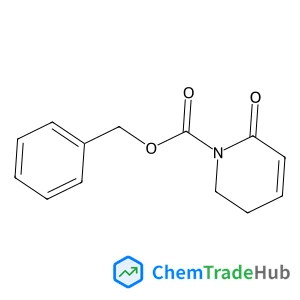
Benzyl 6-oxo-3,6-dihydro-1(2H)-pyridinecarboxylate
CAS Number:
725746-35-0
Molecular Formula:
C13H13NO3
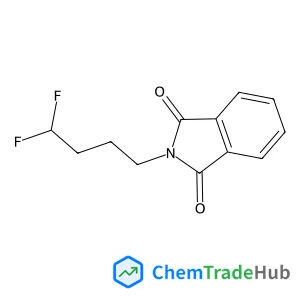
2-(4,4-Difluorobutyl)-1H-isoindole-1,3(2H)-dione
CAS Number:
1265341-14-7
Molecular Formula:
C12H11F2NO2
![N-{[(2-Methyl-2-propanyl)oxy]carbonyl}-L-methionylglycine structure](https://static.chemtradehub.com/structs/234/23446-03-9-e1e5.webp "N-{[(2-Methyl-2-propanyl)oxy]carbonyl}-L-methionylglycine structure")
N-{[(2-Methyl-2-propanyl)oxy]carbonyl}-L-methionylglycine
CAS Number:
23446-03-9
Molecular Formula:
C12H22N2O5S
Recommended Suppliers






Disclaimer
This page provides academic journal information for reference and research purposes only. We are not affiliated with any journal publishers and do not handle publication submissions. For publication-related inquiries, please contact the respective journal publishers directly.
If you notice any inaccuracies in the information displayed, please contact us at support@chemtradehub.com. We will promptly review and address your concerns.