












The amplified electrochemiluminescence response signal promoted by the Ir(iii)-containing polymer complex
Literature Information
Publication Date
2018-04-07
DOI
10.1039/C8AN00426A
Impact Factor
4.616
Authors
Yayun Fang, Ziyu Wang, Yang Li, Yiwu Quan, Yixiang Cheng
View Original
Abstract
A novel Ir(III)-containing polymer complex (P2) as an electrochemiluminescence (ECL) emitter was prepared by the coordination reaction of the N-containing bidentate ligand (–CHN–CH2–CH2–NCH–) in the conjugated polymer P1 with [Ir2(2-ppy)4(μ-Cl)2] (M3). Despite a rather low Ir(III) content in P2, it can emit a greatly enhanced ECL signal compared with its polymer ligand P1 and the Ir(III) model complex using TPrA as a co-reactant in CH3CN solution due to the effective intramolecular metal–ligand charge transfer (MLCT) from the Ir(III)-complex centre to the polymer backbone.
Recommended Journals
Related Literature
Unravelling the structures of sodiated β-cyclodextrin and its fragments
Jordan M. Rabus, Robert P. Pellegrinelli, Ali Hassan Abi Khodr, Benjamin J. Bythell, Thomas R. Rizzo, Eduardo Carrascosa
2021-06-07
Paper
DOI: 10.1039/D1CP01058A
Origin of asynchronicity in Diels–Alder reactions
Pascal Vermeeren, Trevor A. Hamlin
2021-09-03
Paper
DOI: 10.1039/D1CP02456F
Surface electronic states mediate concerted electron and proton transfer at metal nanoscale interfaces for catalytic hydride reduction of –NO2 to –NH2
Bing-Qian Shan, Jia-Feng Zhou, Meng Ding, Xiao-Dan Hu
2021-05-25
Communication
DOI: 10.1039/D1CP01792F
Second harmonic generation theory for a helical macromolecule with high sensitivity to structural disorder
Darius Abramavicius
2021-05-25
Paper
DOI: 10.1039/D1CP00694K
Simple lattice model of self-assembling metal–organic layers of pyridyl-substituted porphyrins and copper on Au(111) surface
Anastasiia I. Fadeeva, Vitaly A. Gorbunov, Alexander V. Myshlyavtsev
2021-08-20
Paper
DOI: 10.1039/D1CP03111B
Computational prediction of the supramolecular self-assembling properties of organic molecules: the role of conformational flexibility of amide moieties
Laura Le Bras, Yves L. Dory, Benoît Champagne
2021-08-31
Paper
DOI: 10.1039/D1CP02675E
An experimental and master-equation modeling study of the kinetics of the reaction between resonance-stabilized (CH3)2CCHCH2 radical and molecular oxygen
Satya P. Joshi, Timo T. Pekkanen, Prasenjit Seal, Raimo S. Timonen, Arkke J. Eskola
2021-08-02
Paper
DOI: 10.1039/D1CP02210E
The manner and extent to which the hydration shell impacts interactions between hydrated species
Jinyang Jiang, Le Guo, Luping Tang, Yu Zhang
2021-08-17
Paper
DOI: 10.1039/D1CP03368A
First principles characterisation of bio–nano interface
Ian Rouse, David Power, Erik G. Brandt, Matthew Schneemilch, Konstantinos Kotsis, Nick Quirke, Alexander P. Lyubartsev, Vladimir Lobaskin
2021-06-10
Paper
DOI: 10.1039/D1CP01116B
Dynamics of photodissociation of nitric oxide from S-nitrosylated cysteine and N-acetylated cysteine derivatives in water
Hojeong Yoon, Seongchul Park, Manho Lim
2021-06-09
Paper
DOI: 10.1039/D1CP01743H
You might also like
Compound Q&A
What is the market or research trend for N-(4-Methoxybenzyl)-2-pyridinamine (CAS: 52818-63-0)?
N-(4-Methoxybenzyl)-2-pyridinamine (CAS: 52818-63-0) is increasingly being used ...
52818-63-0N-(4-Methoxybenzyl)-...
Compound Q&A
What precautions should be taken when handling Ethyl 4-(2-chlorophenyl)-1,3-thiazole-2-carboxylate (CAS: 1050507-06-6)?
When handling Ethyl 4-(2-chlorophenyl)-1,3-thiazole-2-carboxylate, appropriate p...
1050507-06-6Ethyl 4-(2-chlorophe...
Compound Q&A
What regulatory guidelines apply to diethyldiselane (CAS: 628-39-7)?
Diethyldiselane (CAS: 628-39-7) is classified under the Globally Harmonized Syst...
628-39-7Diethyldiselane
Compound Q&A
What is the market or research trend for oxocopper (CAS: 12053-18-8)?
The market for oxocopper (CAS: 12053-18-8) is primarily driven by its use in cat...
12053-18-8oxocopper; oxo-(oxoc...
Compound Q&A
What is the market or research trend for 5-{[(2-Methyl-2-propanyl)oxy]carbonyl}-5-azaspiro[2.4]heptane-7-carboxylic acid?
The market for 5-{[(2-Methyl-2-propanyl)oxy]carbonyl}-5-azaspiro[2.4]heptane-7-c...
1268519-54-55-{[(2-Methyl-2-prop...
Compound Q&A
What is 2-(1-Pyrrolidinyl)-4-pyridinamine (CAS: 35981-63-6)?
2-(1-Pyrrolidinyl)-4-pyridinamine is a chemical compound with the CAS number 359...
35981-63-62-(1-Pyrrolidinyl)-4...
Compound Q&A
What are the physical and chemical properties of 2-(3-Pyridinyl)-1-azabicyclo[2.2.2]octane (CAS: 91556-75-1)?
2-(3-Pyridinyl)-1-azabicyclo[2.2.2]octane (CAS: 91556-75-1) is a crystalline sol...
91556-75-12-(3-Pyridinyl)-1-az...
Compound Q&A
How is (S)-Alpha-allyl-proline hydrochloride (CAS: 129704-91-2) typically synthesized?
(S)-Alpha-allyl-proline hydrochloride is usually synthesized via a Wittig reacti...
129704-91-2(S)-Alpha-allyl-prol...
Compound Q&A
What is 3-Methyl-1,2-oxazole-5-carboxylic acid (CAS: 4857-42-5)?
3-Methyl-1,2-oxazole-5-carboxylic acid (CAS: 4857-42-5) is an organic compound w...
4857-42-53-Methyl-1,2-oxazole...
Compound Q&A
How is Lys-SMCC-DM1 (CAS: 1281816-04-3) typically synthesized?
Lys-SMCC-DM1 is synthesized via a multi-step process involving the coupling of S...
1281816-04-3Lys-SMCC-DM1
Source Journal
Analyst

CiteScore:
7.8
Self-citation Rate:
5.6%
Articles per Year:
653
Analyst publishes analytical and bioanalytical research that reports premier fundamental discoveries and inventions, and the applications of those discoveries, unconfined by traditional discipline barriers.
Recommended Compounds
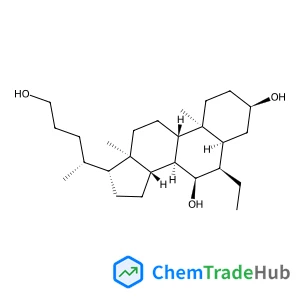
(3alpha,5beta,6alpha,7alpha)-6-Ethylcholane-3,7,24-triol
CAS Number:
1537866-49-1
Molecular Formula:
C26H46O3
![N-{[(2-Methyl-2-propanyl)oxy]carbonyl}-L-methionylglycine structure](https://static.chemtradehub.com/structs/234/23446-03-9-e1e5.webp "N-{[(2-Methyl-2-propanyl)oxy]carbonyl}-L-methionylglycine structure")
N-{[(2-Methyl-2-propanyl)oxy]carbonyl}-L-methionylglycine
CAS Number:
23446-03-9
Molecular Formula:
C12H22N2O5S
Recommended Suppliers


Disclaimer
This page provides academic journal information for reference and research purposes only. We are not affiliated with any journal publishers and do not handle publication submissions. For publication-related inquiries, please contact the respective journal publishers directly.
If you notice any inaccuracies in the information displayed, please contact us at support@chemtradehub.com. We will promptly review and address your concerns.