












Investigating the autophagy pathway in silver@gold core–shell nanoparticles-treated cells using surface-enhanced Raman scattering
Literature Information
Publication Date
2018-06-15
DOI
10.1039/C8AN00405F
Impact Factor
4.616
Authors
Yuqing Hou, Wen Zhang, Shengtao Li, Zhen Wang, Huiqing Zhong, Zhiming Liu, Zhouyi Guo
View Original
Abstract
Previous studies have shown that nanoparticles can induce autophagy, and the main approach for investigating autophagy induced by nanoparticles is via traditional methods such as TEM and biochemical assay. These methods measurements suffer from the disadvantages of complicated experimental processes, cell destruction, as well as lack of characterization of individual stages of the autophagy pathway. Surface-enhanced Raman scattering (SERS) has been extensively used in biological applications. With the combination of SERS and chemometric methods, such as principal component analysis-linear discriminant analysis (PCA-LDA), identification and distribution mapping of endosomes and lysosomes in the endocytosis of Au nanoparticles has been achieved by segregating the spectra from complex SERS data sets in the previous study. In this study, silver@gold core–shell nanoparticles (Ag@Au NPs) were synthesized by reduction of gold ions on the surface of the silver nanoparticles, and the autophagy induced by Ag@Au NPs was studied with Ag@Au NPs serving both as an autophagy inducer and as a high-performance SERS substrate. Pro-survival autophagy induced by Ag@Au NPs was proved by the western blot assay, flow cytometry and fluorescent staining. Furthermore, the autophagy pathway in Ag@Au NPs-treated cells was first elucidated by SERS combined with a modified reference-based PCA-LDA methodology. This study provides a feasible way of using SERS to elucidate the autophagy pathway induced by nanoparticles.
Related Literature
Electron–phonon scattering effect on the lattice thermal conductivity of silicon nanostructures
Bo Fu, Guihua Tang, Yifei Li
2017-08-29
Paper
DOI: 10.1039/C7CP04638C
Thermodynamic assessment of the oxygen reduction activity in aqueous solutions
2017-10-18
Paper
DOI: 10.1039/C7CP05448C
Asymmetric vanadium flow batteries: long lifespan via an anolyte overhang strategy
Di Mu, Yang Zhao, Liwei Yu, Le Liu, Jingyu Xi
2017-10-09
Paper
DOI: 10.1039/C7CP06249D
Understanding the role of co-catalysts on silicon photocathodes using intensity modulated photocurrent spectroscopy
James E. Thorne, Yanyan Zhao, Da He, Shizhao Fan, Srinivas Vanka, Zetian Mi, Dunwei Wang
2017-10-24
Paper
DOI: 10.1039/C7CP06533G
Freezing of supercooled n-decane nanodroplets: from surface driven to frustrated crystallization
Viraj P. Modak, Andrew J. Amaya
2017-10-31
Paper
DOI: 10.1039/C7CP05431A
Quantitative DFT modeling of product concentration in organometallic reactions: Cu-mediated pentafluoroethylation of benzoic acid chlorides as a case study
2017-10-10
Paper
DOI: 10.1039/C7CP05709A
Halogen substitutions leading to enhanced oxygen evolution and oxygen reduction reactions in metalloporphyrin frameworks
Sippakorn Wannakao, Thana Maihom, Kanokwan Kongpatpanich, Jumras Limtrakul, Vinich Promarak
2017-10-16
Paper
DOI: 10.1039/C7CP06187K
Accumulation of counterions and coions evaluated by cryogenic XPS as a new tool for describing the structure of electric double layer at the silica/water interface
Jiří Škvarla, Mária Kaňuchová, Andrey Shchukarev, Ivan Brezáni, Juraj Škvarla
2017-10-18
Communication
DOI: 10.1039/C7CP06439J
A dry molten globule-like intermediate during the base-induced unfolding of a multidomain protein
Nirbhik Acharya, Prajna Mishra, Santosh Kumar Jha
2017-10-27
Paper
DOI: 10.1039/C7CP06614G
You might also like
Compound Q&A
What industries use (1R,3S)-1,3-Cyclopentanediol (CAS: 16326-97-9)?
(1R,3S)-1,3-Cyclopentanediol finds applications in various industries. In the ph...
16326-97-9(1R,3S)-1,3-Cyclopen...
Compound Q&A
What precautions should be taken when handling N'-[4-(Dimethylamino)phenyl]-N,N-dimethyl-1,4-benzenediamine (CAS: 637-31-0)?
When handling N'-[4-(Dimethylamino)phenyl]-N,N-dimethyl-1,4-benzenediamine, it i...
637-31-0N'-[4-(Dimethylamino...
Compound Q&A
Are there alternatives to 5-(2,4-Difluorophenyl)-2-methoxypyrimidine (CAS: 1352318-16-1) in synthesis?
There are several alternatives to 5-(2,4-Difluorophenyl)-2-methoxypyrimidine in ...
1352318-16-15-(2,4-Difluoropheny...
Compound Q&A
What regulatory guidelines apply to 1-(3-Methoxyphenoxy)propan-2-ol (CAS: 382141-68-6)?
1-(3-Methoxyphenoxy)propan-2-ol (CAS: 382141-68-6) must comply with the Globally...
382141-68-61-(3-Methoxyphenoxy)...
Compound Q&A
Is Tetrodotoxin Citrate (CAS: 18660-81-6) safe?
Tetrodotoxin Citrate is extremely dangerous and should be handled with extreme c...
18660-81-6Tetrodotoxin Citrate
Compound Q&A
What are the main uses of 2-Methyl-2-propanyl [(1R,3S)-3-hydroxycyclopentyl]carbamate (CAS: 225641-84-9)?
2-Methyl-2-propanyl [(1R,3S)-3-hydroxycyclopentyl]carbamate (CAS: 225641-84-9) i...
225641-84-92-Methyl-2-propanyl ...
Compound Q&A
How should waste containing 4-(2-Hydroxyhexafluoroisopropyl)Benzoic Acid (CAS: 16261-80-6) be handled?
Waste containing 4-(2-Hydroxyhexafluoroisopropyl)Benzoic Acid (CAS: 16261-80-6) ...
16261-80-64-(2-Hydroxyhexafluo...
Compound Q&A
How is 2-Methyl-2-proanyl {(2S)-1-[(benzyloxy)amino]-3-hydroxy-3-methyl-1-oxo-2-butanyl}carbamate (CAS: 102507-19-7) typically synthesized?
2-Methyl-2-proanyl {(2S)-1-[(benzyloxy)amino]-3-hydroxy-3-methyl-1-oxo-2-butanyl...
102507-19-72-Methyl-2-propanyl ...
Compound Q&A
What is Benzeneethanamine, α-ethyl-, hydrochloride (1:1) (CAS: 20735-15-3)?
Benzeneethanamine, α-ethyl-, hydrochloride (1:1) is an organic compound with the...
20735-15-3Benzeneethanamine, α...
Compound Q&A
Are there alternatives to 3-{(E)-[4-(Dimethylamino)phenyl]diazenyl}benzoic acid (CAS: 20691-84-3) in synthesis?
In the synthesis of compounds similar to 3-{(E)-[4-(Dimethylamino)phenyl]diazeny...
20691-84-33-{(E)-[4-(Dimethyla...
Source Journal
Analyst

CiteScore:
7.8
Self-citation Rate:
5.6%
Articles per Year:
653
Analyst publishes analytical and bioanalytical research that reports premier fundamental discoveries and inventions, and the applications of those discoveries, unconfined by traditional discipline barriers.
Recommended Compounds
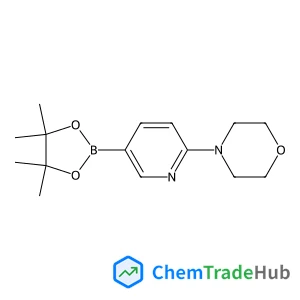
4-(5-(4,4,5,5-tetramethyl-1,3,2-dioxaborolan-2-yl)pyridin-2-yl)morpholine
CAS Number:
485799-04-0
Molecular Formula:
C15H23BN2O3
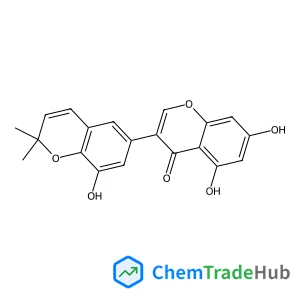
5,7,8'-Trihydroxy-2',2'-dimethyl-2'H,4H-3,6'-bichromen-4-one
CAS Number:
129280-33-7
Molecular Formula:
C20H16O6
Recommended Suppliers




Disclaimer
This page provides academic journal information for reference and research purposes only. We are not affiliated with any journal publishers and do not handle publication submissions. For publication-related inquiries, please contact the respective journal publishers directly.
If you notice any inaccuracies in the information displayed, please contact us at support@chemtradehub.com. We will promptly review and address your concerns.