


Electron–phonon scattering effect on the lattice thermal conductivity of silicon nanostructures
Literature Information
Publication Date
2017-08-29
DOI
10.1039/C7CP04638C
Impact Factor
3.676
Authors
Bo Fu, Guihua Tang, Yifei Li
View Original
Abstract
Nanostructuring technology has been widely employed to reduce the thermal conductivity of thermoelectric materials because of the strong phonon–boundary scattering. Optimizing the carrier concentration can not only improve the electrical properties, but also affect the lattice thermal conductivity significantly due to the electron–phonon scattering. The lattice thermal conductivity of silicon nanostructures considering electron–phonon scattering is investigated for comparing the lattice thermal conductivity reductions resulting from nanostructuring technology and the carrier concentration optimization. We performed frequency-dependent simulations of thermal transport systematically in nanowires, solid thin films and nanoporous thin films by solving the phonon Boltzmann transport equation using the discrete ordinate method. All the phonon properties are based on the first-principles calculations. The results show that the lattice thermal conductivity reduction due to the electron–phonon scattering decreases as the feature size of nanostructures goes down and could be ignored at low feature sizes (50 nm for n-type nanowires and 20 nm for p-type nanowires and n-type solid thin films) or a high porosity (0.6 for n-type 500 nm-thick nanoporous thin films) even when the carrier concentration is as high as 1021 cm−3. Similarly, the size effect due to the phonon–boundary scattering also becomes less significant with the increase of carrier concentration. The findings provide a fundamental understanding of electron and phonon transports in nanostructures, which is important for the optimization of nanostructured thermoelectric materials.
Recommended Journals

Advances in Colloid and Interface Science

Journal of the Chinese Chemical Society

Accounts of Chemical Research

Chemistry of Natural Compounds

Australian Journal of Chemistry

Cement and Concrete Research

Journal of the American Chemical Society

Canadian Metallurgical Quarterly

Ferroelectrics

Chemistry of Heterocyclic Compounds
Related Literature
Kamlet–Taft solvent parameters, NMR spectroscopic analysis and thermoelectrochemistry of lithium–glyme solvate ionic liquids and their dilute solutions
Jeffrey J. Black, Andrew Dolan, Jason B. Harper
2018-06-04
Paper
DOI: 10.1039/C8CP02527D
Fragmentation of a dioxolanyl radical via nonstatistical reaction dynamics: characterization of the vinyloxy radical by ns time-resolved laser flash photolysis
Götz Bucher, Mukul Lal, Anup Rana, Michael Schmittel
2018-07-18
Paper
DOI: 10.1039/C8CP03311K
A remarkable two-dimensional membrane for multifunctional gas separation: halogenated metal-free fused-ring polyphthalocyanine
Yadong Zhang, Qi Shi, Yuzhen Liu, Aijun Du, Ruifeng Lu
2018-06-04
Paper
DOI: 10.1039/C8CP01648H
The role of nitric acid in atmospheric new particle formation
Ling Liu, Hao Li, Haijie Zhang, Jie Zhong, Yang Bai, Maofa Ge, Zesheng Li, Yu Chen, Xiuhui Zhang
2018-05-30
Paper
DOI: 10.1039/C8CP02719F
The importance of grand-canonical quantum mechanical methods to describe the effect of electrode potential on the stability of intermediates involved in both electrochemical CO2 reduction and hydrogen evolution
Haochen Zhang, William A. Goddard, III, Qi Lu, Mu-Jeng Cheng
2018-01-03
Paper
DOI: 10.1039/C7CP08153G
Field-, strain- and light-induced superconductivity in organic strongly correlated electron systems
2017-11-02
Perspective
DOI: 10.1039/C7CP06716J
Ethanol synthesis from syngas over Cu(Pd)-doped Fe(100): a systematic theoretical investigation
Wei Wang, Ye Wang
2017-11-13
Paper
DOI: 10.1039/C7CP06693G
Hierarchical formation of Fe-9eG supramolecular networks via flexible coordination bonds
Chi Zhang, Lei Xie, Yuanqi Ding, Chunxue Yuan, Wei Xu
2018-01-05
Paper
DOI: 10.1039/C7CP08278A
A low temperature investigation of the gas-phase N(2D) + NO reaction. Towards a viable source of N(2D) atoms for kinetic studies in astrochemistry
2018-06-12
Paper
DOI: 10.1039/C8CP02851F
You might also like
Compound Q&A
What industries use (1R,3S)-1,3-Cyclopentanediol (CAS: 16326-97-9)?
(1R,3S)-1,3-Cyclopentanediol finds applications in various industries. In the ph...
16326-97-9(1R,3S)-1,3-Cyclopen...
Compound Q&A
What precautions should be taken when handling N'-[4-(Dimethylamino)phenyl]-N,N-dimethyl-1,4-benzenediamine (CAS: 637-31-0)?
When handling N'-[4-(Dimethylamino)phenyl]-N,N-dimethyl-1,4-benzenediamine, it i...
637-31-0N'-[4-(Dimethylamino...
Compound Q&A
Are there alternatives to 5-(2,4-Difluorophenyl)-2-methoxypyrimidine (CAS: 1352318-16-1) in synthesis?
There are several alternatives to 5-(2,4-Difluorophenyl)-2-methoxypyrimidine in ...
1352318-16-15-(2,4-Difluoropheny...
Compound Q&A
What regulatory guidelines apply to 1-(3-Methoxyphenoxy)propan-2-ol (CAS: 382141-68-6)?
1-(3-Methoxyphenoxy)propan-2-ol (CAS: 382141-68-6) must comply with the Globally...
382141-68-61-(3-Methoxyphenoxy)...
Compound Q&A
Is Tetrodotoxin Citrate (CAS: 18660-81-6) safe?
Tetrodotoxin Citrate is extremely dangerous and should be handled with extreme c...
18660-81-6Tetrodotoxin Citrate
Compound Q&A
What are the main uses of 2-Methyl-2-propanyl [(1R,3S)-3-hydroxycyclopentyl]carbamate (CAS: 225641-84-9)?
2-Methyl-2-propanyl [(1R,3S)-3-hydroxycyclopentyl]carbamate (CAS: 225641-84-9) i...
225641-84-92-Methyl-2-propanyl ...
Compound Q&A
How should waste containing 4-(2-Hydroxyhexafluoroisopropyl)Benzoic Acid (CAS: 16261-80-6) be handled?
Waste containing 4-(2-Hydroxyhexafluoroisopropyl)Benzoic Acid (CAS: 16261-80-6) ...
16261-80-64-(2-Hydroxyhexafluo...
Compound Q&A
How is 2-Methyl-2-proanyl {(2S)-1-[(benzyloxy)amino]-3-hydroxy-3-methyl-1-oxo-2-butanyl}carbamate (CAS: 102507-19-7) typically synthesized?
2-Methyl-2-proanyl {(2S)-1-[(benzyloxy)amino]-3-hydroxy-3-methyl-1-oxo-2-butanyl...
102507-19-72-Methyl-2-propanyl ...
Compound Q&A
What is Benzeneethanamine, α-ethyl-, hydrochloride (1:1) (CAS: 20735-15-3)?
Benzeneethanamine, α-ethyl-, hydrochloride (1:1) is an organic compound with the...
20735-15-3Benzeneethanamine, α...
Compound Q&A
Are there alternatives to 3-{(E)-[4-(Dimethylamino)phenyl]diazenyl}benzoic acid (CAS: 20691-84-3) in synthesis?
In the synthesis of compounds similar to 3-{(E)-[4-(Dimethylamino)phenyl]diazeny...
20691-84-33-{(E)-[4-(Dimethyla...
Source Journal
Physical Chemistry Chemical Physics

CiteScore:
5.5
Self-citation Rate:
10.3%
Articles per Year:
3036
Physical Chemistry Chemical Physics (PCCP) is an international journal co-owned by 19 physical chemistry and physics societies from around the world. This journal publishes original, cutting-edge research in physical chemistry, chemical physics and biophysical chemistry. To be suitable for publication in PCCP, articles must include significant innovation and/or insight into physical chemistry; this is the most important criterion that reviewers and Editors will judge against when evaluating submissions. The journal has a broad scope and welcomes contributions spanning experiment, theory, computation and data science. Topical coverage includes spectroscopy, dynamics, kinetics, statistical mechanics, thermodynamics, electrochemistry, catalysis, surface science, quantum mechanics, quantum computing and machine learning. Interdisciplinary research areas such as polymers and soft matter, materials, nanoscience, energy, surfaces/interfaces, and biophysical chemistry are welcomed if they demonstrate significant innovation and/or insight into physical chemistry. Joined experimental/theoretical studies are particularly appreciated when complementary and based on up-to-date approaches.
Recommended Compounds
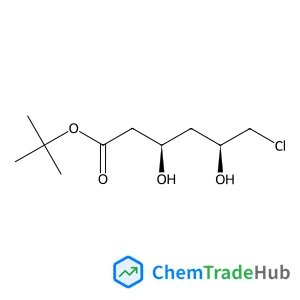
2-Methyl-2-propanyl (3R,5S)-6-chloro-3,5-dihydroxyhexanoate
CAS Number:
154026-93-4
Molecular Formula:
C10H19ClO4
![N-[(9H-Fluoren-9-ylmethoxy)carbonyl]-beta-phenyl-L-phenylalanine structure](https://static.chemtradehub.com/structs/201/201484-50-6-c2fc.webp "N-[(9H-Fluoren-9-ylmethoxy)carbonyl]-beta-phenyl-L-phenylalanine structure")
N-[(9H-Fluoren-9-ylmethoxy)carbonyl]-beta-phenyl-L-phenylalanine
CAS Number:
201484-50-6
Molecular Formula:
C30H25NO4
Recommended Suppliers




Disclaimer
This page provides academic journal information for reference and research purposes only. We are not affiliated with any journal publishers and do not handle publication submissions. For publication-related inquiries, please contact the respective journal publishers directly.
If you notice any inaccuracies in the information displayed, please contact us at support@chemtradehub.com. We will promptly review and address your concerns.