












A dry molten globule-like intermediate during the base-induced unfolding of a multidomain protein
Literature Information
Publication Date
2017-10-27
DOI
10.1039/C7CP06614G
Impact Factor
3.676
Authors
Nirbhik Acharya, Prajna Mishra, Santosh Kumar Jha
View Original
Abstract
The nature of the initial structural events during the base-induced unfolding of the native (N) state of proteins is poorly understood. Combining site-specific fluorescence resonance energy transfer, size exclusion chromatography, dynamic fluorescence quenching, red-edge excitation shift and circular dichroism spectroscopy, we show here that an early intermediate during the base-induced unfolding of a multidomain protein, i.e., the B form, has features of a dry molten globule. We show that the N ⇌ B transition involves protein expansion and loosening of packing of inter-domain helices near domains I and II without the disruption of intra-domain packing or any change in hydration of the inter-domain region which resembles a molten hydrocarbon. Surprisingly, the disruption of inter-domain packing accounts for 40–45% of the total change in free energy of complete unfolding. Our results show that the disruption of van der Waals packing can be decoupled in different regions of a protein and could occur prior to hydrophobic solvation during base-induced unfolding, challenging the existing notion.
Related Literature
Theoretical evidence of low-threshold amplified spontaneous emission in organic emitters: transition density and intramolecular vibrational mode analysis
Lin Ma, Yue Yu, Bo Jiao, Xun Hou
2018-07-04
Paper
DOI: 10.1039/C8CP01448E
Model of protocell compartments – dodecyl hydrogen sulfate vesicles
Bin Liu, Meihua Gao, Haiping Li, Jianqiang Liu, Shiling Yuan, Na Du
2017-12-15
Communication
DOI: 10.1039/C7CP06379B
Threshold for shattering fragmentation in collision-induced dissociation of the doubly protonated tripeptide TIK(H+)2
Veronica Macaluso, Zahra Homayoon, William L. Hase
2018-07-17
Communication
DOI: 10.1039/C8CP02577K
The aromatic character of [10]annulenes and dicupra[10]annulenes from current density calculations
Maria Dimitrova, Dage Sundholm
2017-11-20
Paper
DOI: 10.1039/C7CP07212K
Fluorescence immunosensor for cardiac troponin T based on Förster resonance energy transfer (FRET) between carbon dot and MoS2 nano-couple
Satyabrat Gogoi, Raju Khan
2018-05-23
Paper
DOI: 10.1039/C8CP02433B
Multiscale simulations of ligand adsorption and exchange on gold nanoparticles
Hui-Min Gao, Hong Liu, Hu-Jun Qian, Gui-Sheng Jiao, Zhong-Yuan Lu
2017-12-11
Paper
DOI: 10.1039/C7CP07039J
Flue gas adsorption on periodic mesoporous phenylene-silica: a DFT approach
Mirtha A. O. Lourenço, Paula Ferreira, José R. B. Gomes
2018-05-29
Paper
DOI: 10.1039/C8CP02589D
Photodissociation dynamics of acetone studied by time-resolved ion imaging and photofragment excitation spectroscopy
Benjamin W. Toulson, Dmitry A. Fishman, Craig Murray
2018-01-09
Paper
DOI: 10.1039/C7CP07320H
Evolution of the topological properties of two-dimensional group IVA materials and device design‡
2018-01-05
Paper
DOI: 10.1039/C7CP07420D
Kamlet–Taft solvent parameters, NMR spectroscopic analysis and thermoelectrochemistry of lithium–glyme solvate ionic liquids and their dilute solutions
Jeffrey J. Black, Andrew Dolan, Jason B. Harper
2018-06-04
Paper
DOI: 10.1039/C8CP02527D
You might also like
Compound Q&A
What industries use (1R,3S)-1,3-Cyclopentanediol (CAS: 16326-97-9)?
(1R,3S)-1,3-Cyclopentanediol finds applications in various industries. In the ph...
16326-97-9(1R,3S)-1,3-Cyclopen...
Compound Q&A
What precautions should be taken when handling N'-[4-(Dimethylamino)phenyl]-N,N-dimethyl-1,4-benzenediamine (CAS: 637-31-0)?
When handling N'-[4-(Dimethylamino)phenyl]-N,N-dimethyl-1,4-benzenediamine, it i...
637-31-0N'-[4-(Dimethylamino...
Compound Q&A
Are there alternatives to 5-(2,4-Difluorophenyl)-2-methoxypyrimidine (CAS: 1352318-16-1) in synthesis?
There are several alternatives to 5-(2,4-Difluorophenyl)-2-methoxypyrimidine in ...
1352318-16-15-(2,4-Difluoropheny...
Compound Q&A
What regulatory guidelines apply to 1-(3-Methoxyphenoxy)propan-2-ol (CAS: 382141-68-6)?
1-(3-Methoxyphenoxy)propan-2-ol (CAS: 382141-68-6) must comply with the Globally...
382141-68-61-(3-Methoxyphenoxy)...
Compound Q&A
Is Tetrodotoxin Citrate (CAS: 18660-81-6) safe?
Tetrodotoxin Citrate is extremely dangerous and should be handled with extreme c...
18660-81-6Tetrodotoxin Citrate
Compound Q&A
What are the main uses of 2-Methyl-2-propanyl [(1R,3S)-3-hydroxycyclopentyl]carbamate (CAS: 225641-84-9)?
2-Methyl-2-propanyl [(1R,3S)-3-hydroxycyclopentyl]carbamate (CAS: 225641-84-9) i...
225641-84-92-Methyl-2-propanyl ...
Compound Q&A
How should waste containing 4-(2-Hydroxyhexafluoroisopropyl)Benzoic Acid (CAS: 16261-80-6) be handled?
Waste containing 4-(2-Hydroxyhexafluoroisopropyl)Benzoic Acid (CAS: 16261-80-6) ...
16261-80-64-(2-Hydroxyhexafluo...
Compound Q&A
How is 2-Methyl-2-proanyl {(2S)-1-[(benzyloxy)amino]-3-hydroxy-3-methyl-1-oxo-2-butanyl}carbamate (CAS: 102507-19-7) typically synthesized?
2-Methyl-2-proanyl {(2S)-1-[(benzyloxy)amino]-3-hydroxy-3-methyl-1-oxo-2-butanyl...
102507-19-72-Methyl-2-propanyl ...
Compound Q&A
What is Benzeneethanamine, α-ethyl-, hydrochloride (1:1) (CAS: 20735-15-3)?
Benzeneethanamine, α-ethyl-, hydrochloride (1:1) is an organic compound with the...
20735-15-3Benzeneethanamine, α...
Compound Q&A
Are there alternatives to 3-{(E)-[4-(Dimethylamino)phenyl]diazenyl}benzoic acid (CAS: 20691-84-3) in synthesis?
In the synthesis of compounds similar to 3-{(E)-[4-(Dimethylamino)phenyl]diazeny...
20691-84-33-{(E)-[4-(Dimethyla...
Source Journal
Physical Chemistry Chemical Physics

CiteScore:
5.5
Self-citation Rate:
10.3%
Articles per Year:
3036
Physical Chemistry Chemical Physics (PCCP) is an international journal co-owned by 19 physical chemistry and physics societies from around the world. This journal publishes original, cutting-edge research in physical chemistry, chemical physics and biophysical chemistry. To be suitable for publication in PCCP, articles must include significant innovation and/or insight into physical chemistry; this is the most important criterion that reviewers and Editors will judge against when evaluating submissions. The journal has a broad scope and welcomes contributions spanning experiment, theory, computation and data science. Topical coverage includes spectroscopy, dynamics, kinetics, statistical mechanics, thermodynamics, electrochemistry, catalysis, surface science, quantum mechanics, quantum computing and machine learning. Interdisciplinary research areas such as polymers and soft matter, materials, nanoscience, energy, surfaces/interfaces, and biophysical chemistry are welcomed if they demonstrate significant innovation and/or insight into physical chemistry. Joined experimental/theoretical studies are particularly appreciated when complementary and based on up-to-date approaches.
Recommended Compounds
![N-[(9H-Fluoren-9-ylmethoxy)carbonyl]-beta-phenyl-L-phenylalanine structure](https://static.chemtradehub.com/structs/201/201484-50-6-c2fc.webp "N-[(9H-Fluoren-9-ylmethoxy)carbonyl]-beta-phenyl-L-phenylalanine structure")
N-[(9H-Fluoren-9-ylmethoxy)carbonyl]-beta-phenyl-L-phenylalanine
CAS Number:
201484-50-6
Molecular Formula:
C30H25NO4
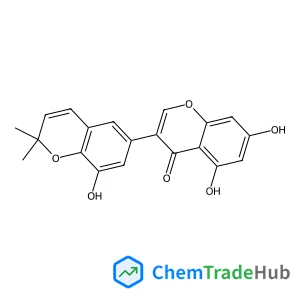
5,7,8'-Trihydroxy-2',2'-dimethyl-2'H,4H-3,6'-bichromen-4-one
CAS Number:
129280-33-7
Molecular Formula:
C20H16O6
![Ethyl 3-((6-(4,5-dihydro-1H-benzo[d]azepin-3(2H)-yl)-2-(pyridin-2-yl)pyrimidin-4-yl)amino)propanoate structure](https://static.chemtradehub.com/structs/137/1373423-53-0-496a.webp "Ethyl 3-((6-(4,5-dihydro-1H-benzo[d]azepin-3(2H)-yl)-2-(pyridin-2-yl)pyrimidin-4-yl)amino)propanoate structure")
Ethyl 3-((6-(4,5-dihydro-1H-benzo[d]azepin-3(2H)-yl)-2-(pyridin-2-yl)pyrimidin-4-yl)amino)propanoate
CAS Number:
1373423-53-0
Molecular Formula:
C24H27N5O2
Recommended Suppliers



Disclaimer
This page provides academic journal information for reference and research purposes only. We are not affiliated with any journal publishers and do not handle publication submissions. For publication-related inquiries, please contact the respective journal publishers directly.
If you notice any inaccuracies in the information displayed, please contact us at support@chemtradehub.com. We will promptly review and address your concerns.