![1-(1-Benzyl-1,2,3,6-tetrahydropyridin-4-yl)-1H-benzo[d]imidazol-2(3H)-one structure](https://static.chemtradehub.com/structs/603/60373-71-9-7dfb.webp "1-(1-Benzyl-1,2,3,6-tetrahydropyridin-4-yl)-1H-benzo[d]imidazol-2(3H)-one structure")
1-(1-Benzyl-1,2,3,6-tetrahydropyridin-4-yl)-1H-benzo[d]imidazol-2(3H)-one
CAS Number:
60373-71-9
Molecular Formula:
C19H19N3O
Ajar Kamal, Renu Sharma, Zhe She
Hg(II) binding to thymine-rich oligonucleotides (ODNs) is investigated electrochemically. The focus of this study is to probe the effects of position on the electrochemical response. For this purpose, three oligonucleotides were investigated in which the position of a hexa-thymine repeat is varied within a surface-supported oligonucleotide. The hexa repeats were placed in the top, middle, and bottom positions within the strand with respect to the gold surface. The effects were monitored by electrochemical impedance spectroscopy and scanning electrochemical microscopy. Using charge transfer resistance (RCT) and tip current (I) as a measure, it was possible to monitor the effects of Hg(II) binding to the ds-oligonucleotide. The extent of film resistance reduces as the T-rich region moves from the bottom to top position within the film. The T-rich region closer to the gold surface probably builds less flexible and more rigid T–Hg(II)–T basepairs compared to the other two positions and is expected to stay in the upright orientation on the surface. This in turn results in significant differences in the electrochemical readout, demonstrating that the position of T-rich sequences within an oligonucleotide strand matters.

Chemical & Pharmaceutical Bulletin

Canadian Metallurgical Quarterly

Chemistry of Natural Compounds

Accounts of Chemical Research

Doklady Chemistry

Chemical Reviews

Australian Journal of Chemistry

Advances in Colloid and Interface Science

Journal of the American Chemical Society

Anti-Corrosion Methods and Materials
Zhongxu Wang, Yu Liu, FengYu Li, Jingxiang Zhao
DOI: 10.1039/D1CP02648H
DOI: 10.1039/D1CP01445E
Simone Ghidinelli, Giuseppe Mazzeo, Stefan E. Boiadjiev, David A. Lightner
DOI: 10.1039/D1CP02571F
Yongjian Zang, Xuhua Li, Yizhen Zhao, He Wang, Dongxiao Hao, Lei Zhang, Zhiwei Yang, Xiaohui Yuan, Shengli Zhang
DOI: 10.1039/D1CP01611C
Tam D. Vo, Amelia L. Schneider
DOI: 10.1039/D1CP01568K
Luis Palomo, Fernando Gordillo Gámez, Ori Gidron, Juan Casado, Francisco J. Ramírez
DOI: 10.1039/D1CP01505B
Darius Abramavicius
DOI: 10.1039/D1CP00694K
Mohammad Zarshenas, Victor Gervilla, Davide G. Sangiovanni, Kostas Sarakinos
DOI: 10.1039/D1CP00522G
Mojgan Kouhnavard, Yifan Diao, Pratim Biswas
DOI: 10.1039/D1CP00658D
N-(4-Methoxybenzyl)-2-pyridinamine (CAS: 52818-63-0) is increasingly being used ...
When handling Ethyl 4-(2-chlorophenyl)-1,3-thiazole-2-carboxylate, appropriate p...
Diethyldiselane (CAS: 628-39-7) is classified under the Globally Harmonized Syst...
The market for oxocopper (CAS: 12053-18-8) is primarily driven by its use in cat...
The market for 5-{[(2-Methyl-2-propanyl)oxy]carbonyl}-5-azaspiro[2.4]heptane-7-c...
2-(1-Pyrrolidinyl)-4-pyridinamine is a chemical compound with the CAS number 359...
2-(3-Pyridinyl)-1-azabicyclo[2.2.2]octane (CAS: 91556-75-1) is a crystalline sol...
(S)-Alpha-allyl-proline hydrochloride is usually synthesized via a Wittig reacti...
3-Methyl-1,2-oxazole-5-carboxylic acid (CAS: 4857-42-5) is an organic compound w...
Lys-SMCC-DM1 is synthesized via a multi-step process involving the coupling of S...

Analyst publishes analytical and bioanalytical research that reports premier fundamental discoveries and inventions, and the applications of those discoveries, unconfined by traditional discipline barriers.
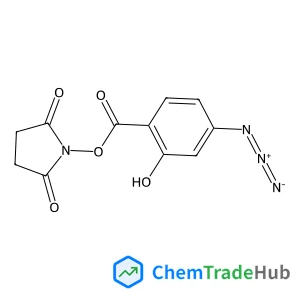
![N-{15-[(2,5-Dioxo-1-pyrrolidinyl)oxy]-15-oxo-3,6,9,12-tetraoxapentadec-1-yl}-2-(2-propyn-1-yloxy)acetamide structure](https://static.chemtradehub.com/structs/210/2101206-92-0-2eb5.webp "N-{15-[(2,5-Dioxo-1-pyrrolidinyl)oxy]-15-oxo-3,6,9,12-tetraoxapentadec-1-yl}-2-(2-propyn-1-yloxy)acetamide structure")