











Evaluation of a cooling/heating-assisted microextraction instrument using a needle trap device packed with aminosilica/graphene oxide nanocomposites, covalently attached to cotton
Literature Information
Publication Date
2018-04-18
DOI
10.1039/C8AN00063H
Impact Factor
4.616
Authors
A. R. Ghiasvand, N. Heidari, S. Abdolhosseini, A. Hamdi, P. R. Haddad
View Original
Abstract
A low-cost and reliable cooling/heating-assisted microextraction (CHaME) instrument was designed and fabricated for use in different modes of microextraction methods. The CHaME setup is able to cool down the sorbent and simultaneously heat the sample in a wide temperature range. Consequently, it can create a large thermal gap between the sorbent and the sample matrix, to promote the release of analytes from the sample tissue and enhance their effective trapping on the microextraction phase. The primary versions of the instrument have previously been evaluated, coupled with different modes of solid- and liquid-phase microextraction strategies. Compared with conventional microextraction systems, it is able to extract volatile organic compounds from complicated solid matrices more effectively, rapidly and without any need for a sample preparation step. In this research, the final and compact version of the CHaME instrument was fabricated and employed in a cooling/heating-assisted needle trap device (CHaME-NTD) for microextraction of polycyclic aromatic hydrocarbons (PAHs) in contaminated soil samples, prior to GC-FID determination. An aminosilica/graphene oxide nanocomposite was synthesized, covalently attached to cotton (Am-Si/GO/Cot), packed inside a needle, and applied as an effective sorbent for trapping of the analytes. The influence of experimental parameters on the extraction efficiency of the TC-NTD-GC-FID strategy was evaluated and optimized. Under the optimal conditions, linear dynamic ranges (LDRs), limits of detection (LODs), and relative standard deviations (RSDs) for the PAHs were 0.001–2.0 μg g−1, 5–38 pg g−1, and 6.2–9.8% (n = 6), respectively. The CHaME-NTD-GC-FID procedure was compared with the traditional NTD-GC-FID method. Additionally, the Am-Si/GO/Cot nanocomposite sorbent was compared with the most frequently used commercial sorbents. The results demonstrated the remarkable performance of the CHaME-NTD procedure and the Am-Si/GO/Cot composite sorbent. The developed setup was also used for the extraction and determination of PAHs in contaminated soil samples, through the CHaME-NTD-GC-FID procedure.
Recommended Journals
Related Literature
Second harmonic generation theory for a helical macromolecule with high sensitivity to structural disorder
Darius Abramavicius
2021-05-25
Paper
DOI: 10.1039/D1CP00694K
Surface hopping dynamics reveal ultrafast triplet generation promoted by S1–T2–T1 spin-vibronic coupling in 2-mercaptobenzothiazole
Chithra M. J., Probal Nag, Sivaranjana Reddy Vennapusa
2021-08-27
Paper
DOI: 10.1039/D1CP02587B
Theoretical study of the mechanism of the solvent dependency of ESIPT in HBT
Keiji Naka
2021-07-19
Paper
DOI: 10.1039/D0CP06604D
On the influence of water molecules on the outer electronic shells of R–SeH, R–Se(−) and R–SeOH fragments in the selenocysteine amino acid residue
Elena Yu. Tupikina, Valerii V. Karpov, Peter M. Tolstoy
2021-05-28
Paper
DOI: 10.1039/D1CP01345A
Mass spectrometric and theoretical study on the formation of uranyl hydride from uranyl carboxylate
Xiuting Chen, Yu Gong
2021-08-16
Paper
DOI: 10.1039/D1CP03092B
Single-molecule binding characterization of primosomal protein PriA involved in replication restart
Tzu-Yu Lee, Yi-Ching Li, Min-Guan Lin, Chwan-Deng Hsiao, Hung-Wen Li
2021-05-25
Paper
DOI: 10.1039/D1CP00638J
Mode-specific dynamics in multichannel reaction NH+ + H2
Weiliang Shi, Kun Wang, Ping Zhang, Le Yu, Anyang Li
2021-08-20
Paper
DOI: 10.1039/D1CP02603H
Self-consistent field modeling of mesomorphic phase changes of monoolein and phospholipids in response to additives
N. de Lange, J. M. Kleijn, F. A. M. Leermakers
2021-06-17
Paper
DOI: 10.1039/D1CP00697E
Origin of the hydrophobicity of sulfur-containing iron surfaces
Hao Li, Weijie Yang, Chongchong Wu, Jiang Xu
2021-05-28
Paper
DOI: 10.1039/D1CP00588J
In silico mutational analyses reveal different ligand-binding abilities of double pockets of medaka fish taste receptor type 1 essential for efficient taste recognition
Hayato Aida, Rikuri Morita
2021-08-20
Paper
DOI: 10.1039/D1CP02876F
You might also like
Compound Q&A
What is the market or research trend for N-(4-Methoxybenzyl)-2-pyridinamine (CAS: 52818-63-0)?
N-(4-Methoxybenzyl)-2-pyridinamine (CAS: 52818-63-0) is increasingly being used ...
52818-63-0N-(4-Methoxybenzyl)-...
Compound Q&A
What precautions should be taken when handling Ethyl 4-(2-chlorophenyl)-1,3-thiazole-2-carboxylate (CAS: 1050507-06-6)?
When handling Ethyl 4-(2-chlorophenyl)-1,3-thiazole-2-carboxylate, appropriate p...
1050507-06-6Ethyl 4-(2-chlorophe...
Compound Q&A
What regulatory guidelines apply to diethyldiselane (CAS: 628-39-7)?
Diethyldiselane (CAS: 628-39-7) is classified under the Globally Harmonized Syst...
628-39-7Diethyldiselane
Compound Q&A
What is the market or research trend for oxocopper (CAS: 12053-18-8)?
The market for oxocopper (CAS: 12053-18-8) is primarily driven by its use in cat...
12053-18-8oxocopper; oxo-(oxoc...
Compound Q&A
What is the market or research trend for 5-{[(2-Methyl-2-propanyl)oxy]carbonyl}-5-azaspiro[2.4]heptane-7-carboxylic acid?
The market for 5-{[(2-Methyl-2-propanyl)oxy]carbonyl}-5-azaspiro[2.4]heptane-7-c...
1268519-54-55-{[(2-Methyl-2-prop...
Compound Q&A
What is 2-(1-Pyrrolidinyl)-4-pyridinamine (CAS: 35981-63-6)?
2-(1-Pyrrolidinyl)-4-pyridinamine is a chemical compound with the CAS number 359...
35981-63-62-(1-Pyrrolidinyl)-4...
Compound Q&A
What are the physical and chemical properties of 2-(3-Pyridinyl)-1-azabicyclo[2.2.2]octane (CAS: 91556-75-1)?
2-(3-Pyridinyl)-1-azabicyclo[2.2.2]octane (CAS: 91556-75-1) is a crystalline sol...
91556-75-12-(3-Pyridinyl)-1-az...
Compound Q&A
How is (S)-Alpha-allyl-proline hydrochloride (CAS: 129704-91-2) typically synthesized?
(S)-Alpha-allyl-proline hydrochloride is usually synthesized via a Wittig reacti...
129704-91-2(S)-Alpha-allyl-prol...
Compound Q&A
What is 3-Methyl-1,2-oxazole-5-carboxylic acid (CAS: 4857-42-5)?
3-Methyl-1,2-oxazole-5-carboxylic acid (CAS: 4857-42-5) is an organic compound w...
4857-42-53-Methyl-1,2-oxazole...
Compound Q&A
How is Lys-SMCC-DM1 (CAS: 1281816-04-3) typically synthesized?
Lys-SMCC-DM1 is synthesized via a multi-step process involving the coupling of S...
1281816-04-3Lys-SMCC-DM1
Source Journal
Analyst

CiteScore:
7.8
Self-citation Rate:
5.6%
Articles per Year:
653
Analyst publishes analytical and bioanalytical research that reports premier fundamental discoveries and inventions, and the applications of those discoveries, unconfined by traditional discipline barriers.
Recommended Compounds
![N-{[(2-Methyl-2-propanyl)oxy]carbonyl}-L-methionylglycine structure](https://static.chemtradehub.com/structs/234/23446-03-9-e1e5.webp "N-{[(2-Methyl-2-propanyl)oxy]carbonyl}-L-methionylglycine structure")
N-{[(2-Methyl-2-propanyl)oxy]carbonyl}-L-methionylglycine
CAS Number:
23446-03-9
Molecular Formula:
C12H22N2O5S
![1-[6-(1H-Imidazol-1-yl)-3-pyridinyl]methanamine structure](https://static.chemtradehub.com/structs/914/914637-08-4-8825.webp "1-[6-(1H-Imidazol-1-yl)-3-pyridinyl]methanamine structure")
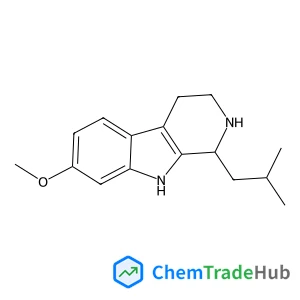
1-Isobutyl-7-methoxy-2,3,4,9-tetrahydro-1H-beta-carboline
CAS Number:
175975-76-5
Molecular Formula:
C16H22N2O
![1,10-bis(3,5-dimethylphenyl)-12-hydroxy-4,5,6,7-tetrahydroiindeno[7,1-de:1',7'-fg][1,3,2]dioxaphosphocine 12-oxide structure](https://static.chemtradehub.com/structs/141/1412439-82-7-b9a9.webp "1,10-bis(3,5-dimethylphenyl)-12-hydroxy-4,5,6,7-tetrahydroiindeno[7,1-de:1',7'-fg][1,3,2]dioxaphosphocine 12-oxide structure")
1,10-bis(3,5-dimethylphenyl)-12-hydroxy-4,5,6,7-tetrahydroiindeno[7,1-de:1',7'-fg][1,3,2]dioxaphosphocine 12-oxide
CAS Number:
1412439-82-7
Molecular Formula:
C33H31O4P
Recommended Suppliers






Disclaimer
This page provides academic journal information for reference and research purposes only. We are not affiliated with any journal publishers and do not handle publication submissions. For publication-related inquiries, please contact the respective journal publishers directly.
If you notice any inaccuracies in the information displayed, please contact us at support@chemtradehub.com. We will promptly review and address your concerns.