












Nickel-catalyzed highly chemo- and stereoselective borylative cyclization of 1,6-enynes with bis(pinacolato)diboron
Literature Information
Publication Date
2017-05-17
DOI
10.1039/C7QO00321H
Impact Factor
5.281
Authors
Jen-Chieh Hsieh, Ya-Chun Hong, Chun-Ming Yang, Subramaniyan Mannathan, Chien-Hong Cheng
View Original
Abstract
A highly chemo- and stereoselective nickel-catalyzed borylative cyclization of 1,6-enynes with bis(pinacolato)diboron is described. Enynes containing an electron-deficient alkene such as a vinyl ketone provided alkenylboronates while enynes containing a terminal alkene gave homoallylic boronates. A plausible mechanism involving a nickelacyclopentene intermediate is proposed. In addition, the resulted alkenyl- or homoallylic boronates can be transformed to the corresponding ketones and alcohols via oxidation. Application to a palladium-catalyzed cross coupling reaction of alkenylboronates with aromatic halides has been demonstrated as well.
Related Literature
Innovative well-defined primary amine-based polyacrylates for plasmid DNA complexation
Hien The Ho, Sagrario Pascual, Véronique Montembault, Nathalie Casse, Laurent Fontaine
2014-06-16
Communication
DOI: 10.1039/C4PY00585F
Janus nanoparticles inside polymeric materials: interfacial arrangement toward functional hybrid materials
Qiuyan Yang, Katja Loos
2016-11-17
Review Article
DOI: 10.1039/C6PY01795A
CO2-Responsive graft copolymers: synthesis and characterization
Shaojian Lin, Anindita Das, Patrick Theato
2017-01-03
Paper
DOI: 10.1039/C6PY01996J
Naphthobisthiazole diimide-based n-type polymer semiconductors: synthesis, π-stacking, field-effect charge transport, and all-polymer solar cells
Selvam Subramaniyan, Taeshik Earmme, Nishit M. Murari, Samson A. Jenekhe
2014-07-02
Paper
DOI: 10.1039/C4PY00566J
Dual-stimuli responsive liposomes using pH- and temperature-sensitive polymers for controlled transdermal delivery
Takumi Sugimoto, Mitsuhiro Fukushima, Ryoma Teranishi, Aki Kotaka, Chiharu Shinde, Takayuki Kumei, Yasushi Sumida, Yuki Munekata, Kei-ichi Maruyama, Eiji Yuba, Atsushi Harada, Kenji Kono
2017-02-03
Paper
DOI: 10.1039/C6PY01754A
Visible-light-induced living radical polymerization using in situ bromine-iodine transformation as an internal boost
Xiaodong Liu, Qinghua Xu, Lifen Zhang, Zhenping Cheng, Xiulin Zhu
2017-03-24
Paper
DOI: 10.1039/C7PY00366H
Preparation of sulfonic acid functional proton conducting phosphazenes by covalent protection
Ferda Hacıvelioğlu
2017-04-17
Paper
DOI: 10.1039/C7PY00189D
RAFT/MADIX emulsion copolymerization of vinyl acetate and N-vinylcaprolactam: towards waterborne physically crosslinked thermoresponsive particles
Laura Etchenausia, Abdel Khoukh, Elise Deniau Lejeune, Maud Save
2017-03-16
Paper
DOI: 10.1039/C7PY00221A
Rational design on D–A conjugated P(BDT–DTBT) polymers for polymer solar cells
Chen Gao, Liwei Wang, Xiaoyu Li
2014-04-22
Review Article
DOI: 10.1039/C4PY00389F
You might also like
Compound Q&A
Are there alternatives to 1-(4-Chlorophenyl)-N-hydroxymethanimine (CAS: 3848-36-0) in synthesis?
When considering alternatives to 1-(4-Chlorophenyl)-N-hydroxymethanimine (CAS: 3...
3848-36-01-(4-Chlorophenyl)-N...
Compound Q&A
How should (1R,9S,10S,12S,14E,16S,19R,20R,21S,22R)-3,9,21-Trihydroxy-5,10,12,14,16,20,22-heptamethyl-23,24-dioxatetracyclo[17.3.1.1~6,9~.0~2,7~]tetracosa-2,5,7,14-tetraen-4-one (CAS: 183202-73-5) be stored?
This compound should be stored in a cool, dry place away from direct sunlight. I...
183202-73-5(1R,9S,10S,12S,14E,1...
Compound Q&A
How is 3-(4-Bromophenyl)-5-(2-fluorophenyl)-1,2,4-oxadiazole (CAS: 419553-16-5) typically synthesized?
3-(4-Bromophenyl)-5-(2-fluorophenyl)-1,2,4-oxadiazole is synthesized through a m...
419553-16-53-(4-Bromophenyl)-5-...
Compound Q&A
How is 5-Chloro-2-(4-chlorophenyl)-4-methyl-6-[3-(1-piperidinyl)propoxy]pyrimidine (CAS: 1639220-19-1) typically synthesized?
5-Chloro-2-(4-chlorophenyl)-4-methyl-6-[3-(1-piperidinyl)propoxy]pyrimidine (CAS...
1639220-19-15-Chloro-2-(4-chloro...
Compound Q&A
What industries use 2-Chloro-4-(difluoromethoxy)pyridine (CAS: 1206978-15-5)?
2-Chloro-4-(difluoromethoxy)pyridine is used in the pharmaceutical industry for ...
1206978-15-52-Chloro-4-(difluoro...
Compound Q&A
What regulatory guidelines apply to 3-Chloro-6-methylpyridazine (CAS: 1121-79-5)?
3-Chloro-6-methylpyridazine (CAS: 1121-79-5) is classified under the Globally Ha...
1121-79-53-Chloro-6-methylpyr...
Compound Q&A
Are there alternatives to Methyl 4,5-dimethyl-2-nitrobenzoate in synthesis?
Several alternatives can be used in the synthesis of Methyl 4,5-dimethyl-2-nitro...
90922-74-0Methyl 4,5-dimethyl-...
Compound Q&A
Are there alternatives to (2E,2'E)-3,3'-(1,4-Phenylene)bisacrylaldehyde in synthesis?
Alternatives to (2E,2'E)-3,3'-(1,4-Phenylene)bisacrylaldehyde include other acry...
63405-68-5(2E,2'E)-3,3'-(1,4-P...
Compound Q&A
What is 3-Amino-5-chloropyridin-2-ol hydrochloride (CAS: 1261906-29-9)?
3-Amino-5-chloropyridin-2-ol hydrochloride is an organic compound with the CAS n...
1261906-29-93-Amino-5-chloropyri...
Compound Q&A
What precautions should be taken when handling 6,7-Difluoro-2,3-dihydro-4H-chromen-4-one (CAS: 1092349-93-3)?
When handling 6,7-Difluoro-2,3-dihydro-4H-chromen-4-one, it is essential to wear...
1092349-93-36,7-Difluoro-2,3-dih...
Source Journal
Organic Chemistry Frontiers

CiteScore:
7.8
Self-citation Rate:
8.7%
Articles per Year:
724
Organic Chemistry Frontiers publishes high-quality research from across organic chemistry. Emphases are placed on studies that make significant contributions to the field of organic chemistry by reporting either new or significantly improved protocols or methodologies. Topics include, but are not limited to the following: Organic synthesis Development of synthetic methodologies Catalysis Natural products Functional organic materials Supramolecular and macromolecular chemistry Physical and computational organic chemistry
Recommended Compounds

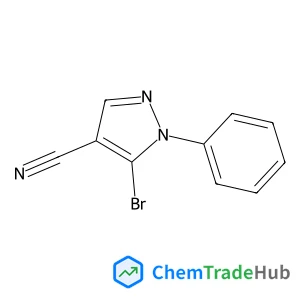
![6-Bromo-2,3-dihydro-1H-pyrido[2,3-b][1,4]oxazine structure](https://static.chemtradehub.com/structs/120/1203499-17-5-b4d1.webp "6-Bromo-2,3-dihydro-1H-pyrido[2,3-b][1,4]oxazine structure")
6-Bromo-2,3-dihydro-1H-pyrido[2,3-b][1,4]oxazine
CAS Number:
1203499-17-5
Molecular Formula:
C7H7BrN2O

Recommended Suppliers





Disclaimer
This page provides academic journal information for reference and research purposes only. We are not affiliated with any journal publishers and do not handle publication submissions. For publication-related inquiries, please contact the respective journal publishers directly.
If you notice any inaccuracies in the information displayed, please contact us at support@chemtradehub.com. We will promptly review and address your concerns.