


Visible-light-induced living radical polymerization using in situ bromine-iodine transformation as an internal boost
Literature Information
Publication Date
2017-03-24
DOI
10.1039/C7PY00366H
Impact Factor
5.582
Authors
Xiaodong Liu, Qinghua Xu, Lifen Zhang, Zhenping Cheng, Xiulin Zhu
View Original
Abstract
A facile and effective visible-light-induced living radical polymerization (LRP) system was successfully developed at room temperature using typical alkyl bromides (such as ethyl α-bromophenylacetate (EBPA) and 2-bromopropanenitrile (BPN)) as the initiator in the presence of sodium iodide (NaI) for the first time. Water-soluble poly(ethylene glycol) methyl ether methacrylate (PEGMA) was used as the model monomer. By investigating the influencing factors including initiator and solvent type, solvent volume, light source, activator (sodium iodide) and catalyst (triethylamine) concentration, and degree of polymerization (DP), optimized polymerization conditions could be established. Excellent control over molecular weights and distributions (Mw/Mn = 1.05–1.33) of the polymers was achieved under light-emitting diode (LED) irradiation. In addition, the moderate polymerization rate could be drastically promoted in the presence of triethylamine (TEA) as the catalyst. This polymerization system exhibited instantaneous control in response to the on–off switch of the irradiation stimulus. Various types of other monomers (such as methyl methacrylate (MMA) and glycidyl methacrylate (GMA)) and illumination sources (especially sunlight) also proved to be compatible with this LRP system. The possible polymerization mechanism was investigated, and the bromine-iodine transformation activated LRP in this study will enable the facile preparation of well-defined materials with satisfactory controllability and versatile architectures.
Recommended Journals

Organic Process Research & Development

Chemical Communications

New Journal of Chemistry

Russian Journal of Coordination Chemistry

Crystallography Reports

Current Opinion in Solid State & Materials Science

Russian Journal of Bioorganic Chemistry

Nature Medicine

Russian Journal of General Chemistry

Current Opinion in Colloid & Interface Science
Related Literature
Large volume liquid state scalar Overhauser dynamic nuclear polarization at high magnetic field
Thierry Dubroca, Sungsool Wi, Johan van Tol
2019-06-25
Communication
DOI: 10.1039/C9CP02997D
Water does not catalyze the reaction of OH radicals with ethanol
Isabelle Weber, Hichem Bouzidi, Bianca Krumm, Coralie Schoemaecker, Alexandre Tomas, Christa Fittschen
2020-03-05
Communication
DOI: 10.1039/D0CP00467G
Understanding the properties of dithienylethenes functionalized for supramolecular self-assembly: a molecular modeling study
Laura Le Bras, Roxanne Berthin, Ismaïl Hamdi, Maroua Louati, Stéphane Aloïse, Michinori Takeshita
2020-03-09
Paper
DOI: 10.1039/C9CP06590C
Correction: Thermodynamics, kinetics and electronic properties of point defects in β-FeSi2
Chen Ming, Pengfei Qiu, Yi-Yang Sun, Lidong Chen
2019-09-25
Correction
DOI: 10.1039/C9CP90237F
Cu/SAPO-34 prepared by a facile ball milling method for enhanced catalytic performance in the selective catalytic reduction of NOx with NH3
Huazhen Chang, Xuan Qin, Lei Ma, Tao Zhang, Junhua Li
2019-09-24
Paper
DOI: 10.1039/C9CP04519H
Holistic approach to chemical degradation of Nafion membranes in fuel cells: modelling and predictions
Philipp Frühwirt, Jens T. Törring, Tomaž Katrašnik, Georg Gescheidt
2020-02-26
Paper
DOI: 10.1039/C9CP04986J
Effects of temperature on the thermal conductivity of amorphous CaO–SiO2–Al2O3 slags: a computational insight
Shuheng Huang
2020-03-26
Paper
DOI: 10.1039/D0CP00382D
Computational analysis of the orientation persistence length of the polymer chain orientation
Falk Niefind, Andreas Neff, Stefan C. B. Mannsfeld, Axel Kahnt, Bernd Abel
2019-09-09
Paper
DOI: 10.1039/C9CP02944C
The physical stage of radiolysis of solvated DNA by high-energy-transfer particles: insights from new first principles simulations
Aurelio Alvarez-Ibarra, Aurélien de la Lande
2020-03-12
Paper
DOI: 10.1039/D0CP00165A
You might also like
Compound Q&A
What are the main uses of 4-Nitrophenyl phosphate disodium salt hexahydrate (CAS: 333338-18-4)?
4-Nitrophenyl phosphate disodium salt hexahydrate is primarily used as a substra...
333338-18-44-Nitrophenyl phosph...
Compound Q&A
What are the main uses of 2-(Trifluoromethyl)-1,3-oxazole-4-carboxylic Acid (CAS: 1060816-01-4)?
2-(Trifluoromethyl)-1,3-oxazole-4-carboxylic Acid (CAS: 1060816-01-4) is widely ...
1060816-01-42-(Trifluoromethyl)-...
Compound Q&A
How should 2-Fluoro-4-biphenylcarboxylic acid (CAS: 137045-30-8) be stored?
2-Fluoro-4-biphenylcarboxylic acid should be stored in a cool, dry place at room...
137045-30-82-Fluoro-4-biphenylc...
Compound Q&A
What industries use Prednisolone-21-Carboxylic Acid (CAS: 61549-70-0)?
Prednisolone-21-Carboxylic Acid is primarily used in the pharmaceutical industry...
61549-70-0Prednisolone-21-Carb...
Compound Q&A
How should 4-(Hydrazinomethyl)-1,2,3-benzenetriol (CAS: 3614-72-0) be stored?
4-(Hydrazinomethyl)-1,2,3-benzenetriol (CAS: 3614-72-0) should be stored in a co...
3614-72-04-(Hydrazinomethyl)-...
Compound Q&A
What industries use 4-Amino-1-methyl-1H-pyrazole-5-carboxylic acid hydrochloride (CAS: 92534-70-8)?
4-Amino-1-methyl-1H-pyrazole-5-carboxylic acid hydrochloride (CAS: 92534-70-8) i...
92534-70-84-Amino-1-methyl-1H-...
Compound Q&A
What regulatory guidelines apply to dehydropachymic acid (CAS: 77012-31-8)?
Dehydropachymic acid (CAS: 77012-31-8) is regulated by various agencies. It fall...
77012-31-8Dehydropachymic acid
Compound Q&A
What is the market or research trend for 6-[(2,2-Dimethylpropanoyl)amino]nicotinic acid (CAS: 898561-66-5)?
The market and research trends for 6-[(2,2-Dimethylpropanoyl)amino]nicotinic aci...
898561-66-56-[(2,2-Dimethylprop...
Compound Q&A
How should 1,10-Phenanthroline-2,9-dicarbaldehyde (CAS: 57709-62-3) be stored?
1,10-Phenanthroline-2,9-dicarbaldehyde should be stored in a cool, dry place awa...
57709-62-31,10-Phenanthroline-...
Compound Q&A
How is 5-Carbamoyl-11-oxo-10,11-dihydro-5H-dibenzo[b,f]azepin-10-yl acetate (CAS: 113952-21-9) typically synthesized?
5-Carbamoyl-11-oxo-10,11-dihydro-5H-dibenzo[b,f]azepin-10-yl acetate can be synt...
113952-21-95-Carbamoyl-11-oxo-1...
Source Journal
Polymer Chemistry

CiteScore:
8.6
Self-citation Rate:
7.3%
Articles per Year:
457
Polymer Chemistry welcomes submissions in all areas of polymer science that have a strong focus on macromolecular chemistry. Manuscripts may cover a broad range of fields, yet no direct application focus is required.
Recommended Compounds
![(3R,5R)-1-[(Benzyloxy)carbonyl]-5-methyl-3-piperidinecarboxylic acid structure](https://static.chemtradehub.com/structs/126/1269757-29-0-c552.webp "(3R,5R)-1-[(Benzyloxy)carbonyl]-5-methyl-3-piperidinecarboxylic acid structure")
(3R,5R)-1-[(Benzyloxy)carbonyl]-5-methyl-3-piperidinecarboxylic acid
CAS Number:
1269757-29-0
Molecular Formula:
C15H19NO4
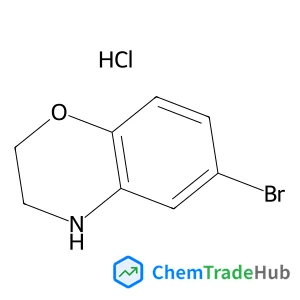
6-Bromo-3,4-dihydro-2H-1,4-benzoxazine hydrochloride (1:1)
CAS Number:
1260803-10-8
Molecular Formula:
C8H9BrClNO

cis-3-Amino-1-(trifluoromethyl)cyclobutanol hydrochloride (1:1)
CAS Number:
1408075-16-0
Molecular Formula:
C5H9ClF3NO
Recommended Suppliers




Disclaimer
This page provides academic journal information for reference and research purposes only. We are not affiliated with any journal publishers and do not handle publication submissions. For publication-related inquiries, please contact the respective journal publishers directly.
If you notice any inaccuracies in the information displayed, please contact us at support@chemtradehub.com. We will promptly review and address your concerns.