












![[3-(2,6-Dichlorophenyl)-5-isopropyl-1,2-oxazol-4-yl]methanol structure](https://static.chemtradehub.com/structs/278/278597-30-1-5c79.webp "[3-(2,6-Dichlorophenyl)-5-isopropyl-1,2-oxazol-4-yl]methanol structure")
[3-(2,6-Dichlorophenyl)-5-isopropyl-1,2-oxazol-4-yl]methanol
CAS Number:
278597-30-1
Molecular Formula:
C13H13Cl2NO2
M. Jalilur Rahman, Hideyuki Shimizu, Masashi Hasegawa, Masahiko Iyoda
Triangular macrocyclic pentadecaphenylenes have been synthesized in moderate yields by the electron-transfer oxidation of the corresponding Lipshutz cuprates with duroquinone. Pentadecaphenylenes are very stable to light, atmospheric oxygen and prolonged heating. Despite the rigid twisted frame, pentadecaphenylenes self-assemble into various nanostructured polymorphs in the solid state. Hexaoctylpentadecaphenylene 1a acts as a gelator in benzene or toluene to form a gel, although 1a neither has a planar structure nor undergoes heteroatom substitution to assist intermolecular interaction. Furthermore, 1a incorporated fullerene C60 into its cavity to afford a fibrous 2 : 1 sandwich complex (1a–C60–1a) which showed higher gelation ability than 1a itself. Interestingly, Janus-faced 1a acts as a host of two C60 molecules, and an additional C60 was intercalated into the 1a·C60 (2 : 1) complex to form a 1 : 1 complex with an infinite chain structure like –1a–C60–1a–C60–, which enhances the gelation power of the 1a·C60 sandwich complex.
Ariel A. C. Toledo Hijo, Guilherme J. Maximo, Rosiane L. Cunha, Felipe H. S. Fonseca, Lisandro P. Cardoso, Jorge F. B. Pereira, Mariana C. Costa, Eduardo A. C. Batista, Antonio J. A. Meirelles
DOI: 10.1039/C7CP06841G
Alexey Koltsov, Jean-Michel Mataigne
DOI: 10.1039/C7CP08636A
Sijia S. Dong, Laura Gagliardi, Donald G. Truhlar
DOI: 10.1039/C7CP07275A
A. Moissette
DOI: 10.1039/C7CP07968K
Min Cheng, Yikui Du, Qihe Zhu
DOI: 10.1039/C7CP07854D
Meng Che, Yuan-Jun Gao, Yan Zhang, Shu-Hua Xia, Ganglong Cui
DOI: 10.1039/C7CP07692D
Zachary J. Buras, Te-Chun Chu, Adeel Jamal, Nathan W. Yee, Joshua E. Middaugh, William H. Green
DOI: 10.1039/C8CP01159A
Christoph Nançoz, Giuseppe Licari, Joseph S. Beckwith, Magnus Soederberg, Bogdan Dereka, Arnulf Rosspeintner, Oleksandr Yushchenko, Romain Letrun, Sabine Richert, Bernhard Lang, Eric Vauthey
DOI: 10.1039/C7CP08390D
A. Ryzhikov, H. Nouali, T. J. Daou, J. Patarin
DOI: 10.1039/C7CP06520E
László Valkai, Attila K. Horváth
DOI: 10.1039/C8CP01156G
When handling 4-Methyl-6-(trifluoromethyl)quinoline (CAS: 40716-16-3), safety go...
4-(3,5-Difluorophenyl)aniline is an aromatic organic compound with the CAS numbe...
5-{[4-(Trifluoromethyl)phenyl]sulfanyl}-1,2,3-thiadiazole-4-carboxylic acid can ...
The market for 4-Benzylaniline hydrochloride (CAS: 6317-57-3) is steadily growin...
[3-(Diethylsulfamoyl)phenyl]boronic acid is generally considered safe when handl...
3-Bromo-2,5-dimethoxyaniline is mainly used in the pharmaceutical and chemical i...
N-Methyl-1-(5-methyl-1H-indol-3-yl)methanamine (CAS: 915922-67-7) is subject to ...
This compound is primarily used in the pharmaceutical industry for the synthesis...
2-Methyl-2-propanyl [(1S,3R)-3-aminocyclohexyl]carbamate (CAS: 1298101-47-9) sho...
Ethyl 2-bromo-4,4,4-trifluorobutanoate (CAS: 367-33-9) is utilized in the pharma...

Organic Chemistry Frontiers publishes high-quality research from across organic chemistry. Emphases are placed on studies that make significant contributions to the field of organic chemistry by reporting either new or significantly improved protocols or methodologies. Topics include, but are not limited to the following: Organic synthesis Development of synthetic methodologies Catalysis Natural products Functional organic materials Supramolecular and macromolecular chemistry Physical and computational organic chemistry
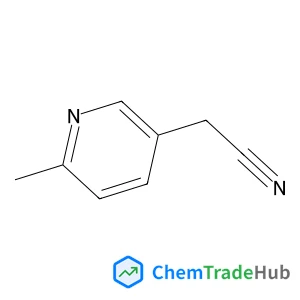
![2,4-Dichloro-6-isopropyl-5H-pyrrolo[3,4-d]pyrimidin-7(6H)-one structure](https://static.chemtradehub.com/structs/107/1079649-94-7-ad4a.webp "2,4-Dichloro-6-isopropyl-5H-pyrrolo[3,4-d]pyrimidin-7(6H)-one structure")
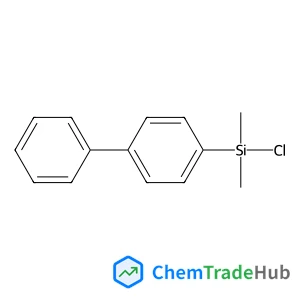
![6,7-Dihydro-5H-pyrrolo[1,2-a]imidazole-6-carboxylic acid structure](https://static.chemtradehub.com/structs/136/1369160-12-2-6524.webp "6,7-Dihydro-5H-pyrrolo[1,2-a]imidazole-6-carboxylic acid structure")



