












Imperfect mixing as a dominant factor leading to stochastic behavior: a new system exhibiting crazy clock behavior
Literature Information
Publication Date
2018-05-11
DOI
10.1039/C8CP01156G
Impact Factor
3.676
Authors
László Valkai, Attila K. Horváth
View Original
Abstract
It is clearly demonstrated that the arsenous acid–periodate reaction displays crazy-clock behavior when a statistically meaningful number of kinetic runs are performed under “exactly the same” conditions. Both extensive experimental and numerical simulation results gave convincing evidence that the stochastic feature of the title reaction originates from the imperfection of the mixing process, and neither local random fluctuation nor initial inhomogeneity alone is capable of explaining adequately the observed phenomena. Imperfect mixing is manifested—in practice—in the unintentional and inherent formation of dead volumes where the concentration of the reactants may even significantly differ from the ones measured in the case of a completely uniform concentration distribution, and the system may spend enough time there under imperfectly mixed conditions to complete the nonlinear chemical process. Furthermore, it is also shown that a more efficient mixing, i.e. a smaller dead volume size and shorter residence time being spent in the dead volume, does not necessarily mean Landolt times are smaller than the one measured under completely homogeneous conditions. Evidently, the “initial” concentration of the reagents in the dead volume—and of course in the rest of the solution—greatly influences the Landolt time to be measured in the case of an individual kinetic run and may therefore show either positive or negative deviation from the Landolt time for the completely homogeneous state. As a result, less efficient mixing may either accelerate or decelerate the rate of a nonlinear autocatalytic reaction at a macroscopic volume level.
Related Literature
Molecular gate effects observed in fluoroalkylsilane self-assembled monolayers grafted on LiNi0.5Mn1.5O4 cathodes: an application to efficient ion-exchange reactions
Youn Charles-Blin, Hitomi Todoki
2021-06-22
Paper
DOI: 10.1039/D1MA00426C
The flavoprotein-catalyzed reduction of aliphatic nitro-compounds represents a biocatalytic equivalent to the Nef-reaction
Katharina Durchschein, Bianca Ferreira-da Silva, Silvia Wallner, Peter Macheroux, Wolfgang Kroutil, Silvia Maria Glueck, Kurt Faber
2010-02-08
Paper
DOI: 10.1039/B922691E
Hydrothermal synthesis of sodium potassium niobate solid solutions at 200 °C
Gregory K. L. Goh
2010-02-20
Paper
DOI: 10.1039/B923840A
Engineering poly(lactic-co-glycolic acid)/calcium carbonate microspheres with controllable topography and their cell response
2013-05-30
Paper
DOI: 10.1039/C3TB20284D
Transfer hydrogenation of levulinic acid under hydrothermal conditions catalyzed by sulfate as a temperature-switchable base
Daniel Kopetzki, Markus Antonietti
2010-02-16
Paper
DOI: 10.1039/B924648G
The effect of storage cycle on improvement in the photovoltaic parameters of planar triple cation perovskite solar cells
Vera La Ferrara, Antonella De Maria, Gabriella Rametta, Paola Delli Veneri
2021-06-23
Paper
DOI: 10.1039/D1MA00345C
Non-matrix matched calibration of major and minor concentrations of Zn and Cu in brass, aluminium and silicate glass using NIR femtosecond laser ablation inductively coupled plasma mass spectrometry
Qunzhou Bian, Carmen C. Garcia, Joachim Koch, Kay Niemax
2005-12-20
Paper
DOI: 10.1039/B513690C
Tailored porous carbons enabled by persistent micelles with glassy cores
Eric R. Williams, Paige L. McMahon, Joseph E. Reynolds, III, Jonathan L. Snider, Vitalie Stavila, Mark D. Allendorf, Morgan Stefik
2021-06-01
Paper
DOI: 10.1039/D1MA00146A
Anaerobic biodegradability of ionic liquid cations under denitrifying conditions
Jennifer Neumann, Olav Grundmann, Jorg Thöming, Michael Schulte, Stefan Stolte
2010-02-08
Paper
DOI: 10.1039/B918453H
You might also like
Compound Q&A
What precautions should be taken when handling 4-Methyl-6-(trifluoromethyl)quinoline (CAS: 40716-16-3)?
When handling 4-Methyl-6-(trifluoromethyl)quinoline (CAS: 40716-16-3), safety go...
40716-16-34-Methyl-6-(trifluor...
Compound Q&A
What is 4-(3,5-Difluorophenyl)aniline (CAS: 405058-00-6)?
4-(3,5-Difluorophenyl)aniline is an aromatic organic compound with the CAS numbe...
405058-00-64-(3,5-Difluoropheny...
Compound Q&A
How is 5-{[4-(Trifluoromethyl)phenyl]sulfanyl}-1,2,3-thiadiazole-4-carboxylic acid (CAS: 338982-07-3) typically synthesized?
5-{[4-(Trifluoromethyl)phenyl]sulfanyl}-1,2,3-thiadiazole-4-carboxylic acid can ...
338982-07-35-{[4-(Trifluorometh...
Compound Q&A
What is the market or research trend for 4-Benzylaniline hydrochloride (CAS: 6317-57-3)?
The market for 4-Benzylaniline hydrochloride (CAS: 6317-57-3) is steadily growin...
6317-57-34-Benzylaniline hydr...
Compound Q&A
Is [3-(Diethylsulfamoyl)phenyl]boronic acid (CAS: 871329-58-7) safe?
[3-(Diethylsulfamoyl)phenyl]boronic acid is generally considered safe when handl...
871329-58-7[3-(Diethylsulfamoyl...
Compound Q&A
What are the main uses of 3-Bromo-2,5-dimethoxyaniline (CAS: 115929-62-9)?
3-Bromo-2,5-dimethoxyaniline is mainly used in the pharmaceutical and chemical i...
115929-62-93-Bromo-2,5-dimethox...
Compound Q&A
What regulatory guidelines apply to N-Methyl-1-(5-methyl-1H-indol-3-yl)methanamine (CAS: 915922-67-7)?
N-Methyl-1-(5-methyl-1H-indol-3-yl)methanamine (CAS: 915922-67-7) is subject to ...
915922-67-7N-Methyl-1-(5-methyl...
Compound Q&A
What industries use Carbamic acid, N-[(5S)-5,6-diamino-6-oxohexyl]-, 1,1-dimethylethyl ester (CAS: 24828-96-4)?
This compound is primarily used in the pharmaceutical industry for the synthesis...
24828-96-4Carbamic acid, N-[(5...
Compound Q&A
How should 2-Methyl-2-propanyl [(1S,3R)-3-aminocyclohexyl]carbamate (CAS: 1298101-47-9) be stored?
2-Methyl-2-propanyl [(1S,3R)-3-aminocyclohexyl]carbamate (CAS: 1298101-47-9) sho...
1298101-47-92-Methyl-2-propanyl ...
Compound Q&A
What industries use Ethyl 2-bromo-4,4,4-trifluorobutanoate (CAS: 367-33-9)?
Ethyl 2-bromo-4,4,4-trifluorobutanoate (CAS: 367-33-9) is utilized in the pharma...
367-33-9Ethyl 2-bromo-4,4,4-...
Source Journal
Physical Chemistry Chemical Physics

CiteScore:
5.5
Self-citation Rate:
10.3%
Articles per Year:
3036
Physical Chemistry Chemical Physics (PCCP) is an international journal co-owned by 19 physical chemistry and physics societies from around the world. This journal publishes original, cutting-edge research in physical chemistry, chemical physics and biophysical chemistry. To be suitable for publication in PCCP, articles must include significant innovation and/or insight into physical chemistry; this is the most important criterion that reviewers and Editors will judge against when evaluating submissions. The journal has a broad scope and welcomes contributions spanning experiment, theory, computation and data science. Topical coverage includes spectroscopy, dynamics, kinetics, statistical mechanics, thermodynamics, electrochemistry, catalysis, surface science, quantum mechanics, quantum computing and machine learning. Interdisciplinary research areas such as polymers and soft matter, materials, nanoscience, energy, surfaces/interfaces, and biophysical chemistry are welcomed if they demonstrate significant innovation and/or insight into physical chemistry. Joined experimental/theoretical studies are particularly appreciated when complementary and based on up-to-date approaches.
Recommended Compounds
![2,4-Dichloro-6-isopropyl-5H-pyrrolo[3,4-d]pyrimidin-7(6H)-one structure](https://static.chemtradehub.com/structs/107/1079649-94-7-ad4a.webp "2,4-Dichloro-6-isopropyl-5H-pyrrolo[3,4-d]pyrimidin-7(6H)-one structure")
2,4-Dichloro-6-isopropyl-5H-pyrrolo[3,4-d]pyrimidin-7(6H)-one
CAS Number:
1079649-94-7
Molecular Formula:
C9H9Cl2N3O
![[3-(2,6-Dichlorophenyl)-5-isopropyl-1,2-oxazol-4-yl]methanol structure](https://static.chemtradehub.com/structs/278/278597-30-1-5c79.webp "[3-(2,6-Dichlorophenyl)-5-isopropyl-1,2-oxazol-4-yl]methanol structure")
[3-(2,6-Dichlorophenyl)-5-isopropyl-1,2-oxazol-4-yl]methanol
CAS Number:
278597-30-1
Molecular Formula:
C13H13Cl2NO2

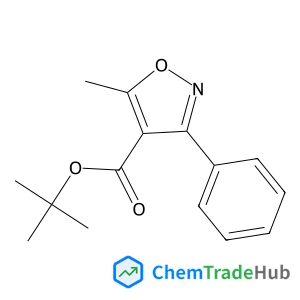
2-Methyl-2-propanyl 5-methyl-3-phenyl-1,2-oxazole-4-carboxylate
CAS Number:
211429-79-7
Molecular Formula:
C15H17NO3
Recommended Suppliers





Disclaimer
This page provides academic journal information for reference and research purposes only. We are not affiliated with any journal publishers and do not handle publication submissions. For publication-related inquiries, please contact the respective journal publishers directly.
If you notice any inaccuracies in the information displayed, please contact us at support@chemtradehub.com. We will promptly review and address your concerns.