












![Imidazo[1,2-c]pyrimidine structure](https://static.chemtradehub.com/structs/274/274-78-2-8b4c.webp "Imidazo[1,2-c]pyrimidine structure")
Effect of Lewis acid bulkiness on the stereoselectivity of Diels–Alder reactions between acyclic dienes and α,β-enals
Literature Information
Publication Date
2017-04-17
DOI
10.1039/C7QO00154A
Impact Factor
5.281
Authors
Israel Fernández
View Original
Abstract
The factors controlling the reactivity and endo/exo selectivity of Lewis acid-catalysed Diels–Alder reactions between highly substituted open-chain 1,3-dienes and α,β-enals have been explored computationally by means of density functional theory calculations. In agreement with previous experimental observations, it is found that the B(C6F5)3-catalysed cycloaddition reaction leads almost exclusively to the corresponding exo-cycloadduct, whereas the analogous AlCl3-mediated process is highly endo-selective. The effect of Lewis acid bulkiness on stereoselectivity has been quantitatively analysed by means of a combination of the activation strain model of reactivity and the energy decomposition analysis methods. In contrast to the current view, the exo-selectivity promoted by the bulky B(C6F5)3 catalyst does not result from the steric destabilization of the corresponding endo-transition state but from the interplay between the less destabilizing strain energy and the stronger interaction between the deformed reactants along the entire reaction coordinate. In addition, non-covalent interactions are found to play a crucial role in stabilizing the exo-approach. These results allow us to not only quantitatively understand the effect of the Lewis acids in the process, but also predict new catalysts leading to highly exo-selective Diels–Alder reactions.
Related Literature
Effects of CNT size on the desalination performance of an outer-wall CNT slit membrane
Elisa Y. M. Ang, Teng Yong Ng, Rongming Lin, Zishun Liu, K. R. Geethalakshmi
2018-04-19
Paper
DOI: 10.1039/C8CP01191E
Structural, electronic and adhesion characteristics of zinc/silica interfaces: ab initio study on zinc/β-cristobalite
Alexey Koltsov, Jean-Michel Mataigne
2018-01-29
Paper
DOI: 10.1039/C7CP08636A
Bandgap scaling and negative differential resistance behavior of zigzag phosphorene antidot nanoribbons (ZPANRs)
Santhia Carmel, Adhithan Pon, N. Meenakshisundaram, R. Ramesh, Arkaprava Bhattacharyya
2018-05-01
Paper
DOI: 10.1039/C8CP01435C
Conformational preferences and isomerization upon excitation/ionization of 2-methoxypyridine and 2-N-methylaminopyridine
Min Cheng, Yikui Du, Qihe Zhu
2018-01-24
Paper
DOI: 10.1039/C7CP07854D
Understanding the deformation mechanism and mechanical characteristics of cementitious mineral analogues from first principles and reactive force field molecular dynamics
Jinyang Jiang, Yiru Yan, Dongshuai Hou, Jiao Yu
2018-04-19
Paper
DOI: 10.1039/C7CP08640G
Magnetic field effects dynamics of ethylammonium nitrate ionic liquid confined between glass plates
2018-01-31
Paper
DOI: 10.1039/C7CP06554J
Aromaticity of acenes: the model of migrating π-circuits
Dariusz W. Szczepanik, Miquel Solà, Tadeusz M. Krygowski, Halina Szatylowicz, Marcin Andrzejak, Barbara Pawełek, Justyna Dominikowska, Mercedes Kukułka, Karol Dyduch
2018-04-27
Paper
DOI: 10.1039/C8CP01108G
Basic photophysical analysis of a thermally activated delayed fluorescence copper(i) complex in the solid state: theoretical estimations from a polarizable continuum model (PCM)-tuned range-separated density functional approach
Lingling Lv, Kun Yuan, Yongcheng Wang
2018-02-02
Paper
DOI: 10.1039/C7CP08264A
Effects of 1-hexanol on C12E10 micelles: a molecular simulations and light scattering study
Sampsa Vierros, Maria Sammalkorpi
2018-01-31
Paper
DOI: 10.1039/C7CP07511A
Transition of surface phase of cobalt oxide during CO oxidation
Yu Tang, Jian Dou, Christopher M. Andolina, Yuting Li, Hongbin Ma, Stephen D. House, Xiaoyan Zhang, Judith Yang, Franklin (Feng) Tao
2018-01-02
Paper
DOI: 10.1039/C7CP07407G
You might also like
Compound Q&A
What precautions should be taken when handling 4-Methyl-6-(trifluoromethyl)quinoline (CAS: 40716-16-3)?
When handling 4-Methyl-6-(trifluoromethyl)quinoline (CAS: 40716-16-3), safety go...
40716-16-34-Methyl-6-(trifluor...
Compound Q&A
What is 4-(3,5-Difluorophenyl)aniline (CAS: 405058-00-6)?
4-(3,5-Difluorophenyl)aniline is an aromatic organic compound with the CAS numbe...
405058-00-64-(3,5-Difluoropheny...
Compound Q&A
How is 5-{[4-(Trifluoromethyl)phenyl]sulfanyl}-1,2,3-thiadiazole-4-carboxylic acid (CAS: 338982-07-3) typically synthesized?
5-{[4-(Trifluoromethyl)phenyl]sulfanyl}-1,2,3-thiadiazole-4-carboxylic acid can ...
338982-07-35-{[4-(Trifluorometh...
Compound Q&A
What is the market or research trend for 4-Benzylaniline hydrochloride (CAS: 6317-57-3)?
The market for 4-Benzylaniline hydrochloride (CAS: 6317-57-3) is steadily growin...
6317-57-34-Benzylaniline hydr...
Compound Q&A
Is [3-(Diethylsulfamoyl)phenyl]boronic acid (CAS: 871329-58-7) safe?
[3-(Diethylsulfamoyl)phenyl]boronic acid is generally considered safe when handl...
871329-58-7[3-(Diethylsulfamoyl...
Compound Q&A
What are the main uses of 3-Bromo-2,5-dimethoxyaniline (CAS: 115929-62-9)?
3-Bromo-2,5-dimethoxyaniline is mainly used in the pharmaceutical and chemical i...
115929-62-93-Bromo-2,5-dimethox...
Compound Q&A
What regulatory guidelines apply to N-Methyl-1-(5-methyl-1H-indol-3-yl)methanamine (CAS: 915922-67-7)?
N-Methyl-1-(5-methyl-1H-indol-3-yl)methanamine (CAS: 915922-67-7) is subject to ...
915922-67-7N-Methyl-1-(5-methyl...
Compound Q&A
What industries use Carbamic acid, N-[(5S)-5,6-diamino-6-oxohexyl]-, 1,1-dimethylethyl ester (CAS: 24828-96-4)?
This compound is primarily used in the pharmaceutical industry for the synthesis...
24828-96-4Carbamic acid, N-[(5...
Compound Q&A
How should 2-Methyl-2-propanyl [(1S,3R)-3-aminocyclohexyl]carbamate (CAS: 1298101-47-9) be stored?
2-Methyl-2-propanyl [(1S,3R)-3-aminocyclohexyl]carbamate (CAS: 1298101-47-9) sho...
1298101-47-92-Methyl-2-propanyl ...
Compound Q&A
What industries use Ethyl 2-bromo-4,4,4-trifluorobutanoate (CAS: 367-33-9)?
Ethyl 2-bromo-4,4,4-trifluorobutanoate (CAS: 367-33-9) is utilized in the pharma...
367-33-9Ethyl 2-bromo-4,4,4-...
Source Journal
Organic Chemistry Frontiers

CiteScore:
7.8
Self-citation Rate:
8.7%
Articles per Year:
724
Organic Chemistry Frontiers publishes high-quality research from across organic chemistry. Emphases are placed on studies that make significant contributions to the field of organic chemistry by reporting either new or significantly improved protocols or methodologies. Topics include, but are not limited to the following: Organic synthesis Development of synthetic methodologies Catalysis Natural products Functional organic materials Supramolecular and macromolecular chemistry Physical and computational organic chemistry
Recommended Compounds
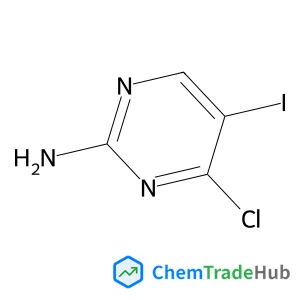
![N-{3-[Benzyl(methyl)amino]propyl}-9-chloro-5,6,7,8-tetrahydro-2-acridinecarboxamide structure](https://static.chemtradehub.com/structs/142/1426944-49-1-1e4c.webp "N-{3-[Benzyl(methyl)amino]propyl}-9-chloro-5,6,7,8-tetrahydro-2-acridinecarboxamide structure")
N-{3-[Benzyl(methyl)amino]propyl}-9-chloro-5,6,7,8-tetrahydro-2-acridinecarboxamide
CAS Number:
1426944-49-1
Molecular Formula:
C25H28ClN3O
Recommended Suppliers





Disclaimer
This page provides academic journal information for reference and research purposes only. We are not affiliated with any journal publishers and do not handle publication submissions. For publication-related inquiries, please contact the respective journal publishers directly.
If you notice any inaccuracies in the information displayed, please contact us at support@chemtradehub.com. We will promptly review and address your concerns.