












Effects of 1-hexanol on C12E10 micelles: a molecular simulations and light scattering study
Literature Information
Publication Date
2018-01-31
DOI
10.1039/C7CP07511A
Impact Factor
3.676
Authors
Sampsa Vierros, Maria Sammalkorpi
View Original
Abstract
The micelles of the non-ionic C12E10 surfactant and 1-hexanol as an aqueous solution additives are studied toward the purpose of understanding the role of alcohol additives in tuning the characteristics of alkyl-ethoxylate micellar systems. Our dynamic light scattering and cloud point experiments show that the addition of hexanol induces a response similar to an increase of temperature. We associate the change with increased attraction between the micelles at low to moderate hexanol loadings and a potential increase of the aggregate size at a high hexanol-to-surfactant ratio. Detailed molecular dynamic simulation characterization shows that hexanol solubilizes to a micelle palisade layer when the hexanol-to-C12E10 ratio is less than or equal to 0.5 while swollen micelles, in which a part of hexanol forms an oil core, are present when the ratio increases above approximately 1.5. The simulations indicate that the surface of the micelles is rough. Formation of reverse hexanol structures akin to those found in bulk octanol is observed in the oil core. Molecular simulations associate the increase in attraction between micelles observed via the experiments with decreased chain density in the headgroup region. This density decrease is caused by hexanol molecules solubilized between neighbouring surfactants. Altogether, these findings provide detailed physical characterization of the effect of an archetypal solution additive, hexanol, on an alkyl ethoxylate micelle system. These findings could bear a significance in designing micellar and emulsion based systems with desired solution characteristics or properties for e.g. drug delivery, catalysis, or platforms for green chemistry reactions.
Related Literature
V-shaped pyranylidene/triphenylamine-based chromophores with enhanced photophysical, electrochemical and nonlinear optical properties
Sergio Gámez-Valenzuela, David Neusser, Belén Villacampa, Rocío Ponce Ortiz, Sabine Ludwigs, Raquel Andreu, M. Carmen Ruiz Delgado
2021-05-25
Paper
DOI: 10.1039/D1MA00415H
In situ trapping of bismuthine in externally heated quartz tube atomizers for atomic absorption spectrometry
Jan Kratzer, Jiří Dědina
2005-12-08
Technical Note
DOI: 10.1039/B513924D
Determination of arsenic in peat samples using HG-AFS and l-cysteine as pre-reductant
Jutta Frank, Michael Krachler, William Shotyk
2005-12-22
Technical Note
DOI: 10.1039/B514268G
Injectable in situ-forming hydrogel for cartilage tissue engineering
Jin Seon Kwon, So Mi Yoon, Doo Yeon Kwon, Da Yeon Kim, Guo Zhe Tai, Ling Mei Jin, Boram Song, Bong Lee, Jae Ho Kim, Dong Keun Han, Byoung Hyun Min, Moon Suk Kim
2013-04-29
Paper
DOI: 10.1039/C3TB20105H
A one-step and biocompatible cellulose functionalization for covalent antibody immobilization on immunoassay membranes
Hervé Volland, Julie Dano, Thomas Berthelot
2013-05-01
Paper
DOI: 10.1039/C3TB20380H
Tailored porous carbons enabled by persistent micelles with glassy cores
Eric R. Williams, Paige L. McMahon, Joseph E. Reynolds, III, Jonathan L. Snider, Vitalie Stavila, Mark D. Allendorf, Morgan Stefik
2021-06-01
Paper
DOI: 10.1039/D1MA00146A
Engineering poly(lactic-co-glycolic acid)/calcium carbonate microspheres with controllable topography and their cell response
2013-05-30
Paper
DOI: 10.1039/C3TB20284D
You might also like
Compound Q&A
What precautions should be taken when handling 4-Methyl-6-(trifluoromethyl)quinoline (CAS: 40716-16-3)?
When handling 4-Methyl-6-(trifluoromethyl)quinoline (CAS: 40716-16-3), safety go...
40716-16-34-Methyl-6-(trifluor...
Compound Q&A
What is 4-(3,5-Difluorophenyl)aniline (CAS: 405058-00-6)?
4-(3,5-Difluorophenyl)aniline is an aromatic organic compound with the CAS numbe...
405058-00-64-(3,5-Difluoropheny...
Compound Q&A
How is 5-{[4-(Trifluoromethyl)phenyl]sulfanyl}-1,2,3-thiadiazole-4-carboxylic acid (CAS: 338982-07-3) typically synthesized?
5-{[4-(Trifluoromethyl)phenyl]sulfanyl}-1,2,3-thiadiazole-4-carboxylic acid can ...
338982-07-35-{[4-(Trifluorometh...
Compound Q&A
What is the market or research trend for 4-Benzylaniline hydrochloride (CAS: 6317-57-3)?
The market for 4-Benzylaniline hydrochloride (CAS: 6317-57-3) is steadily growin...
6317-57-34-Benzylaniline hydr...
Compound Q&A
Is [3-(Diethylsulfamoyl)phenyl]boronic acid (CAS: 871329-58-7) safe?
[3-(Diethylsulfamoyl)phenyl]boronic acid is generally considered safe when handl...
871329-58-7[3-(Diethylsulfamoyl...
Compound Q&A
What are the main uses of 3-Bromo-2,5-dimethoxyaniline (CAS: 115929-62-9)?
3-Bromo-2,5-dimethoxyaniline is mainly used in the pharmaceutical and chemical i...
115929-62-93-Bromo-2,5-dimethox...
Compound Q&A
What regulatory guidelines apply to N-Methyl-1-(5-methyl-1H-indol-3-yl)methanamine (CAS: 915922-67-7)?
N-Methyl-1-(5-methyl-1H-indol-3-yl)methanamine (CAS: 915922-67-7) is subject to ...
915922-67-7N-Methyl-1-(5-methyl...
Compound Q&A
What industries use Carbamic acid, N-[(5S)-5,6-diamino-6-oxohexyl]-, 1,1-dimethylethyl ester (CAS: 24828-96-4)?
This compound is primarily used in the pharmaceutical industry for the synthesis...
24828-96-4Carbamic acid, N-[(5...
Compound Q&A
How should 2-Methyl-2-propanyl [(1S,3R)-3-aminocyclohexyl]carbamate (CAS: 1298101-47-9) be stored?
2-Methyl-2-propanyl [(1S,3R)-3-aminocyclohexyl]carbamate (CAS: 1298101-47-9) sho...
1298101-47-92-Methyl-2-propanyl ...
Compound Q&A
What industries use Ethyl 2-bromo-4,4,4-trifluorobutanoate (CAS: 367-33-9)?
Ethyl 2-bromo-4,4,4-trifluorobutanoate (CAS: 367-33-9) is utilized in the pharma...
367-33-9Ethyl 2-bromo-4,4,4-...
Source Journal
Physical Chemistry Chemical Physics

CiteScore:
5.5
Self-citation Rate:
10.3%
Articles per Year:
3036
Physical Chemistry Chemical Physics (PCCP) is an international journal co-owned by 19 physical chemistry and physics societies from around the world. This journal publishes original, cutting-edge research in physical chemistry, chemical physics and biophysical chemistry. To be suitable for publication in PCCP, articles must include significant innovation and/or insight into physical chemistry; this is the most important criterion that reviewers and Editors will judge against when evaluating submissions. The journal has a broad scope and welcomes contributions spanning experiment, theory, computation and data science. Topical coverage includes spectroscopy, dynamics, kinetics, statistical mechanics, thermodynamics, electrochemistry, catalysis, surface science, quantum mechanics, quantum computing and machine learning. Interdisciplinary research areas such as polymers and soft matter, materials, nanoscience, energy, surfaces/interfaces, and biophysical chemistry are welcomed if they demonstrate significant innovation and/or insight into physical chemistry. Joined experimental/theoretical studies are particularly appreciated when complementary and based on up-to-date approaches.
Recommended Compounds
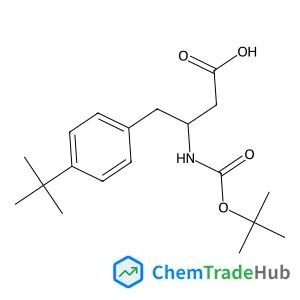
(S)-3-((tert-Butoxycarbonyl)amino)-4-(4-(tert-butyl)phenyl)butanoic acid
CAS Number:
403661-85-8
Molecular Formula:
C19H29NO4
![Methyl 3-({2'-[(E)-(hydroxyhydrazono)methyl]-4-biphenylyl}methyl)-2-oxo-2,3-dihydro-1H-benzimidazole-4-carboxylate structure](https://static.chemtradehub.com/structs/149/1499167-72-4-034a.webp "Methyl 3-({2'-[(E)-(hydroxyhydrazono)methyl]-4-biphenylyl}methyl)-2-oxo-2,3-dihydro-1H-benzimidazole-4-carboxylate structure")
Methyl 3-({2'-[(E)-(hydroxyhydrazono)methyl]-4-biphenylyl}methyl)-2-oxo-2,3-dihydro-1H-benzimidazole-4-carboxylate
CAS Number:
1499167-72-4
Molecular Formula:
C23H20N4O4
Recommended Suppliers







Disclaimer
This page provides academic journal information for reference and research purposes only. We are not affiliated with any journal publishers and do not handle publication submissions. For publication-related inquiries, please contact the respective journal publishers directly.
If you notice any inaccuracies in the information displayed, please contact us at support@chemtradehub.com. We will promptly review and address your concerns.