


A facile route to well-defined imidazolium-based poly(ionic liquid)s of enhanced conductivity via RAFT
Literature Information
Publication Date
2017-08-02
DOI
10.1039/C7PY01046J
Impact Factor
5.582
Authors
Karol Erfurt, Anna Chrobok, Andrzej Zięba
View Original
Abstract
The synthesis of well-defined imidazolium-based poly(ionic liquid)s (PILs) by reversible addition–fragmentation chain transfer (RAFT) polymerization is demonstrated. Two specially designed monomeric ionic liquids (MILs), such as 1-methyl-3-vinylimidazolium bis(trifluoromethanesulfonyl)imide [MVIM][NTf2] and 1-ethyl-3-vinylimidazolium bis(trifluoromethanesulfonyl)imide [EVIM][NTf2] were polymerized with the 2,2′-azobisisobutyronitrile (AIBN) initiator in the presence of a trithiocarbonate RAFT agent. Depending on the varied ratios of the monomer to CTA ([monomer]/[CTA] = 100/1; 400/1; 1000/1) we obtained P[MVIM][NTf2] and P[EVIM][NTf2] homopolymers with the number-average molecular weights (Mn) in a broad range Mn = 2.5–340.0 kDa and Mn = 2.1–450.0 kDa, respectively. The controlled character of the polymerization of each ionic monomer was confirmed by the pseudo-first order kinetic, a linear increase in the Mn with conversion and relatively narrow dispersity indices (Đ = 1.09–1.37 for P[MVIM][NTf2] and Đ = 1.10–1.41 for P[EVIM][NTf2]). Additionally, the obtained macromolecules are characterized by the enhanced/or comparable conductivity in comparison with those reported in the literature [Wojnarowska et al., Macromolecules, 2014, 47, 4056–4065 and Fan et al., Macromolecules, 2016, 49, 4557–4570], indicating that we are able to produce polymers of high molecular weights characterized by relatively high conductivity (σdc ∼ 10−9 at Tg). Finally, we found quite unexpected evolution of Tgvs. Mn of the produced polymers in the limit of low molecular weight, which seems to correspond to those observed in the case of van der Waals polymers such as polystyrene or polyisobutylene.
Recommended Journals

Journal of Enzyme inhibition and Medicinal Chemistry

Environmental Toxicology and Pharmacology

Photochemical & Photobiological Sciences

Advanced Engineering Materials

Molecules

European Journal of Organic Chemistry

Journal of Medical Biochemistry

CrystEngComm

Coloration Technology

Current Pharmaceutical Biotechnology
Related Literature
Monitoring bacterial spore metabolic activity using heavy water-induced Raman peak evolution
Rasmus Öberg, Tobias Dahlberg, Dmitry Malyshev
2023-04-04
Paper
DOI: 10.1039/D2AN02047E
A fluorescent aptasensor for ATP based on functional DNAzyme/walker and terminal deoxynucleotidyl transferase-assisted formation of DNA-AgNCs
Shixin Cai, Xin Chen, Haohan Chen, Yuting Zhang, Xiaoli Wang, Nandi Zhou
2023-01-16
Paper
DOI: 10.1039/D2AN02006H
Discrimination of Robusta Amazônico coffee farmed by indigenous and non-indigenous people in Amazon: comparing benchtop and portable NIR using ComDim and duplex
Patrícia Valderrama, Enrique Anastácio Alves, Juliana Azevedo Lima Pallone, Federico Marini
2023-02-28
Paper
DOI: 10.1039/D3AN00104K
Controllable synthesis of MoS2@TiO2 nanocomposites for visual detection of dopamine secretion with highly-efficient enzymatic activity
Chonghui Wei, Xuan Xie, Yue Mou, Shiqi Cheng, Jin Yang, Kaixin Xue, Kewei Yu, Xinru Lin, Chunfen Zhang, Yujie Zhao, Xingyu Luo, Yilin Wang
2023-03-10
Paper
DOI: 10.1039/D3AN00089C
Surface plasmon resonance detection of UV irradiation-induced DNA damage and photoenzymatic repair processes through specific interaction between consensus double-stranded DNA and p53 protein
Yuhan He, Sijia Chen, Guoyang Xie, Xinyao Yi, Jianxiu Wang
2022-12-26
Paper
DOI: 10.1039/D2AN01847K
“Lighting up” fluoride: cellular imaging and zebrafish model interrogations using a simple ESIPT-based mycophenolic acid precursor-based probe
Neha Jain, Prasad M. Sonawane, Haoyan Liu, Arkaprava Roychaudhury, Youngseob Lee, Jongkeol An, Donghyeon Kim, Dongwook Kim, Yunsu Kim, Yeu-Chun Kim, Kyung-Bin Cho, Hee-Sung Park, Cheol-Hee Kim
2023-05-15
Paper
DOI: 10.1039/D3AN00646H
An aptamer array for discriminating tetracycline antibiotics based on binding-enhanced intrinsic fluorescence
Yichen Zhao, Biwen Gao, Yijing Chen, Juewen Liu
2023-03-06
Paper
DOI: 10.1039/D3AN00154G
Self-supervised learning for inter-laboratory variation minimization in surface-enhanced Raman scattering spectroscopy
Seongyong Park, Abdul Wahab
2023-02-10
Paper
DOI: 10.1039/D2AN01569B
Spatial distribution and comparative analysis of Aconitum alkaloids in Fuzi using DESI-MSI and UHPLC-QTOF-MS
Huixia Zhang, Liu Yang, Xin Chen, Shuai Zhang, Shiqi Chen, Daowen Li, Cun Li, Haiyang Jiang
2023-03-13
Paper
DOI: 10.1039/D2AN02051C
Recurrent neural networks for time domain modelling of FTIR spectra: application to brain tumour detection
Georgios Antoniou, Justin J. A. Conn, Benjamin R. Smith, Paul M. Brennan
2023-03-24
Paper
DOI: 10.1039/D2AN02041F
You might also like
Compound Q&A
What are the main uses of 4-Nitrophenyl phosphate disodium salt hexahydrate (CAS: 333338-18-4)?
4-Nitrophenyl phosphate disodium salt hexahydrate is primarily used as a substra...
333338-18-44-Nitrophenyl phosph...
Compound Q&A
What are the main uses of 2-(Trifluoromethyl)-1,3-oxazole-4-carboxylic Acid (CAS: 1060816-01-4)?
2-(Trifluoromethyl)-1,3-oxazole-4-carboxylic Acid (CAS: 1060816-01-4) is widely ...
1060816-01-42-(Trifluoromethyl)-...
Compound Q&A
How should 2-Fluoro-4-biphenylcarboxylic acid (CAS: 137045-30-8) be stored?
2-Fluoro-4-biphenylcarboxylic acid should be stored in a cool, dry place at room...
137045-30-82-Fluoro-4-biphenylc...
Compound Q&A
What industries use Prednisolone-21-Carboxylic Acid (CAS: 61549-70-0)?
Prednisolone-21-Carboxylic Acid is primarily used in the pharmaceutical industry...
61549-70-0Prednisolone-21-Carb...
Compound Q&A
How should 4-(Hydrazinomethyl)-1,2,3-benzenetriol (CAS: 3614-72-0) be stored?
4-(Hydrazinomethyl)-1,2,3-benzenetriol (CAS: 3614-72-0) should be stored in a co...
3614-72-04-(Hydrazinomethyl)-...
Compound Q&A
What industries use 4-Amino-1-methyl-1H-pyrazole-5-carboxylic acid hydrochloride (CAS: 92534-70-8)?
4-Amino-1-methyl-1H-pyrazole-5-carboxylic acid hydrochloride (CAS: 92534-70-8) i...
92534-70-84-Amino-1-methyl-1H-...
Compound Q&A
What regulatory guidelines apply to dehydropachymic acid (CAS: 77012-31-8)?
Dehydropachymic acid (CAS: 77012-31-8) is regulated by various agencies. It fall...
77012-31-8Dehydropachymic acid
Compound Q&A
What is the market or research trend for 6-[(2,2-Dimethylpropanoyl)amino]nicotinic acid (CAS: 898561-66-5)?
The market and research trends for 6-[(2,2-Dimethylpropanoyl)amino]nicotinic aci...
898561-66-56-[(2,2-Dimethylprop...
Compound Q&A
How should 1,10-Phenanthroline-2,9-dicarbaldehyde (CAS: 57709-62-3) be stored?
1,10-Phenanthroline-2,9-dicarbaldehyde should be stored in a cool, dry place awa...
57709-62-31,10-Phenanthroline-...
Compound Q&A
How is 5-Carbamoyl-11-oxo-10,11-dihydro-5H-dibenzo[b,f]azepin-10-yl acetate (CAS: 113952-21-9) typically synthesized?
5-Carbamoyl-11-oxo-10,11-dihydro-5H-dibenzo[b,f]azepin-10-yl acetate can be synt...
113952-21-95-Carbamoyl-11-oxo-1...
Source Journal
Polymer Chemistry

CiteScore:
8.6
Self-citation Rate:
7.3%
Articles per Year:
457
Polymer Chemistry welcomes submissions in all areas of polymer science that have a strong focus on macromolecular chemistry. Manuscripts may cover a broad range of fields, yet no direct application focus is required.
Recommended Compounds
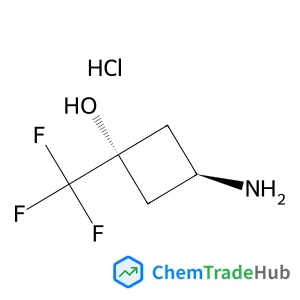
cis-3-Amino-1-(trifluoromethyl)cyclobutanol hydrochloride (1:1)
CAS Number:
1408075-16-0
Molecular Formula:
C5H9ClF3NO
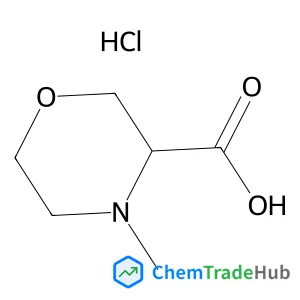
4-Methyl-3-morpholinecarboxylic acid hydrochloride (1:1)
CAS Number:
1240518-90-4
Molecular Formula:
C6H12ClNO3
Recommended Suppliers





Disclaimer
This page provides academic journal information for reference and research purposes only. We are not affiliated with any journal publishers and do not handle publication submissions. For publication-related inquiries, please contact the respective journal publishers directly.
If you notice any inaccuracies in the information displayed, please contact us at support@chemtradehub.com. We will promptly review and address your concerns.