












Tailoring degree of esterification and branching of poly(glycerol sebacate) by energy efficient microwave irradiation
Literature Information
Publication Date
2017-06-12
DOI
10.1039/C7PY00862G
Impact Factor
5.582
Authors
Chi Ching Lau, Mustafa Kemal Bayazit, Junwang Tang
View Original
Abstract
Poly(glycerol sebacate) (PGS) is known as an exciting biomaterial owing to its tunable mechanical properties and controllable degradation rate. However, it is always challenging to control these properties. In this study, we have proposed a solvent-based system to provide a better control of reaction temperature in a microwave cavity, which can minimize evaporation of monomers, and water was collected to analyse the degree of esterification. Pre-PGSs with varied degrees of esterification were prepared using both single mode and multimode microwave cavity irradiation (MI) in this solvent-based reaction system. For a similar degree of esterification of pre-PGSs, the reaction time was almost halved with a better control on mechanical properties by single mode MI compared to multimode MI. Furthermore, the single mode MI approach was compared with the conventional heating (CH) approach. The mechanical properties and degradation rate of PGSs can be controlled readily by using the single mode MI approach compared to CH, which are crucial for their application as a biomaterial. It has been found that the single mode MI not only accelerates the pre-polymerisation process rate by six times, but also speeds up the curing time to the same extent. The Young's modulus of PGSs prepared by single mode MI is increased from 0.77 to 3.14 MPa when the degree of esterification is 66.82%, which is 50% higher than that reported in the literature. Furthermore, PGS using a highly branched pre-PGS prepared by the single mode MI method has a large degree of flexibility. It can achieve a much higher Young's modulus than that obtained by CH with a short curing time (<10 hours). In addition, the residual mass of PGSs prepared by single mode MI is varied from 78.54% to 92.96% compared to the CH method that ranges from 84.24% to 93.31%. Thus, these highly branched PGSs produced by single mode MI also show a wider degradation window (approximately 59% higher degree of flexibility than the CH method), which is found to be highly dependent on the degree of esterification and curing time of the pre-polymer, and controlled by branching.
Related Literature
Highly sensitive and specific detection of silver ions using a dual-color fluorescence co-localization strategy
Chenhui Hao, Jinxiu Wei, Shenfei Zong, Zhuyuan Wang, Hong Wang, Yiping Cui
2023-01-06
Paper
DOI: 10.1039/D2AN01662A
Evaluation of kasugamycin as a chiral selector in capillary electrophoresis
Chunyan Zhang, Yifeng Fan, Liangliang Cai, Xiaofei Ma
2023-02-14
Paper
DOI: 10.1039/D2AN01949C
An aptamer triple helix molecular switch for sensitive electrochemical assay of lipocalin 1 biomarker via dual signal amplifications
Jianglong Yao, Yujie Liu, Bingying Jiang, Ruo Yuan, Yun Xiang
2023-05-17
Paper
DOI: 10.1039/D3AN00524K
Molecular simulation-guided aptasensor design of robust and sensitive lateral flow strip for cadmium ion detection
Muhammad Irfan, Ghulam Murtaza, Shangnan Fu, Ailiang Chen, Feng Qu, Xin Su
2023-03-20
Paper
DOI: 10.1039/D3AN00202K
Duplex-immunoassay of ovarian cancer biomarker CA125 and HE4 based carbon dot decorated dendritic mesoporous silica nanoparticles
Zi-Xuan Wang, Shou-Nian Ding
2022-12-27
Paper
DOI: 10.1039/D2AN01929A
Surface plasmon resonance detection of UV irradiation-induced DNA damage and photoenzymatic repair processes through specific interaction between consensus double-stranded DNA and p53 protein
Yuhan He, Sijia Chen, Guoyang Xie, Xinyao Yi, Jianxiu Wang
2022-12-26
Paper
DOI: 10.1039/D2AN01847K
Rapid and sensitive detection of chlordimeform in cucumber and tomato samples using an immunochromatographic assay
Yingyue Zhu
2023-01-10
Paper
DOI: 10.1039/D2AN01923J
You might also like
Compound Q&A
What are the main uses of 4-Nitrophenyl phosphate disodium salt hexahydrate (CAS: 333338-18-4)?
4-Nitrophenyl phosphate disodium salt hexahydrate is primarily used as a substra...
333338-18-44-Nitrophenyl phosph...
Compound Q&A
What are the main uses of 2-(Trifluoromethyl)-1,3-oxazole-4-carboxylic Acid (CAS: 1060816-01-4)?
2-(Trifluoromethyl)-1,3-oxazole-4-carboxylic Acid (CAS: 1060816-01-4) is widely ...
1060816-01-42-(Trifluoromethyl)-...
Compound Q&A
How should 2-Fluoro-4-biphenylcarboxylic acid (CAS: 137045-30-8) be stored?
2-Fluoro-4-biphenylcarboxylic acid should be stored in a cool, dry place at room...
137045-30-82-Fluoro-4-biphenylc...
Compound Q&A
What industries use Prednisolone-21-Carboxylic Acid (CAS: 61549-70-0)?
Prednisolone-21-Carboxylic Acid is primarily used in the pharmaceutical industry...
61549-70-0Prednisolone-21-Carb...
Compound Q&A
How should 4-(Hydrazinomethyl)-1,2,3-benzenetriol (CAS: 3614-72-0) be stored?
4-(Hydrazinomethyl)-1,2,3-benzenetriol (CAS: 3614-72-0) should be stored in a co...
3614-72-04-(Hydrazinomethyl)-...
Compound Q&A
What industries use 4-Amino-1-methyl-1H-pyrazole-5-carboxylic acid hydrochloride (CAS: 92534-70-8)?
4-Amino-1-methyl-1H-pyrazole-5-carboxylic acid hydrochloride (CAS: 92534-70-8) i...
92534-70-84-Amino-1-methyl-1H-...
Compound Q&A
What regulatory guidelines apply to dehydropachymic acid (CAS: 77012-31-8)?
Dehydropachymic acid (CAS: 77012-31-8) is regulated by various agencies. It fall...
77012-31-8Dehydropachymic acid
Compound Q&A
What is the market or research trend for 6-[(2,2-Dimethylpropanoyl)amino]nicotinic acid (CAS: 898561-66-5)?
The market and research trends for 6-[(2,2-Dimethylpropanoyl)amino]nicotinic aci...
898561-66-56-[(2,2-Dimethylprop...
Compound Q&A
How should 1,10-Phenanthroline-2,9-dicarbaldehyde (CAS: 57709-62-3) be stored?
1,10-Phenanthroline-2,9-dicarbaldehyde should be stored in a cool, dry place awa...
57709-62-31,10-Phenanthroline-...
Compound Q&A
How is 5-Carbamoyl-11-oxo-10,11-dihydro-5H-dibenzo[b,f]azepin-10-yl acetate (CAS: 113952-21-9) typically synthesized?
5-Carbamoyl-11-oxo-10,11-dihydro-5H-dibenzo[b,f]azepin-10-yl acetate can be synt...
113952-21-95-Carbamoyl-11-oxo-1...
Source Journal
Polymer Chemistry

CiteScore:
8.6
Self-citation Rate:
7.3%
Articles per Year:
457
Polymer Chemistry welcomes submissions in all areas of polymer science that have a strong focus on macromolecular chemistry. Manuscripts may cover a broad range of fields, yet no direct application focus is required.
Recommended Compounds

2,2-dideuterio-2-(3,4,5,6-tetradeuterio-2-pyridyl)acetic acid;hydrochloride
CAS Number:
1329799-67-8
Molecular Formula:
C7H2ClD6NO2
![[(1S,2S,3R,4S,7R,9S,10S,12R,15S)-4,12-Diacetyloxy-15-[(2R,3S)-3-benzamido-3-phenyl-2-(2,2,2-trichloroethoxycarbonyloxy)propanoyl]oxy-1,9-dihydroxy-10,14,17,17-tetramethyl-11-oxo-6-oxatetracyclo[11.3.1.03,10.04,7]heptadec-13-en-2-yl] benzoate structure](https://static.chemtradehub.com/structs/100/100431-55-8-7104.webp "[(1S,2S,3R,4S,7R,9S,10S,12R,15S)-4,12-Diacetyloxy-15-[(2R,3S)-3-benzamido-3-phenyl-2-(2,2,2-trichloroethoxycarbonyloxy)propanoyl]oxy-1,9-dihydroxy-10,14,17,17-tetramethyl-11-oxo-6-oxatetracyclo[11.3.1.03,10.04,7]heptadec-13-en-2-yl] benzoate structure")
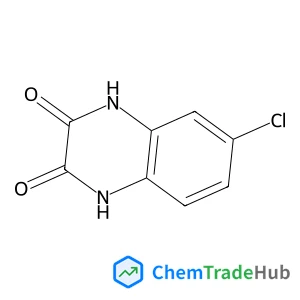
6-CHLORO-2,3-DIOXO-1,2,3,4-TETRAHYDROQUINOXALINE, 97
CAS Number:
169-14-2
Molecular Formula:
C8H5ClN2O2
Recommended Suppliers






Disclaimer
This page provides academic journal information for reference and research purposes only. We are not affiliated with any journal publishers and do not handle publication submissions. For publication-related inquiries, please contact the respective journal publishers directly.
If you notice any inaccuracies in the information displayed, please contact us at support@chemtradehub.com. We will promptly review and address your concerns.