












Highly sensitive and specific detection of silver ions using a dual-color fluorescence co-localization strategy
Literature Information
Publication Date
2023-01-06
DOI
10.1039/D2AN01662A
Impact Factor
4.616
Authors
Chenhui Hao, Jinxiu Wei, Shenfei Zong, Zhuyuan Wang, Hong Wang, Yiping Cui
View Original
Abstract
Ag+ ions are widely used in various fields of human life due to their unique properties and they threaten the environment and human health. The traditional methods for Ag+ detection commonly suffer from disadvantages including limited sensitivity, expensive equipment and complicated operating steps. Herein, we developed a highly specific dual-color fluorescence co-localization (DFC) strategy based on the C–Ag+–C structure for Ag+ detection. In this strategy, Ag+ ions can be captured to form C–Ag+–C base pairs, and these ions enable single-stranded DNAs to form double strands. The DFC strategy can exclude nonspecific interaction sites and greatly improve the sensitivity and specificity. By DFC of the QDs and Cy5 linked to the DNA strands, highly sensitive Ag+ detection was achieved in the concentration range from 0.14 pM to 200 nM, with a limit of detection (LOD) of 0.14 pM. Moreover, this method has been applied for the detection of Ag+ ions in real environmental samples with satisfactory recoveries. We believe that the DFC strategy is promising for Ag+ detection.
Recommended Journals
Related Literature
Determination of ion pairing on capping structures of gold nanoparticles by phase extraction
Mark J. Schadt, Kaylie Young, Jin Luo, Chuan-Jian Zhong
2015-08-12
Communication
DOI: 10.1039/C5AN01165E
A peptide array-based serological protein kinase A activity assay and its application in cancer diagnosis
Deok-Hoon Kong, Se-Hui Jung, Hye-Yoon Jeon, Woo-Jin Kim, Young-Myeong Kim, Kwon-Soo Ha
2015-08-14
Paper
DOI: 10.1039/C5AN01151E
A polyvinyl alcohol-coated silica gel stationary phase for hydrophilic interaction chromatography
Shunli Ji, Yang Zheng, Feifang Zhang, Xinmiao Liang, Bingcheng Yang
2015-08-06
Communication
DOI: 10.1039/C5AN01159K
Ion-neutral collisional cross sections of carbohydrate isomers as divalent cation adducts and their electron transfer products
Yuting Huang, Eric D. Dodds
2015-07-22
Paper
DOI: 10.1039/C5AN01093D
A new electrochemical substrate for rapid and sensitive in vivo monitoring of β-galactosidase gene expressions
Kesavan Manibalan, Veerappan Mani
2015-07-10
Paper
DOI: 10.1039/C5AN01036E
Characteristic lipid profiles of canine non-Hodgkin's lymphoma from surgical biopsy tissue sections and fine needle aspirate smears by desorption electrospray ionization – mass spectrometry
Alan K. Jarmusch, Kevin S. Kerian, Valentina Pirro, Tyler Peat, Craig A. Thompson, José A. Ramos-Vara, Michael O. Childress, R. Graham Cooks
2015-07-27
Paper
DOI: 10.1039/C5AN00825E
DNA-functionalized upconversion nanoparticles as biosensors for rapid, sensitive, and selective detection of Hg2+ in complex matrices
Li-Jiao Huang, Ru-Qin Yu, Xia Chu
2015-05-15
Communication
DOI: 10.1039/C5AN00635J
Simultaneous electroanalytical determination of hydroquinone and catechol in the presence of resorcinol at an SiO2/C electrode spin-coated with a thin film of Nb2O5
Thiago C. Canevari, Leliz T. Arenas, Richard Landers, Rogério Custodio, Yoshitaka Gushikem
2012-10-23
Paper
DOI: 10.1039/C2AN36170A
Investigating carbohydrate isomers by IMS-CID-IMS-MS: precursor and fragment ion cross-sections
M. M. Gaye, R. Kurulugama, D. E. Clemmer
2015-08-07
Paper
DOI: 10.1039/C5AN00840A
You might also like
Compound Q&A
What are the main uses of 4-Nitrophenyl phosphate disodium salt hexahydrate (CAS: 333338-18-4)?
4-Nitrophenyl phosphate disodium salt hexahydrate is primarily used as a substra...
333338-18-44-Nitrophenyl phosph...
Compound Q&A
What are the main uses of 2-(Trifluoromethyl)-1,3-oxazole-4-carboxylic Acid (CAS: 1060816-01-4)?
2-(Trifluoromethyl)-1,3-oxazole-4-carboxylic Acid (CAS: 1060816-01-4) is widely ...
1060816-01-42-(Trifluoromethyl)-...
Compound Q&A
How should 2-Fluoro-4-biphenylcarboxylic acid (CAS: 137045-30-8) be stored?
2-Fluoro-4-biphenylcarboxylic acid should be stored in a cool, dry place at room...
137045-30-82-Fluoro-4-biphenylc...
Compound Q&A
What industries use Prednisolone-21-Carboxylic Acid (CAS: 61549-70-0)?
Prednisolone-21-Carboxylic Acid is primarily used in the pharmaceutical industry...
61549-70-0Prednisolone-21-Carb...
Compound Q&A
How should 4-(Hydrazinomethyl)-1,2,3-benzenetriol (CAS: 3614-72-0) be stored?
4-(Hydrazinomethyl)-1,2,3-benzenetriol (CAS: 3614-72-0) should be stored in a co...
3614-72-04-(Hydrazinomethyl)-...
Compound Q&A
What industries use 4-Amino-1-methyl-1H-pyrazole-5-carboxylic acid hydrochloride (CAS: 92534-70-8)?
4-Amino-1-methyl-1H-pyrazole-5-carboxylic acid hydrochloride (CAS: 92534-70-8) i...
92534-70-84-Amino-1-methyl-1H-...
Compound Q&A
What regulatory guidelines apply to dehydropachymic acid (CAS: 77012-31-8)?
Dehydropachymic acid (CAS: 77012-31-8) is regulated by various agencies. It fall...
77012-31-8Dehydropachymic acid
Compound Q&A
What is the market or research trend for 6-[(2,2-Dimethylpropanoyl)amino]nicotinic acid (CAS: 898561-66-5)?
The market and research trends for 6-[(2,2-Dimethylpropanoyl)amino]nicotinic aci...
898561-66-56-[(2,2-Dimethylprop...
Compound Q&A
How should 1,10-Phenanthroline-2,9-dicarbaldehyde (CAS: 57709-62-3) be stored?
1,10-Phenanthroline-2,9-dicarbaldehyde should be stored in a cool, dry place awa...
57709-62-31,10-Phenanthroline-...
Compound Q&A
How is 5-Carbamoyl-11-oxo-10,11-dihydro-5H-dibenzo[b,f]azepin-10-yl acetate (CAS: 113952-21-9) typically synthesized?
5-Carbamoyl-11-oxo-10,11-dihydro-5H-dibenzo[b,f]azepin-10-yl acetate can be synt...
113952-21-95-Carbamoyl-11-oxo-1...
Source Journal
Analyst

CiteScore:
7.8
Self-citation Rate:
5.6%
Articles per Year:
653
Analyst publishes analytical and bioanalytical research that reports premier fundamental discoveries and inventions, and the applications of those discoveries, unconfined by traditional discipline barriers.
Recommended Compounds
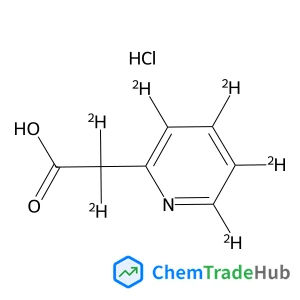
2,2-dideuterio-2-(3,4,5,6-tetradeuterio-2-pyridyl)acetic acid;hydrochloride
CAS Number:
1329799-67-8
Molecular Formula:
C7H2ClD6NO2
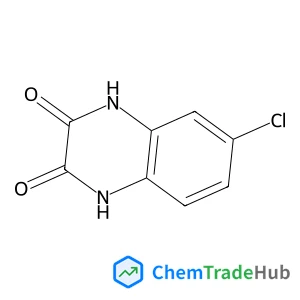
6-CHLORO-2,3-DIOXO-1,2,3,4-TETRAHYDROQUINOXALINE, 97
CAS Number:
169-14-2
Molecular Formula:
C8H5ClN2O2
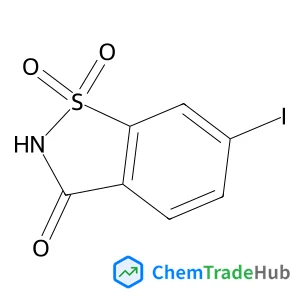
![(3R,5R)-1-[(Benzyloxy)carbonyl]-5-methyl-3-piperidinecarboxylic acid structure](https://static.chemtradehub.com/structs/126/1269757-29-0-c552.webp "(3R,5R)-1-[(Benzyloxy)carbonyl]-5-methyl-3-piperidinecarboxylic acid structure")
(3R,5R)-1-[(Benzyloxy)carbonyl]-5-methyl-3-piperidinecarboxylic acid
CAS Number:
1269757-29-0
Molecular Formula:
C15H19NO4
Recommended Suppliers





Disclaimer
This page provides academic journal information for reference and research purposes only. We are not affiliated with any journal publishers and do not handle publication submissions. For publication-related inquiries, please contact the respective journal publishers directly.
If you notice any inaccuracies in the information displayed, please contact us at support@chemtradehub.com. We will promptly review and address your concerns.