












Back cover
Literature Information
Publication Date
DOI
10.1039/C7OB90198D
Impact Factor
3.876
Authors
View Original
Abstract
A graphical abstract is available for this content
Related Literature
Programmed single step self-assembly of a [2 × 2] grid architecture built on metallic centers of different coordination geometries
Anne Petitjean, Nathalie Kyritsakas, Jean-Marie Lehn
2004-04-23
Communication
DOI: 10.1039/B402854F
Template synthesis of multi-macrocycles by metathesis reaction‡
Myroslav O. Vysotsky, Anca Bogdan, Leyong Wang, Volker Böhmer
2004-04-28
Communication
DOI: 10.1039/B402719A
Shuttling through reversible covalent chemistry
David A. Leigh, Emilio M. Pérez
2004-09-23
Communication
DOI: 10.1039/B412570C
Construction of building-blocks for polyether synthesis using sequential catalytic ring-closing enyne and cross metathesis
J. Stephen Clark, Frédéric Elustondo, Marc C. Kimber
2004-09-24
Communication
DOI: 10.1039/B409067E
Ferromagnetic NiII–GdIII interactions in complexes with NiGd, NiGdNi, and NiGdGdNi cores supported by tripodal ligands
Tomoka Yamaguchi, Yukinari Sunatsuki, Masaaki Kojima, Haruo Akashi, Masanobu Tsuchimoto, Nazzareno Re, Shutaro Osa, Naohide Matsumoto
2004-04-05
Communication
DOI: 10.1039/B401033G
Nano-complex formation of cyclodextrin and azobenzene using supercritical carbon dioxide
Min Wu, Yoshiaki Yuguchi, Takako Kumagai, Takashi Endo, Takahiro Hirotsu
2004-05-10
Communication
DOI: 10.1039/B400289J
A novel, stereoselective and convergent synthesis of aryltetralins
Steven M. Miles, Stephen P. Marsden, Robin J. Leatherbarrow, William J. Coates
2004-09-01
Communication
DOI: 10.1039/B409528F
Synergistic effects in controlling excited-state photodimerisation using multiple supramolecular interactions
Yolanda Vida Pol, Rafael Suau, Ezequiel Perez-Inestrosa, Dario M. Bassani
2004-04-29
Communication
DOI: 10.1039/B402298J
Oxy-peptide nucleic acid with a pyrrolidine ring that is configurationally optimized for hybridization with DNA
Mizuki Kitamatsu, Masanori Shigeyasu, Tomoyuki Okada, Masahiko Sisido
2004-04-23
Communication
DOI: 10.1039/B401057D
Novel cobalt-free oxygen permeable membrane
Xuefeng Zhu, Haihui Wang, Weishen Yang
2004-04-08
Communication
DOI: 10.1039/B400857J
You might also like
Compound Q&A
What precautions should be taken when handling 2-Chloro-1,2-bis(4-methylphenyl)ethanone (CAS: 71193-32-3)?
When handling 2-Chloro-1,2-bis(4-methylphenyl)ethanone (CAS: 71193-32-3), it is ...
71193-32-32-Chloro-1,2-bis(4-m...
Compound Q&A
What industries use 4-Ethoxy-3-(5-methyl-4-oxo-7-propyl-1,4-dihydroimidazo[5,1-f][1,2,4]triazin-2-yl)benzenesulfonyl chloride (CAS: 224789-26-8)?
4-Ethoxy-3-(5-methyl-4-oxo-7-propyl-1,4-dihydroimidazo[5,1-f][1,2,4]triazin-2-yl...
224789-26-84-Ethoxy-3-(5-methyl...
Compound Q&A
How should Methyl 3-Oxo-4-Androsten-17-Carboxylate (CAS: 2681-55-2) be stored?
Methyl 3-Oxo-4-Androsten-17-Carboxylate (CAS: 2681-55-2) should be stored in a c...
2681-55-2Methyl 3-Oxo-4-Andro...
Compound Q&A
What are the main uses of (R)-3-Amino-4-(3-hexylphenylamino)-4-oxobutylphosphonic acid (CAS: 909725-61-7)?
(R)-3-Amino-4-(3-hexylphenylamino)-4-oxobutylphosphonic acid is primarily used i...
909725-61-7(R)-3-Amino-4-(3-hex...
Compound Q&A
What regulatory guidelines apply to 2-Methyl-2-propanyl 3-amino-3-carbamoyl-1-azetidinecarboxylate (CAS: 1254120-14-3)?
2-Methyl-2-propanyl 3-amino-3-carbamoyl-1-azetidinecarboxylate (CAS: 1254120-14-...
1254120-14-32-Methyl-2-propanyl ...
Compound Q&A
Are there alternatives to (E)-4-(tert-Butoxy)-4-oxobut-2-enoic acid (CAS: 135355-96-3) in synthesis?
There are alternative reagents that can be used in synthesis instead of (E)-4-(t...
135355-96-3(E)-4-(tert-Butoxy)-...
Compound Q&A
What are the physical and chemical properties of [2-(3-Chlorophenyl)-1,3-thiazol-4-yl]methanol (CAS: 121202-20-8)?
[2-(3-Chlorophenyl)-1,3-thiazol-4-yl]methanol (CAS: 121202-20-8) is a crystallin...
121202-20-8[2-(3-Chlorophenyl)-...
Compound Q&A
What is the market or research trend for Methyl (2S)-[(4S)-2,2-dimethyl-1,3-dioxolan-4-yl]{[(4-methylphenyl)sulfonyl]oxy}acetate (CAS: 166249-17-8)?
The market and research trends for Methyl (2S)-[(4S)-2,2-dimethyl-1,3-dioxolan-4...
166249-17-8Methyl (2S)-[(4S)-2,...
Compound Q&A
What is the market or research trend for 1-Bromo-2-isocyanatoethane (CAS: 42865-19-0)?
The market for 1-Bromo-2-isocyanatoethane (CAS: 42865-19-0) is driven by its use...
42865-19-01-Bromo-2-isocyanato...
Compound Q&A
What are the main uses of 4-Nitro-D-phenylalanine hydrochloride (CAS: 147065-06-3)?
4-Nitro-D-phenylalanine hydrochloride (CAS: 147065-06-3) is primarily used in re...
147065-06-34-Nitro-D-phenylalan...
Source Journal
Organic & Biomolecular Chemistry

CiteScore:
3.4
Self-citation Rate:
10.3%
Articles per Year:
1041
Organic & Biomolecular Chemistry (OBC) publishes original and high impact research and reviews in organic chemistry. We welcome research that shows new or significantly improved protocols or methodologies in total synthesis, synthetic methodology or physical and theoretical organic chemistry as well as research that shows a significant advance in the organic chemistry or molecular design aspects of chemical biology, catalysis, supramolecular and macromolecular chemistry, theoretical chemistry, mechanism-oriented physical organic chemistry, medicinal chemistry or natural products. Articles published in the journal should report new work which makes a highly-significant impact in the field. Routine and incremental work is generally not suitable for publication in the journal. More details about key areas of our scope are below. In all cases authors should include in their article clear rationale for why their research has been carried out.
Recommended Compounds
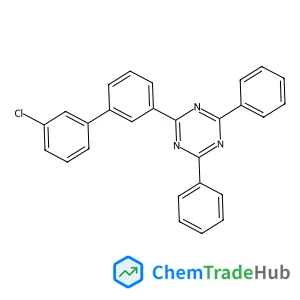
2-(3'-Chlorobiphenyl-3-yl)-4,6-diphenyl-1,3,5-triazine
CAS Number:
1443049-83-9
Molecular Formula:
C27H18ClN3

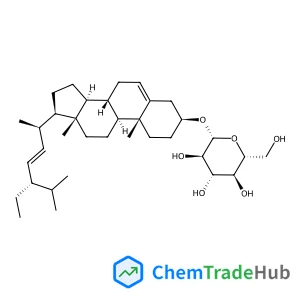
(3beta,22E)-Stigmasta-5,22-dien-3-yl beta-D-glucopyranoside
CAS Number:
19716-26-8
Molecular Formula:
C35H58O6
Recommended Suppliers







Disclaimer
This page provides academic journal information for reference and research purposes only. We are not affiliated with any journal publishers and do not handle publication submissions. For publication-related inquiries, please contact the respective journal publishers directly.
If you notice any inaccuracies in the information displayed, please contact us at support@chemtradehub.com. We will promptly review and address your concerns.