












![7-Bromo-5-chloro-1H-pyrazolo[4,3-b]pyridine structure](https://static.chemtradehub.com/structs/135/1351813-70-1-a716.webp "7-Bromo-5-chloro-1H-pyrazolo[4,3-b]pyridine structure")
Contiguous hydrophobic and charged surface patches in short helix-constrained peptides drive cell permeability
Literature Information
Publication Date
2017-12-06
DOI
10.1039/C7OB02952G
Impact Factor
3.876
Authors
Samuel R. Perry, Timothy A. Hill, Aline D. de Araujo, Huy N. Hoang, David P. Fairlie
View Original
Abstract
Most protein–protein interactions occur inside cells. Peptides can inhibit protein–protein interactions but tend not to enter cells. We systematically compare cell permeability for 8–12 residue model peptides with helix-inducing lactam/hydrocarbon linkers between amino acid sidechains. Cell uptake increases when hydrophobic residues and lactam linkers (i, i + 4) form a contiguous hydrophobic surface patch. Uptake increases further when both hydrophobic and positively charged (but not neutral or negative) residues are clustered into like surface patches. Amphipathicity alone is however insufficient for cell uptake of acyclic sequences. Changing the linker from lactam to hydrocarbon further increases uptake, but also promotes cell lysis. Helicity, positive charge and amphipathicity together promote cell permeability. Most known bioactive helical peptides do not optimally cluster residues for amphipathicity and so are likely unoptimised for cell uptake.
Recommended Journals
Related Literature
Spectrum of excess partial molar absorptivity. Part II: a near infrared spectroscopic study of aqueous Na-halides
Fumie Sebe, Keiko Nishikawa, Yoshikata Koga
2012-02-09
Paper
DOI: 10.1039/C2CP23255C
Computational study of methyl group dynamics in the hydroquinoneclathrate of acetonitrile
Alexandra Nemkevich, Ben Corry, Mark A. Spackman
2011-12-06
Communication
DOI: 10.1039/C2CP23384C
Intermolecular acetaldehyde and dimethoxymethane formation mechanisms viaethenol and methoxymethylene precursors in reactions of atomic carbon with methanol: a computational study
Yavuz Dede, Ilker Ozkan
2011-11-23
Paper
DOI: 10.1039/C2CP23127A
Molecular dynamics calculation of molecular volumes and volumes of activation
J. Spooner, N. Boon, E. Deglint, E. Edwards, B. Yanciw, B. Patton, L. Thiele, P. Dance
2012-01-12
Paper
DOI: 10.1039/C2CP22949H
Investigation of band offsets of interface BiOCl:Bi2WO6: a first-principles study
2011-12-07
Paper
DOI: 10.1039/C2CP23186G
Iron phthalocyanine coated on single-walled carbon nanotubes composite for the oxygen reduction reaction in alkaline media
Guofa Dong, Meihua Huang, Lunhui Guan
2012-01-06
Communication
DOI: 10.1039/C2CP23718K
The natural DNA bending angle in the lac repressor headpiece–O1 operator complex is determined by protein–DNA contacts and water release
Daniel Barr, Arjan van der Vaart
2011-12-09
Paper
DOI: 10.1039/C2CP23780F
Faraday rotation and its dispersion in the visible region for saturated organic liquids
Stefaan Vandendriessche, Ventsislav K. Valev, Thierry Verbiest
2011-12-06
Paper
DOI: 10.1039/C2CP23311H
Reversible transient hydrogenstorage in a fuelcell–supercapacitor hybrid device
Jesus E. Zerpa Unda, Emil Roduner
2012-02-09
Paper
DOI: 10.1039/C2CP23140A
Density minimum of confined water at low temperatures: a combined study by small-angle scattering of X-rays and neutrons
M. Erko, D. Wallacher, A. Hoell, T. Hauß, I. Zizak, O. Paris
2012-01-23
Paper
DOI: 10.1039/C2CP24075K
You might also like
Compound Q&A
What are the main uses of (3.beta.)-3-Hydroxy-N,N-dimethyl-chol-5-en-24-amide (CAS: 79066-03-8)?
(3.beta.)-3-Hydroxy-N,N-dimethyl-chol-5-en-24-amide (CAS: 79066-03-8) is primari...
79066-03-8(3.beta.)-3-Hydroxy-...
Compound Q&A
What regulatory guidelines apply to 5-(aminomethyl)-2-methoxyphenol (CAS: 89702-89-6)?
5-(Aminomethyl)-2-methoxyphenol (CAS: 89702-89-6) is classified under GHS as a s...
89702-89-65-(aminomethyl)-2-me...
Compound Q&A
What is Thieno[2,3-c]pyridin-7(6H)-one (CAS: 28981-13-7)?
Thieno[2,3-c]pyridin-7(6H)-one (CAS: 28981-13-7) is a heterocyclic organic compo...
28981-13-7Thieno[2,3-c]pyridin...
Compound Q&A
Is 1-[(6-Methoxy-3-pyridinyl)methyl]-4-piperidinamine dihydrochloride (CAS: 1185311-28-7) safe?
1-[(6-Methoxy-3-pyridinyl)methyl]-4-piperidinamine dihydrochloride is generally ...
1185311-28-71-[(6-Methoxy-3-pyri...
Compound Q&A
What regulatory guidelines apply to [(2E)-3-Phenyl-2-propen-1-yl]phosphonic acid (CAS: 146404-58-2)?
[(2E)-3-Phenyl-2-propen-1-yl]phosphonic acid (CAS: 146404-58-2) is regulated und...
146404-58-2[(2E)-3-Phenyl-2-pro...
Compound Q&A
What regulatory guidelines apply to 6-Bromo-7-methoxyquinoline (CAS: 1620515-86-7)?
6-Bromo-7-methoxyquinoline (CAS: 1620515-86-7) falls under the scope of the Glob...
1620515-86-76-Bromo-7-methoxyqui...
Compound Q&A
What industries use (2R)-1-(1-Benzofuran-2-yl)-N-propyl-2-pentanamine (CAS: 260550-89-8)?
This compound is primarily used in the pharmaceutical industry for the developme...
260550-89-8(2R)-1-(1-Benzofuran...
Compound Q&A
What are the main uses of 1-Ethyl-7-[2-methyl-6-(4H-1,2,4-triazol-3-yl)-3-pyridinyl]-3,5-dihydropyrazino[2,3-b]pyrazin-2(1H)-one (CAS: 1228013-15-7)?
1-Ethyl-7-[2-methyl-6-(4H-1,2,4-triazol-3-yl)-3-pyridinyl]-3,5-dihydropyrazino[2...
1228013-15-71-Ethyl-7-[2-methyl-...
Compound Q&A
Are there alternatives to {5-(Acryloylamino)-2-[(dimethylamino)methyl]phenyl}boronic acid (CAS: 1217500-78-1) in synthesis?
Alternative reagents such as 2-[(dimethylamino)methyl]phenylboronic acid or rela...
1217500-78-1{5-(Acryloylamino)-2...
Compound Q&A
What is 3-(Piperidin-4-yloxy)pyridine (CAS: 310881-48-2)?
3-(Piperidin-4-yloxy)pyridine (CAS: 310881-48-2) is an organic compound with the...
310881-48-23-(Piperidin-4-yloxy...
Source Journal
Organic & Biomolecular Chemistry

CiteScore:
3.4
Self-citation Rate:
10.3%
Articles per Year:
1041
Organic & Biomolecular Chemistry (OBC) publishes original and high impact research and reviews in organic chemistry. We welcome research that shows new or significantly improved protocols or methodologies in total synthesis, synthetic methodology or physical and theoretical organic chemistry as well as research that shows a significant advance in the organic chemistry or molecular design aspects of chemical biology, catalysis, supramolecular and macromolecular chemistry, theoretical chemistry, mechanism-oriented physical organic chemistry, medicinal chemistry or natural products. Articles published in the journal should report new work which makes a highly-significant impact in the field. Routine and incremental work is generally not suitable for publication in the journal. More details about key areas of our scope are below. In all cases authors should include in their article clear rationale for why their research has been carried out.
Recommended Compounds
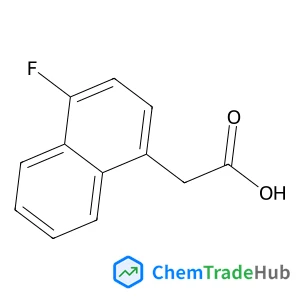
amine structure](https://static.chemtradehub.com/structs/629/62924-61-2-0728.webp "[(2-chlorophenyl)methyl](ethyl)amine structure")
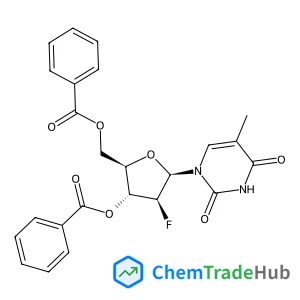
1-(3',5'-Di-O-benzoyl-2'-deoxy-2'-fluoro-b-D-arabinofuranosyl)thymine
CAS Number:
97614-47-6
Molecular Formula:
C24H21FN2O7
Recommended Suppliers






Disclaimer
This page provides academic journal information for reference and research purposes only. We are not affiliated with any journal publishers and do not handle publication submissions. For publication-related inquiries, please contact the respective journal publishers directly.
If you notice any inaccuracies in the information displayed, please contact us at support@chemtradehub.com. We will promptly review and address your concerns.