












Spectrum of excess partial molar absorptivity. Part II: a near infrared spectroscopic study of aqueous Na-halides
Literature Information
Publication Date
2012-02-09
DOI
10.1039/C2CP23255C
Impact Factor
3.676
Authors
Fumie Sebe, Keiko Nishikawa, Yoshikata Koga
View Original
Abstract
Our earlier thermodynamic studies suggested that F− and Cl− form hydration shells with the hydration number 14 ± 2 and 2.3 ± 0.6, respectively, and leave the bulk H2O away from hydration shells unperturbed. Br− and I−, on the other hand, form hydrogen bonds directly with the momentarily existing hydrogen bond network of H2O, and retard the degree of entropy–volume cross fluctuation inherent in liquid H2O. The effect of the latter is stronger for I− than Br−. Here we seek additional information about this qualitative difference between Cl− and (Br− and I−) pair by near infrared (NIR) spectroscopy. We analyze the ν2 + ν3 band of H2O in the range 4600–5500 cm−1 of aqueous solutions of NaCl, NaBr and NaI, by a new approach. From observed absorbance, we calculate excess molar absorptivity, εE, excess over the additive contributions of solute and solvent. εE thus contains information about the effect of inter-molecular interactions in the ν2 + ν3 spectrum. The spectrum of εE shows three bands; two negative ones at 5263 and 4873 cm−1, and the positive band at 5123 cm−1. We then define and calculate the excess partial molar absorptivity of each salt, εEsalt. From the behaviour of εEsalt we suggest that the negative band at 5263 cm−1 represents free H2O without much hydrogen bonding under the influence of local electric field of ions. Furthermore, from a sudden change in the xsalt (mole fraction of salt) dependence of εEsalt, we suggest that there is an ion-pairing in xsalt > 0.032, 0.036, and 0.04 for NaCl, NaBr and NaI respectively. The positive band of εE at 5123 cm−1 is attributed to a modestly organized hydrogen bond network of H2O (or liquid-likeness), and the xsalt dependence of εEsalt indicated a qualitative difference in the effect of Cl− from those of Br− and I−. Namely, the values of εEsalt stay constant for Cl− but those for Br− and I− decrease smoothly on increasing the salt mole fraction. The mole fraction dependence of εEsalt at the 4873 cm−1 band, due to ice-likeness in H2O, shows a subtle difference between Cl− and (Br−, I−) pair.
Related Literature
The effect of fluorination on chain transfer reactions in the radical polymerization of oligo ethylene glycol ethenesulfonate monomers
Hubertus Burchardt-Tofaute, Mukundan Thelakkat
2018-07-09
Paper
DOI: 10.1039/C8PY00623G
A new echelon of precision polypentenamers: highly isotactic branching on every five carbons
Stefan Brits, William J. Neary, Goutam Palui, Justin G. Kennemur
2018-01-02
Paper
DOI: 10.1039/C7PY01922J
New electroactive macromonomers and multi-responsive PEDOT graft copolymers
Sara Marina, Daniele Mantione, Kasina ManojKumar, Vijayakrishna Kari, Agnieszka Tercjak, Ana Sanchez-Sanchez
2018-06-15
Paper
DOI: 10.1039/C8PY00680F
The power of the ring: a pH-responsive hydrophobic epoxide monomer for superior micelle stability
Jaeeun Song, L. Palanikumar, Yeongkyu Choi, Inhye Kim, Tae-young Heo, Eungjin Ahn, Soo-Hyung Choi, Eunji Lee, Yuji Shibasaki, Ja-Hyoung Ryu
2017-10-06
Paper
DOI: 10.1039/C7PY01613A
ROS-responsive poly(ε-caprolactone) with pendent thioether and selenide motifs
Li Yu, Mei Zhang, Fu-Sheng Du, Zi-Chen Li
2018-06-21
Paper
DOI: 10.1039/C8PY00620B
Recyclable and efficient polyurethane-Ir catalysts for direct borylation of aromatic compounds
Akihiro Kimura, Haruka Hayama, Hassan Nageh, Yue Wang, Naofumi Naga
2017-11-09
Paper
DOI: 10.1039/C7PY01509G
Exploiting CH/π interactions in robust supramolecular adhesives
Taiki Yamate, Takayuki Fujiwara, Toru Yamaguchi, Hiroshi Suzuki, Motohiro Akazome
2018-07-20
Paper
DOI: 10.1039/C8PY00592C
Straightforward synthesis of model polystyrene-block-poly(vinyl alcohol) diblock polymers
Ozcan Altintas, Joshua C. Speros, Frank S. Bates, Marc A. Hillmyer
2018-07-31
Paper
DOI: 10.1039/C8PY00937F
The effects of polymer topology and chain length on the antimicrobial activity and hemocompatibility of amphiphilic ternary copolymers
Rashin Namivandi-Zangeneh, Rebecca J. Kwan, Thuy-Khanh Nguyen, Jonathan Yeow, Frances L. Byrne, Edgar H. H. Wong, Cyrille Boyer
2017-08-18
Paper
DOI: 10.1039/C7PY01069A
You might also like
Compound Q&A
What are the main uses of (3.beta.)-3-Hydroxy-N,N-dimethyl-chol-5-en-24-amide (CAS: 79066-03-8)?
(3.beta.)-3-Hydroxy-N,N-dimethyl-chol-5-en-24-amide (CAS: 79066-03-8) is primari...
79066-03-8(3.beta.)-3-Hydroxy-...
Compound Q&A
What regulatory guidelines apply to 5-(aminomethyl)-2-methoxyphenol (CAS: 89702-89-6)?
5-(Aminomethyl)-2-methoxyphenol (CAS: 89702-89-6) is classified under GHS as a s...
89702-89-65-(aminomethyl)-2-me...
Compound Q&A
What is Thieno[2,3-c]pyridin-7(6H)-one (CAS: 28981-13-7)?
Thieno[2,3-c]pyridin-7(6H)-one (CAS: 28981-13-7) is a heterocyclic organic compo...
28981-13-7Thieno[2,3-c]pyridin...
Compound Q&A
Is 1-[(6-Methoxy-3-pyridinyl)methyl]-4-piperidinamine dihydrochloride (CAS: 1185311-28-7) safe?
1-[(6-Methoxy-3-pyridinyl)methyl]-4-piperidinamine dihydrochloride is generally ...
1185311-28-71-[(6-Methoxy-3-pyri...
Compound Q&A
What regulatory guidelines apply to [(2E)-3-Phenyl-2-propen-1-yl]phosphonic acid (CAS: 146404-58-2)?
[(2E)-3-Phenyl-2-propen-1-yl]phosphonic acid (CAS: 146404-58-2) is regulated und...
146404-58-2[(2E)-3-Phenyl-2-pro...
Compound Q&A
What regulatory guidelines apply to 6-Bromo-7-methoxyquinoline (CAS: 1620515-86-7)?
6-Bromo-7-methoxyquinoline (CAS: 1620515-86-7) falls under the scope of the Glob...
1620515-86-76-Bromo-7-methoxyqui...
Compound Q&A
What industries use (2R)-1-(1-Benzofuran-2-yl)-N-propyl-2-pentanamine (CAS: 260550-89-8)?
This compound is primarily used in the pharmaceutical industry for the developme...
260550-89-8(2R)-1-(1-Benzofuran...
Compound Q&A
What are the main uses of 1-Ethyl-7-[2-methyl-6-(4H-1,2,4-triazol-3-yl)-3-pyridinyl]-3,5-dihydropyrazino[2,3-b]pyrazin-2(1H)-one (CAS: 1228013-15-7)?
1-Ethyl-7-[2-methyl-6-(4H-1,2,4-triazol-3-yl)-3-pyridinyl]-3,5-dihydropyrazino[2...
1228013-15-71-Ethyl-7-[2-methyl-...
Compound Q&A
Are there alternatives to {5-(Acryloylamino)-2-[(dimethylamino)methyl]phenyl}boronic acid (CAS: 1217500-78-1) in synthesis?
Alternative reagents such as 2-[(dimethylamino)methyl]phenylboronic acid or rela...
1217500-78-1{5-(Acryloylamino)-2...
Compound Q&A
What is 3-(Piperidin-4-yloxy)pyridine (CAS: 310881-48-2)?
3-(Piperidin-4-yloxy)pyridine (CAS: 310881-48-2) is an organic compound with the...
310881-48-23-(Piperidin-4-yloxy...
Source Journal
Physical Chemistry Chemical Physics

CiteScore:
5.5
Self-citation Rate:
10.3%
Articles per Year:
3036
Physical Chemistry Chemical Physics (PCCP) is an international journal co-owned by 19 physical chemistry and physics societies from around the world. This journal publishes original, cutting-edge research in physical chemistry, chemical physics and biophysical chemistry. To be suitable for publication in PCCP, articles must include significant innovation and/or insight into physical chemistry; this is the most important criterion that reviewers and Editors will judge against when evaluating submissions. The journal has a broad scope and welcomes contributions spanning experiment, theory, computation and data science. Topical coverage includes spectroscopy, dynamics, kinetics, statistical mechanics, thermodynamics, electrochemistry, catalysis, surface science, quantum mechanics, quantum computing and machine learning. Interdisciplinary research areas such as polymers and soft matter, materials, nanoscience, energy, surfaces/interfaces, and biophysical chemistry are welcomed if they demonstrate significant innovation and/or insight into physical chemistry. Joined experimental/theoretical studies are particularly appreciated when complementary and based on up-to-date approaches.
Recommended Compounds
![N-[(6-Bromo-3-pyridinyl)methyl]ethanamine structure](https://static.chemtradehub.com/structs/120/120740-05-8-ca55.webp "N-[(6-Bromo-3-pyridinyl)methyl]ethanamine structure")
![Ethanone, 1-[4-chloro-2-(methylthio)-5-pyrimidinyl]- structure](https://static.chemtradehub.com/structs/661/66116-82-3-863e.webp "Ethanone, 1-[4-chloro-2-(methylthio)-5-pyrimidinyl]- structure")
Ethanone, 1-[4-chloro-2-(methylthio)-5-pyrimidinyl]-
CAS Number:
66116-82-3
Molecular Formula:
C7H7ClN2OS
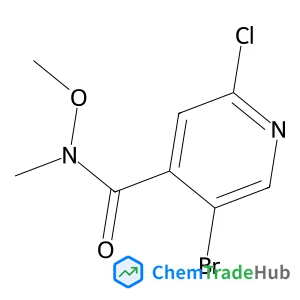
5-Bromo-2-chloro-N-methoxy-N-methylisonicotinamide
CAS Number:
1256790-08-5
Molecular Formula:
C8H8BrClN2O2
![4,4-Difluoro-2-methyl-1-{[(2-methyl-2-propanyl)oxy]carbonyl}-L-proline structure](https://static.chemtradehub.com/structs/119/1194032-23-9-f426.webp "4,4-Difluoro-2-methyl-1-{[(2-methyl-2-propanyl)oxy]carbonyl}-L-proline structure")
4,4-Difluoro-2-methyl-1-{[(2-methyl-2-propanyl)oxy]carbonyl}-L-proline
CAS Number:
1194032-23-9
Molecular Formula:
C11H17F2NO4
Recommended Suppliers






Disclaimer
This page provides academic journal information for reference and research purposes only. We are not affiliated with any journal publishers and do not handle publication submissions. For publication-related inquiries, please contact the respective journal publishers directly.
If you notice any inaccuracies in the information displayed, please contact us at support@chemtradehub.com. We will promptly review and address your concerns.