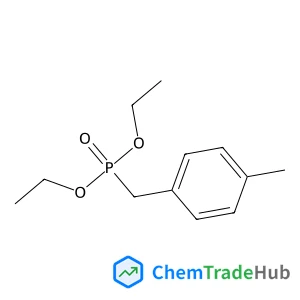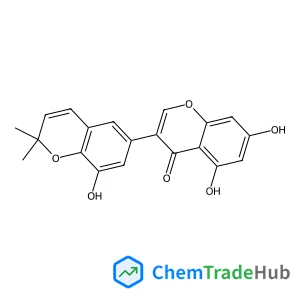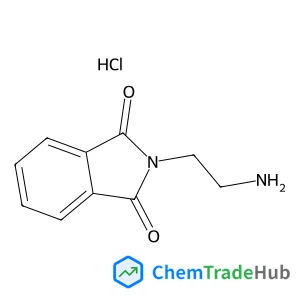
Back cover

Literature Information

Publication Date
DOI 10.1039/C7CP90123B
Impact Factor 3.676
Authors


View Original

Abstract

A graphical abstract is available for this content

Related Literature

A photoredox/nickel dual-catalytic strategy for benzylic C–H alkoxylation

Min Dong, Yuqi Jia, Wei Zhou, Jinlai Gao, Xiaoqing Lv, Fan Luo, Yongqiang Zhang, Shihui Liu

2021-10-26 Research Article

DOI: 10.1039/D1QO01421H

Nickel-catalyzed cascade carbonylative synthesis of N-benzoyl indoles from 2-nitroalkynes and aryl iodides

Lingyun Yao, Jun Ying

2021-10-05 Research Article

DOI: 10.1039/D1QO01284C

Fissisternoids A and B, two 2′,5′-quinodihydrochalcone-based meroterpenoid enantiomers with unusual carbon skeletons from Fissistigma bracteolatum

Gui-Min Xue, Chen-Guang Zhao, Jin-Feng Xue, Hui Chen, Zhen-Zhu Zhao, Ying-Ying Si, Kun Du, Yan-Le Zhi, Wei-Sheng Feng

2021-11-19 Research Article

DOI: 10.1039/D1QO01404H

Synthesis and biochemical evaluation of two novel N-hydroxyalkylated cyclosporin A analogs

Viktoria Kahlert, Oliver Ohlenschläger, Jelena Melesina, Christian Lücke

2018-05-24 Paper

DOI: 10.1039/C8OB00980E

Three decades of unveiling the complex chemistry of C-nitroso species with computational chemistry

Pauline Bianchi, Jean-Christophe M. Monbaliu

2021-11-09 Review Article

DOI: 10.1039/D1QO01415C

Insight into the mechanism of the arylation of arenes via norbornene relay palladation through meta- to para-selectivity

Shengnan Liu, Qiong Wang, Fang Huang, Wenjuan Wang, Chong Yang, Jianbiao Liu, Dezhan Chen

2021-11-09 Research Article

DOI: 10.1039/D1QO01500A

Synthesis of δ-phosphorothiolated alcohols by photoredox/copper catalyzed remote C(sp3)–H phosphorothiolation of N-alkoxypyridinium salts

Zhipeng Zheng, Shanshan Shi, Qianru Ma, Yufei Yang, Yan Liu, Guo Tang

2021-10-02 Research Article

DOI: 10.1039/D1QO01178B

Hydroxyl group-directed, tartaric acid-catalyzed synthesis of meta-functionalized aryl ethers and phenols through domino conjugate addition/aromatization of para-quinols

Guo-Shu Chen, Jia-Hui Li, Shu-Jie Chen, Wen-Xia Lin, Hai Ren, Dong-Sheng Deng, Yun-Lin Liu

2021-10-02 Research Article

DOI: 10.1039/D1QO01078F

Correction: 2-Aroylquinoline-5,8-diones as potent anticancer agents displaying tubulin and heat shock protein 90 (HSP90) inhibition

Kunal Nepali, Sunil Kumar, Hsiang-Ling Huang, Fei-Chiao Kuo, Cheng-Hsin Lee, Ching-Chuan Kuo, Teng-Kuang Yeh, Yu-Hsuan Li, Jang-Yang Chang, Jing-Ping Liou, Hsueh-Yun Lee

2018-06-15 Correction

DOI: 10.1039/C8OB90080A

Activation of disulfide bond cleavage triggered by hydrophobization and lipophilization of functionalized dihydroasparagusic acid

Fuyuhiko Inagaki, Miyuki Momose, Naoya Maruyama, Kenkyo Matsuura, Tsukasa Matsunaga, Chisato Mukai

2018-05-24 Paper

DOI: 10.1039/C8OB01055B

You might also like

Compound Q&A

What industries use (1R,3S)-1,3-Cyclopentanediol (CAS: 16326-97-9)?

(1R,3S)-1,3-Cyclopentanediol finds applications in various industries. In the ph...

16326-97-9(1R,3S)-1,3-Cyclopen...
Compound Q&A

What precautions should be taken when handling N'-[4-(Dimethylamino)phenyl]-N,N-dimethyl-1,4-benzenediamine (CAS: 637-31-0)?

When handling N'-[4-(Dimethylamino)phenyl]-N,N-dimethyl-1,4-benzenediamine, it i...

637-31-0N'-[4-(Dimethylamino...
Compound Q&A

Are there alternatives to 5-(2,4-Difluorophenyl)-2-methoxypyrimidine (CAS: 1352318-16-1) in synthesis?

There are several alternatives to 5-(2,4-Difluorophenyl)-2-methoxypyrimidine in ...

1352318-16-15-(2,4-Difluoropheny...
Compound Q&A

What regulatory guidelines apply to 1-(3-Methoxyphenoxy)propan-2-ol (CAS: 382141-68-6)?

1-(3-Methoxyphenoxy)propan-2-ol (CAS: 382141-68-6) must comply with the Globally...

382141-68-61-(3-Methoxyphenoxy)...
Compound Q&A

Is Tetrodotoxin Citrate (CAS: 18660-81-6) safe?

Tetrodotoxin Citrate is extremely dangerous and should be handled with extreme c...

18660-81-6Tetrodotoxin Citrate
Compound Q&A

What are the main uses of 2-Methyl-2-propanyl [(1R,3S)-3-hydroxycyclopentyl]carbamate (CAS: 225641-84-9)?

2-Methyl-2-propanyl [(1R,3S)-3-hydroxycyclopentyl]carbamate (CAS: 225641-84-9) i...

225641-84-92-Methyl-2-propanyl ...
Compound Q&A

How should waste containing 4-(2-Hydroxyhexafluoroisopropyl)Benzoic Acid (CAS: 16261-80-6) be handled?

Waste containing 4-(2-Hydroxyhexafluoroisopropyl)Benzoic Acid (CAS: 16261-80-6) ...

16261-80-64-(2-Hydroxyhexafluo...
Compound Q&A

How is 2-Methyl-2-proanyl {(2S)-1-[(benzyloxy)amino]-3-hydroxy-3-methyl-1-oxo-2-butanyl}carbamate (CAS: 102507-19-7) typically synthesized?

2-Methyl-2-proanyl {(2S)-1-[(benzyloxy)amino]-3-hydroxy-3-methyl-1-oxo-2-butanyl...

102507-19-72-Methyl-2-propanyl ...
Compound Q&A

What is Benzeneethanamine, α-ethyl-, hydrochloride (1:1) (CAS: 20735-15-3)?

Benzeneethanamine, α-ethyl-, hydrochloride (1:1) is an organic compound with the...

20735-15-3Benzeneethanamine, α...
Compound Q&A

Are there alternatives to 3-{(E)-[4-(Dimethylamino)phenyl]diazenyl}benzoic acid (CAS: 20691-84-3) in synthesis?

In the synthesis of compounds similar to 3-{(E)-[4-(Dimethylamino)phenyl]diazeny...

20691-84-33-{(E)-[4-(Dimethyla...

Source Journal

Physical Chemistry Chemical Physics

Physical Chemistry Chemical Physics
CiteScore: 5.5
Self-citation Rate: 10.3%
Articles per Year: 3036

Physical Chemistry Chemical Physics (PCCP) is an international journal co-owned by 19 physical chemistry and physics societies from around the world. This journal publishes original, cutting-edge research in physical chemistry, chemical physics and biophysical chemistry. To be suitable for publication in PCCP, articles must include significant innovation and/or insight into physical chemistry; this is the most important criterion that reviewers and Editors will judge against when evaluating submissions. The journal has a broad scope and welcomes contributions spanning experiment, theory, computation and data science. Topical coverage includes spectroscopy, dynamics, kinetics, statistical mechanics, thermodynamics, electrochemistry, catalysis, surface science, quantum mechanics, quantum computing and machine learning. Interdisciplinary research areas such as polymers and soft matter, materials, nanoscience, energy, surfaces/interfaces, and biophysical chemistry are welcomed if they demonstrate significant innovation and/or insight into physical chemistry. Joined experimental/theoretical studies are particularly appreciated when complementary and based on up-to-date approaches.
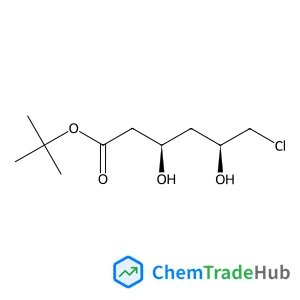
Recommended Compounds

Recommended Suppliers

Disclaimer
This page provides academic journal information for reference and research purposes only. We are not affiliated with any journal publishers and do not handle publication submissions. For publication-related inquiries, please contact the respective journal publishers directly.
If you notice any inaccuracies in the information displayed, please contact us at support@chemtradehub.com. We will promptly review and address your concerns.