












Three decades of unveiling the complex chemistry of C-nitroso species with computational chemistry
Literature Information
Publication Date
2021-11-09
DOI
10.1039/D1QO01415C
Impact Factor
5.281
Authors
Pauline Bianchi, Jean-Christophe M. Monbaliu
View Original
Abstract
C-Nitroso species are characterized by a unique nitrogen–oxygen combination located next to a carbon backbone, which confers them a unique ambiphilic and high reactivity towards nucleophilic, electrophilic but also radical species. Although this ambivalence can be seen as a strong asset for developing versatile synthetic aminohydroxylation and/or hydroxylamination processes mainly through nitroso Diels–Alder, nitroso ene, and nitrosoaldol reactions, it also contributes to complex optimization and rationalization arising from the many competitive pathways, that is, the occurrence of regioisomers and stereoisomers, as well as dimerization and tautomerization side-reactions. Complex reactivity profiles are usually seen by synthetic organic chemists as major hurdles to overcome, despite the armada of analytical and purification methods available to them, and hence to achieve selective and exploitable developments of such reactions. The rise of computational chemistry and resources has certainly changed their perspectives, since it provides a very different angle to gather insights on intrinsic properties, reactivity, and mechanisms. In silico chemistry also provides a robust alternative to time and resource-consuming synthetic work and can therefore contribute to alleviate wasteful preparations by guiding the chemist toward the best combination of reagents to achieve high selectivity and yield. The synergistic combination of synthetic organic chemistry and computational chemistry, within the specific context of the complex chemistry of C-nitroso species, is discussed in this work. This review aims at giving an overview of the molecular and chemical properties obtained through computational chemistry as an enabling support for the rationalization and optimization of reactions relying on ambiphilic C-nitroso species over the 3 last decades. It provides clear, concise, and illustrated guidelines for the synthetic chemist in search of inspiration through computations.
Recommended Journals
Related Literature
Towards sustainable synthesis: a life cycle assessment of polymer of intrinsic microporosity (PIM-1) by green mechanosynthesis
Ching Yoong Loh, Rui Huang, Roy Bell, Ming Xie
2023-10-26
Paper
DOI: 10.1039/D3SU00340J
Sulfonyldibenzoate coordination polymers as bioactive dopants for polysaccharide films with antibacterial and antibiofilm properties
Filipa Macedo, Telma Guiu, Chris H. J. Franco, Vânia André, Alexander M. Kirillov
2023-11-02
Paper
DOI: 10.1039/D3LF00123G
A guide to lignin valorization in biorefineries: traditional, recent, and forthcoming approaches to convert raw lignocellulose into valuable materials and chemicals
David Cannella, Diego Montesdeoca, Iwona Cybulska, Damien P. Debecker
2023-11-09
Tutorial Review
DOI: 10.1039/D3SU00140G
The role of ceria/precious metal interfaces in catalysis
Michele Melchionna
2023-11-29
Perspective
DOI: 10.1039/D3LF00202K
New buffer systems for photopainting of single biomolecules
Christoph Naderer, Heinrich Krobath, Dmitry Sivun, Georgii Gvindzhiliia, Thomas A. Klar, Jaroslaw Jacak
2023-10-07
Paper
DOI: 10.1039/D3LF00125C
Biological and postharvest interventions to manage the ethylene in fruit: a review
Ram Asrey, Swati Sharma, Kalyan Barman, Uma Prajapati, Narender Negi
2023-06-29
Review Article
DOI: 10.1039/D3FB00037K
Engineering Pt nanoclusters on CeO2 surface with abundant point defects by in situ confined-domain encapsulation strategy for the catalytic elimination of VOCs
Weiliang Han, Weigao Han, Zhicheng Tang
2023-10-09
Paper
DOI: 10.1039/D3LF00147D
Moringa pod derived antioxidant dietary fibre as a quality enhancer in goat meat nuggets
Annada Das, S. Biswas, P. K. Nanda, Niloy Chatterjee, Srija Pal, Pubali Dhar, Arun K. Verma, Dipanwita Bhattacharya, Rojison Koshy, Arun K. Das
2024-01-03
Paper
DOI: 10.1039/D3FB00177F
Fortification of vegetable fat with natural antioxidants recovered by bergamot pomace for use as an ingredient for the production of biscuits
Amalia Piscopo, Simone Santacaterina, Elisa Imeneo, Alessandra De Bruno, Marco Poiana
2023-10-13
Paper
DOI: 10.1039/D3FB00125C
Structure and properties of biobased polyamide 36,9/cellulose nanocomposites
Biqiong Chen
2023-10-20
Paper
DOI: 10.1039/D3SU00302G
You might also like
Compound Q&A
What industries use (1R,3S)-1,3-Cyclopentanediol (CAS: 16326-97-9)?
(1R,3S)-1,3-Cyclopentanediol finds applications in various industries. In the ph...
16326-97-9(1R,3S)-1,3-Cyclopen...
Compound Q&A
What precautions should be taken when handling N'-[4-(Dimethylamino)phenyl]-N,N-dimethyl-1,4-benzenediamine (CAS: 637-31-0)?
When handling N'-[4-(Dimethylamino)phenyl]-N,N-dimethyl-1,4-benzenediamine, it i...
637-31-0N'-[4-(Dimethylamino...
Compound Q&A
Are there alternatives to 5-(2,4-Difluorophenyl)-2-methoxypyrimidine (CAS: 1352318-16-1) in synthesis?
There are several alternatives to 5-(2,4-Difluorophenyl)-2-methoxypyrimidine in ...
1352318-16-15-(2,4-Difluoropheny...
Compound Q&A
What regulatory guidelines apply to 1-(3-Methoxyphenoxy)propan-2-ol (CAS: 382141-68-6)?
1-(3-Methoxyphenoxy)propan-2-ol (CAS: 382141-68-6) must comply with the Globally...
382141-68-61-(3-Methoxyphenoxy)...
Compound Q&A
Is Tetrodotoxin Citrate (CAS: 18660-81-6) safe?
Tetrodotoxin Citrate is extremely dangerous and should be handled with extreme c...
18660-81-6Tetrodotoxin Citrate
Compound Q&A
What are the main uses of 2-Methyl-2-propanyl [(1R,3S)-3-hydroxycyclopentyl]carbamate (CAS: 225641-84-9)?
2-Methyl-2-propanyl [(1R,3S)-3-hydroxycyclopentyl]carbamate (CAS: 225641-84-9) i...
225641-84-92-Methyl-2-propanyl ...
Compound Q&A
How should waste containing 4-(2-Hydroxyhexafluoroisopropyl)Benzoic Acid (CAS: 16261-80-6) be handled?
Waste containing 4-(2-Hydroxyhexafluoroisopropyl)Benzoic Acid (CAS: 16261-80-6) ...
16261-80-64-(2-Hydroxyhexafluo...
Compound Q&A
How is 2-Methyl-2-proanyl {(2S)-1-[(benzyloxy)amino]-3-hydroxy-3-methyl-1-oxo-2-butanyl}carbamate (CAS: 102507-19-7) typically synthesized?
2-Methyl-2-proanyl {(2S)-1-[(benzyloxy)amino]-3-hydroxy-3-methyl-1-oxo-2-butanyl...
102507-19-72-Methyl-2-propanyl ...
Compound Q&A
What is Benzeneethanamine, α-ethyl-, hydrochloride (1:1) (CAS: 20735-15-3)?
Benzeneethanamine, α-ethyl-, hydrochloride (1:1) is an organic compound with the...
20735-15-3Benzeneethanamine, α...
Compound Q&A
Are there alternatives to 3-{(E)-[4-(Dimethylamino)phenyl]diazenyl}benzoic acid (CAS: 20691-84-3) in synthesis?
In the synthesis of compounds similar to 3-{(E)-[4-(Dimethylamino)phenyl]diazeny...
20691-84-33-{(E)-[4-(Dimethyla...
Source Journal
Organic Chemistry Frontiers

CiteScore:
7.8
Self-citation Rate:
8.7%
Articles per Year:
724
Organic Chemistry Frontiers publishes high-quality research from across organic chemistry. Emphases are placed on studies that make significant contributions to the field of organic chemistry by reporting either new or significantly improved protocols or methodologies. Topics include, but are not limited to the following: Organic synthesis Development of synthetic methodologies Catalysis Natural products Functional organic materials Supramolecular and macromolecular chemistry Physical and computational organic chemistry
Recommended Compounds
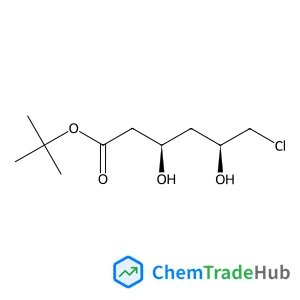
2-Methyl-2-propanyl (3R,5S)-6-chloro-3,5-dihydroxyhexanoate
CAS Number:
154026-93-4
Molecular Formula:
C10H19ClO4
Recommended Suppliers







Disclaimer
This page provides academic journal information for reference and research purposes only. We are not affiliated with any journal publishers and do not handle publication submissions. For publication-related inquiries, please contact the respective journal publishers directly.
If you notice any inaccuracies in the information displayed, please contact us at support@chemtradehub.com. We will promptly review and address your concerns.