












Unusual photoresponses in the upper critical solution temperature of polymer solutions mediated by changes in intermolecular interactions in an azo-doped liquid crystalline solvent
Literature Information
Publication Date
2018-01-22
DOI
10.1039/C7CP08335A
Impact Factor
3.676
Authors
Takahiro Yamamoto, Hideyuki Kihara, Yasuhisa Yamamura, Kazuya Saito, Kohji Ohno
View Original
Abstract
Photoinduced changes in the upper critical solution temperature (UCST) were investigated for polymer solutions in an azobenzene-doped liquid crystal solvent. The UCST of poly(methyl methacrylate) (PMMA) and polystyrene (PS) solutions dropped upon irradiation with UV light, which induces trans–cis photoisomerization of the doped azo dye. In the case of PMMA solutions, the photoinduced drop in UCST was significantly larger than that expected from previous studies using azo-based polymers and common solvents. Moreover, the UCST of PS solutions also decreased under photoirradiation, in a direction opposite to that expected from the contribution of polarity. X-ray diffraction data of the solvent suggest that the decreased intermolecular interaction in the solvent (i.e. larger distance between the solvent molecules) is responsible for the photoresponsive behavior of the UCST. The proposed mechanism is consistent with the Flory–Huggins theory. Using such photoresponses in the UCST, the isothermal transition between 2-phase and 1-phase states by photoirradiation was demonstrated.
Recommended Journals
Related Literature
Catalytic enantioselective one-pot approach to cis- and trans-2,3-diaryl substituted 1,5-benzothiazepines
Sara Meninno, Ilaria Quaratesi, Chiara Volpe, Andrea Mazzanti, Alessandra Lattanzi
2018-09-12
Paper
DOI: 10.1039/C8OB01988F
Reduction of aromatic nitriles into aldehydes using calcium hypophosphite and a nickel precursor
Ali Hachem, Ali Alaaeddine, Estelle Métay, Marc Lemaire
2018-08-22
Paper
DOI: 10.1039/C8OB01751D
Tandem radical cyclization of N-methacryloyl benzamides with CBr4 to construct brominated isoquinolinediones
Songhai Huang, Pengfei Niu, Yingpeng Su, Dongcheng Hu, Congde Huo
2018-10-02
Paper
DOI: 10.1039/C8OB01964A
Cobalt(ii)-catalyzed regioselective C–H halogenation of anilides
Ze-lin Li, Kang-kang Sun, Chun Cai
2018-07-10
Paper
DOI: 10.1039/C8OB01448E
Correction: Chiral NHC-catalyzed 1,3-dipolar [3 + 2] cycloaddition of azomethine imines with α-chloroaldehydes for the synthesis of bicyclic pyrazolidinones
Limin Yang, Yunbo Lv, Fei Wang, Guofu Zhong
2018-08-07
Correction
DOI: 10.1039/C8OB90095G
Silver-catalyzed regioselective hydroamination of alkenyl diazoacetates to synthesize γ-amino acid equivalents
Jun Ueda, Shingo Harada, Hiroki Nakayama
2018-06-06
Paper
DOI: 10.1039/C8OB00894A
Protected 2′-deoxyribonucleoside triphosphate building blocks for the photocaging of epigenetic 5-(hydroxymethyl)cytosine in DNA
Soňa Boháčová, Lenka Poštová Slavětínská
2018-06-08
Paper
DOI: 10.1039/C8OB01106K
trans-Hydroboration vs. 1,2-reduction: divergent reactivity of ynones and ynoates in Lewis-base-catalyzed reactions with pinacolborane
You Zi, Fritz Schömberg, Fabian Seifert, Helmar Görls, Ivan Vilotijevic
2018-08-16
Paper
DOI: 10.1039/C8OB01343H
You might also like
Compound Q&A
What are the main uses of 1-(3-Aminophenyl)-3-[(3R)-1-(3,3-dimethyl-2-oxobutyl)-2-oxo-5-(2-pyridinyl)-2,3-dihydro-1H-1,4-benzodiazepin-3-yl]urea (CAS: 155412-88-7)?
This compound is mainly used as an intermediate in the synthesis of antipsychoti...
155412-88-71-(3-Aminophenyl)-3-...
Compound Q&A
How should waste containing 1-(D-Ribofuranosyl)-1,4-dihydro-3-pyridinecarboxamide (CAS: 19132-12-8) be handled?
Waste containing 1-(D-Ribofuranosyl)-1,4-dihydro-3-pyridinecarboxamide (CAS: 191...
19132-12-81-(D-Ribofuranosyl)-...
Compound Q&A
What regulatory guidelines apply to 2-Methyl-2-propanyl 3-bromo-3-(hydroxymethyl)-1-azetidinecarboxylate (CAS: 2007919-81-3)?
2-Methyl-2-propanyl 3-bromo-3-(hydroxymethyl)-1-azetidinecarboxylate (CAS: 20079...
2007919-81-32-Methyl-2-propanyl ...
Compound Q&A
What is N-(4-Chloro-2-pyridinyl)acetamide (CAS: 245056-66-0)?
N-(4-Chloro-2-pyridinyl)acetamide (CAS: 245056-66-0) is a chemical compound with...
245056-66-0N-(4-Chloro-2-pyridi...
Compound Q&A
What is 5-Chloro-2-hydroxybenzoic acid (CAS: 321-14-2)?
5-Chloro-2-hydroxybenzoic acid, also known as 5-chlorosalicylic acid, is an arom...
321-14-25-Chloro-2-hydroxybe...
Compound Q&A
What precautions should be taken when handling 1,1-Dichloro-1-fluoroethane (CAS: 1717-00-6)?
When handling 1,1-Dichloro-1-fluoroethane (CAS: 1717-00-6), it is important to u...
1717-00-61,1-Dichloro-1-fluor...
Compound Q&A
What are the physical and chemical properties of Fmoc-(2S,3R)-3-phenylpyrrolidine-2-carboxylic acid (CAS: 281655-32-1)?
Fmoc-(2S,3R)-3-phenylpyrrolidine-2-carboxylic acid is a white crystalline solid ...
281655-32-1Fmoc-(2S,3R)-3-pheny...
Compound Q&A
What are the main uses of 4-Amino-5-bromo-2-pyridinecarboxylic acid (CAS: 1363381-01-4)?
4-Amino-5-bromo-2-pyridinecarboxylic acid is primarily used as a precursor in th...
1363381-01-44-Amino-5-bromo-2-py...
Compound Q&A
What precautions should be taken when handling (S)-tert-butyl 2-((2-(4-bromophenyl)-2-oxoethyl)carbamoyl)pyrrolidine-1-carboxylate (CAS: 1007881-98-2)?
Handling this compound should be done with personal protective equipment (PPE) i...
1007881-98-2(S)-tert-butyl 2-((2...
Compound Q&A
What precautions should be taken when handling 8-bromo-2,2-dimethyl-3,4-dihydro-2H-1,4-benzoxazin-3-one (CAS: 688363-73-7)?
When handling 8-bromo-2,2-dimethyl-3,4-dihydro-2H-1,4-benzoxazin-3-one, use prop...
688363-73-78-bromo-2,2-dimethyl...
Source Journal
Physical Chemistry Chemical Physics

CiteScore:
5.5
Self-citation Rate:
10.3%
Articles per Year:
3036
Physical Chemistry Chemical Physics (PCCP) is an international journal co-owned by 19 physical chemistry and physics societies from around the world. This journal publishes original, cutting-edge research in physical chemistry, chemical physics and biophysical chemistry. To be suitable for publication in PCCP, articles must include significant innovation and/or insight into physical chemistry; this is the most important criterion that reviewers and Editors will judge against when evaluating submissions. The journal has a broad scope and welcomes contributions spanning experiment, theory, computation and data science. Topical coverage includes spectroscopy, dynamics, kinetics, statistical mechanics, thermodynamics, electrochemistry, catalysis, surface science, quantum mechanics, quantum computing and machine learning. Interdisciplinary research areas such as polymers and soft matter, materials, nanoscience, energy, surfaces/interfaces, and biophysical chemistry are welcomed if they demonstrate significant innovation and/or insight into physical chemistry. Joined experimental/theoretical studies are particularly appreciated when complementary and based on up-to-date approaches.
Recommended Compounds
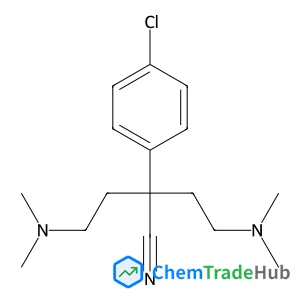
2-(4-Chlorophenyl)-4-(dimethylamino)-2-(2-(dimethylamino)ethyl)butanenitrile
CAS Number:
1246816-57-8
Molecular Formula:
C16H24ClN3
![Methyl 4-({[(2-methyl-2-propanyl)oxy]carbonyl}amino)bicyclo[2.2.2]octane-1-carboxylate structure](https://static.chemtradehub.com/structs/943/943845-74-7-b7e5.webp "Methyl 4-({[(2-methyl-2-propanyl)oxy]carbonyl}amino)bicyclo[2.2.2]octane-1-carboxylate structure")
Methyl 4-({[(2-methyl-2-propanyl)oxy]carbonyl}amino)bicyclo[2.2.2]octane-1-carboxylate
CAS Number:
943845-74-7
Molecular Formula:
C15H25NO4
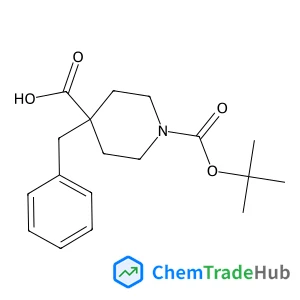
4-Benzyl-1-(tert-butoxycarbonyl)piperidine-4-carboxylic acid
CAS Number:
170838-87-6
Molecular Formula:
C18H25NO4
Recommended Suppliers





Disclaimer
This page provides academic journal information for reference and research purposes only. We are not affiliated with any journal publishers and do not handle publication submissions. For publication-related inquiries, please contact the respective journal publishers directly.
If you notice any inaccuracies in the information displayed, please contact us at support@chemtradehub.com. We will promptly review and address your concerns.