












The effects of osmolytes and crowding on the pressure-induced dissociation and inactivation of dimeric LADH
Literature Information
Publication Date
2018-02-19
DOI
10.1039/C7CP08242H
Impact Factor
3.676
Authors
Karin Julius, Samy R. Al-Ayoubi, Michael Paulus, Metin Tolan, Roland Winter
View Original
Abstract
Investigating the correlation between structure and activity of oligomeric enzymes at high pressure is essential for understanding intermolecular interactions and reactivity of proteins in cellulo of organisms thriving at extreme environmental conditions as well as for biotechnological applications, such as high-pressure enzymology. In a combined experimental effort employing small-angle X-ray scattering, FT-IR and fluorescence spectroscopy as well as stopped-flow enzyme kinetics in concert with high-pressure techniques, we reveal the pressure-induced conformational changes of the dimeric enzyme horse liver alcohol dehydrogenase (LADH) on the quaternary, secondary and tertiary structural level. Moreover, the effects of cosolutes and crowding agents, mimicking intracellular conditions, have been addressed. Our results show that beyond an increase of enzymatic activity at low pressures, loss of enzyme activity occurs around 600–800 bar, i.e. in a pressure regime where small conformational changes take place in the coenzyme's binding pocket, only. Whereas higher-order oligomers dissociate at low pressures, subunit dissociation of dimeric LADH takes place, depending on the solution conditions, between 2000 and 4000 bar, only. Oligomerization and subunit dissociation are modulated by cosolvents such as urea or trimethylamine-N-oxide as well as by the crowding agent polyethylene glycol, based on their tendency to bind to the protein's interface or act via their excluded volume effect, respectively.
Related Literature
Magnetic alignment of aqueous CTAB in nematic and hexagonal liquid crystalline phases investigated by spin-1 NMR
Jacalyn S. Clawson, Gregory P. Holland, Todd M. Alam
2006-05-04
Paper
DOI: 10.1039/B601539E
Large molecular aggregates: from atmospheric aerosols to drugnanoparticles
George Firanescu, Dana Hermsdorf, Roman Ueberschaer, Ruth Signorell
2006-08-03
Invited Article
DOI: 10.1039/B608433H
An FT-IRRAS study of nitrophenyl mono- and multilayers electro-deposited on gold by reduction of the diazonium salt
Alejandra Ricci, Cecilia Bonazzola, Ernesto J. Calvo
2006-08-24
Communication
DOI: 10.1039/B609497J
On the nature of metallic nanoparticles obtained from molecular Co3Ru–carbonyl clusters in mesoporous silica matrices‡
Claude Estournès, Pierre Braunstein, Jean Guille, Jean-Louis Paillaud, Mireille Richard-Plouet, Jacky Rosé
2006-08-01
Paper
DOI: 10.1039/B603404G
Electro-oxidation of formic acid catalyzed by FePt nanoparticles
Wei Chen, Jaemin Kim, Shouheng Sun, Shaowei Chen
2006-05-25
Paper
DOI: 10.1039/B603045A
Calculation of intermolecular interactions in the benzene dimer using coupled-cluster and local electron correlation methods‡
J. Grant Hill, James A. Platts, Hans-Joachim Werner
2006-07-27
Paper
DOI: 10.1039/B608623C
An NMR and relativistic DFT investigation of one-bond nuclear spin–spin coupling in solid triphenyl group-14 chlorides
Mathew J. Willans, Bryan A. Demko, Roderick E. Wasylishen
2006-05-10
Paper
DOI: 10.1039/B603937E
You might also like
Compound Q&A
How is Ethyl 4-chlorothieno[2,3-b]pyridine-5-carboxylate (CAS: 59713-58-5) typically synthesized?
Ethyl 4-chlorothieno[2,3-b]pyridine-5-carboxylate (CAS: 59713-58-5) can be synth...
59713-58-5Ethyl 4-chlorothieno...
Compound Q&A
What regulatory guidelines apply to 5-Methyl-1H-indole-3-carbaldehyde (CAS: 52562-50-2)?
5-Methyl-1H-indole-3-carbaldehyde (CAS: 52562-50-2) is subject to various regula...
52562-50-25-Methyl-1H-indole-3...
Compound Q&A
What are the physical and chemical properties of (1,3-Dimethyl-2,4-dioxo-1,2,3,4-tetrahydro-5-pyrimidinyl)boronic acid (CAS: 223418-73-3)?
(1,3-Dimethyl-2,4-dioxo-1,2,3,4-tetrahydro-5-pyrimidinyl)boronic acid is a white...
223418-73-3(1,3-Dimethyl-2,4-di...
Compound Q&A
How should waste containing Sulfocostunolide A (CAS: 1016983-51-9) be handled?
Waste containing Sulfocostunolide A (CAS: 1016983-51-9) should be handled with c...
1016983-51-9Sulfocostunolide A
Compound Q&A
What precautions should be taken when handling Murraxocin (CAS: 88478-44-8)?
When handling Murraxocin (CAS: 88478-44-8), ensure proper personal protective eq...
88478-44-8Murraxocin
Compound Q&A
What are the physical and chemical properties of Formvar (CAS: 63148-64-1)?
Formvar (CAS: 63148-64-1) is an alkyd resin characterized by a high molecular we...
63148-64-1Formvar(R)
Compound Q&A
Is (S)-4-benzyl-2-((benzyloxy)methyl)morpholine (CAS: 205242-66-6) safe?
(S)-4-benzyl-2-((benzyloxy)methyl)morpholine is generally safe when handled with...
205242-66-6(S)-4-benzyl-2-((ben...
Compound Q&A
What industries use Methyl 1-(5-bromo-2-pyrimidinyl)cyclopropanecarboxylate (CAS: 1447607-69-3)?
Methyl 1-(5-bromo-2-pyrimidinyl)cyclopropanecarboxylate (CAS: 1447607-69-3) is p...
1447607-69-3Methyl 1-(5-bromo-2-...
Compound Q&A
Is 2-Methyl-1-phenyl-1-propanamine hydrochloride (CAS: 24290-47-9) safe?
2-Methyl-1-phenyl-1-propanamine hydrochloride (CAS: 24290-47-9) is generally con...
24290-47-92-Methyl-1-phenyl-1-...
Compound Q&A
How is 3-(4-Bromophenyl)-2-methylpropanoic acid (CAS: 66735-01-1) typically synthesized?
3-(4-Bromophenyl)-2-methylpropanoic acid is synthesized through a multi-step pro...
66735-01-13-(4-Bromophenyl)-2-...
Source Journal
Physical Chemistry Chemical Physics

CiteScore:
5.5
Self-citation Rate:
10.3%
Articles per Year:
3036
Physical Chemistry Chemical Physics (PCCP) is an international journal co-owned by 19 physical chemistry and physics societies from around the world. This journal publishes original, cutting-edge research in physical chemistry, chemical physics and biophysical chemistry. To be suitable for publication in PCCP, articles must include significant innovation and/or insight into physical chemistry; this is the most important criterion that reviewers and Editors will judge against when evaluating submissions. The journal has a broad scope and welcomes contributions spanning experiment, theory, computation and data science. Topical coverage includes spectroscopy, dynamics, kinetics, statistical mechanics, thermodynamics, electrochemistry, catalysis, surface science, quantum mechanics, quantum computing and machine learning. Interdisciplinary research areas such as polymers and soft matter, materials, nanoscience, energy, surfaces/interfaces, and biophysical chemistry are welcomed if they demonstrate significant innovation and/or insight into physical chemistry. Joined experimental/theoretical studies are particularly appreciated when complementary and based on up-to-date approaches.
Recommended Compounds
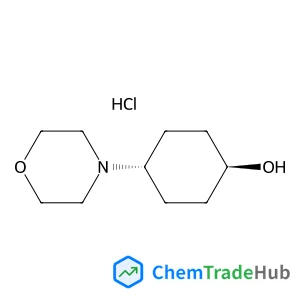
trans-4-(4-Morpholinyl)cyclohexanol hydrochloride (1:1)
CAS Number:
1588441-09-1
Molecular Formula:
C10H20ClNO2
![Imidazo[1,5-a]pyrazine structure](https://static.chemtradehub.com/structs/274/274-49-7-d749.webp "Imidazo[1,5-a]pyrazine structure")
Recommended Suppliers





Disclaimer
This page provides academic journal information for reference and research purposes only. We are not affiliated with any journal publishers and do not handle publication submissions. For publication-related inquiries, please contact the respective journal publishers directly.
If you notice any inaccuracies in the information displayed, please contact us at support@chemtradehub.com. We will promptly review and address your concerns.