


Charge driven lateral structural evolution of ions in electric double layer capacitors strongly correlates with differential capacitance
Literature Information
Publication Date
2018-02-26
DOI
10.1039/C7CP08075A
Impact Factor
3.676
Authors
Qiangqiang Meng
View Original
Abstract
Electric double layers (EDLs) play a decisive role in the energy storage of supercapacitors. Recently, voltage/charge driven ordering transitions of ions in the lateral direction of the EDL were found to dramatically affect the capacitance in experiments and molecular dynamics (MD) simulations. However, the correlation between the lateral structure of the ions and the capacitance was not well understood. In this work, all-atom MD simulations were applied to investigate the lateral ordering of the [BMIM][PF6] ionic liquid on both anode and cathode surfaces. The lateral ordering of ions was systematically characterized using the 2D structure factor, radial distribution function and coordination number. It was found that the disorder to order transition of PF6− ions on the anode occurs when the number of first nearest neighboring ions converges to six. What's more, the local maximum of the differential capacitance profile not only appears at the disorder–order transition point, but also occurs at the splitting point of the radial distribution function peak and where the number of second and third nearest neighboring ions become converged and stable. On the cathode side, a long range ordered phase of BMIM+ ions does not exist due to its multi-adsorption states on the electrode. To understand the origin of the correlation between the lateral structure and the differential capacitance, the correlation between the structures in the lateral and normal directions was investigated. Such a structural correlation is closely related to the three-dimensional characteristics of the EDL structure and the over-screening phenomenon.
Recommended Journals

Contact Lens & Anterior Eye

Journal of Enzyme inhibition and Medicinal Chemistry

Molecules

Advanced Engineering Materials

Green Chemistry

Photochemical & Photobiological Sciences

Journal of Medical Biochemistry

Environmental Toxicology and Pharmacology

Angewandte Chemie International Edition

Coloration Technology
Related Literature
Aromaticity control via modifications of a macrocyclic frame: 5,6-dimethoxyphenanthriporphyrin and 5,6-dioxophenanthriporphyrin
Kamil Kupietz, Michał J. Białek, Agata Białońska, Bartosz Szyszko, Lechosław Latos-Grażyński
2018-08-20
Research Article
DOI: 10.1039/C8QO00751A
Transition metal-free controlled synthesis of bis[(trifluoromethyl)sulfonyl]ethyl-decorated heterocycles‡
Pedro Almendros, Hikaru Yanai, Shoki Hoshikawa, Cristina Aragoncillo, Carlos Lázaro-Milla, Mireia Toledano-Pinedo, Takashi Matsumoto, Benito Alcaide
2018-09-20
Research Article
DOI: 10.1039/C8QO00955D
Regioselective indole C2-alkylation using β-CF3-substituted enones under redox neutral Rh(iii) catalysis
Bharatkumar Chaudhary, Monika Diwaker, Satyasheel Sharma
2018-09-27
Research Article
DOI: 10.1039/C8QO00932E
Palladium-catalyzed denitrogenative cycloadditions and alkenylations of benzotriazoles with alkynes
Yuanhao Wang, Zhiguo Wang, Xuewei Chen
2018-08-24
Research Article
DOI: 10.1039/C8QO00778K
Triisopropylsilylethynyl-substituted indenofluorenes: carbonyl versus dicyanovinylene functionalization in one-dimensional molecular crystals and solution-processed n-channel OFETs
Resul Ozdemir, Sangyun Park, İbrahim Deneme, Yonghan Park, Yunus Zorlu, Kevser Harmandar, Choongik Kim, Hakan Usta
2018-09-06
Research Article
DOI: 10.1039/C8QO00856F
Cleavage of the C–C triple bond of ketoalkynes: synthesis of 4(3H)-quinazolinones
Xifa Yang, Guolin Cheng, Jinhai Shen, Changsheng Kuai, Xiuling Cui
2015-02-11
Research Article
DOI: 10.1039/C4QO00260A
Transition-metal-free cleavage of C–C double bonds: a three-component reaction of aromatic alkenes with S8 and amides towards aryl thioamides‡
Zhanghong Guo, Kai Xu, Shuangshuang Hui, Xiaofang Zhao, Yangjie Wu
2018-10-05
Research Article
DOI: 10.1039/C8QO00835C
The CASE 2014 symposium: Catalysis and sensing for our environment, Xiamen 7th–9th November 2014
John S. Fossey, William D. G. Brittain
2014-12-19
Conference Report
DOI: 10.1039/C4QO90045F
You might also like
Compound Q&A
Is 2-(2-chloroacetamido)-3-phenylpropanoic acid (CAS: 7765-11-9) safe?
2-(2-Chloroacetamido)-3-phenylpropanoic acid (CAS: 7765-11-9) is generally consi...
7765-11-92-(2-chloroacetamido...
Compound Q&A
Is 2-(Benzyloxy)-5-bromobenzoic acid (CAS: 62176-31-2) safe?
2-(Benzyloxy)-5-bromobenzoic acid can be handled safely if appropriate precautio...
62176-31-22-(Benzyloxy)-5-brom...
Compound Q&A
What is (4-Methyl-1,2,5-oxadiazol-3-yl)methanamine hydrochloride (CAS: 1159825-48-5)?
(4-Methyl-1,2,5-oxadiazol-3-yl)methanamine hydrochloride is a chemical compound ...
1159825-48-5(4-Methyl-1,2,5-oxad...
Compound Q&A
What is 2-(5-Hexylthiophen-2-yl)-4,4,5,5-tetramethyl-1,3,2-dioxaborolane (CAS: 917985-54-7)?
2-(5-Hexylthiophen-2-yl)-4,4,5,5-tetramethyl-1,3,2-dioxaborolane (CAS: 917985-54...
917985-54-72-(5-Hexylthiophen-2...
Compound Q&A
Are there alternatives to 4-(8-Methyl-9H-1,3-dioxolo[4,5-h][2,3]benzodiazepin-5-yl)benzenamine (CAS: 102771-26-6) in synthesis?
While 4-(8-Methyl-9H-1,3-dioxolo[4,5-h][2,3]benzodiazepin-5-yl)benzenamine (CAS:...
102771-26-64-(8-Methyl-9H-1,3-d...
Compound Q&A
What is the market or research trend for tert-butyl 3-hydroxy-4,5,7,8-tetrahydro-2H-pyrazolo[3,4-d]azepine-6-carboxylate (CAS: 851376-80-2)?
The market for tert-butyl 3-hydroxy-4,5,7,8-tetrahydro-2H-pyrazolo[3,4-d]azepine...
851376-80-2tert-butyl 3-hydroxy...
Compound Q&A
How should waste containing 3,5-Diamino-1H-pyrazole-4-carbonitrile (CAS: 6844-58-2) be handled?
Waste containing 3,5-Diamino-1H-pyrazole-4-carbonitrile (CAS: 6844-58-2) should ...
6844-58-23,5-Diamino-1H-pyraz...
Compound Q&A
How is (6-Fluoro-3-pyridinyl)boronic acid (CAS: 351019-18-6) typically synthesized?
(6-Fluoro-3-pyridinyl)boronic acid can be synthesized through the reaction of 6-...
351019-18-6(6-Fluoro-3-pyridiny...
Compound Q&A
What industries use Dibenzyl carbonimidoylbiscarbamate (CAS: 10065-79-9)?
Dibenzyl carbonimidoylbiscarbamate (CAS: 10065-79-9) finds applications in vario...
10065-79-9Dibenzyl carbonimido...
Compound Q&A
What is the market or research trend for (beta,beta,2,3,4,5,6-~2~H_7_)Phenylalanine (CAS: 74228-83-4)?
The market for (beta,beta,2,3,4,5,6-~2~H_7_)Phenylalanine (CAS: 74228-83-4) is g...
74228-83-4(beta,beta,2,3,4,5,6...
Source Journal
Physical Chemistry Chemical Physics

CiteScore:
5.5
Self-citation Rate:
10.3%
Articles per Year:
3036
Physical Chemistry Chemical Physics (PCCP) is an international journal co-owned by 19 physical chemistry and physics societies from around the world. This journal publishes original, cutting-edge research in physical chemistry, chemical physics and biophysical chemistry. To be suitable for publication in PCCP, articles must include significant innovation and/or insight into physical chemistry; this is the most important criterion that reviewers and Editors will judge against when evaluating submissions. The journal has a broad scope and welcomes contributions spanning experiment, theory, computation and data science. Topical coverage includes spectroscopy, dynamics, kinetics, statistical mechanics, thermodynamics, electrochemistry, catalysis, surface science, quantum mechanics, quantum computing and machine learning. Interdisciplinary research areas such as polymers and soft matter, materials, nanoscience, energy, surfaces/interfaces, and biophysical chemistry are welcomed if they demonstrate significant innovation and/or insight into physical chemistry. Joined experimental/theoretical studies are particularly appreciated when complementary and based on up-to-date approaches.
Recommended Compounds

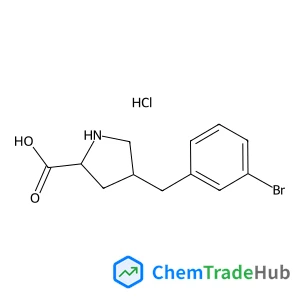
(2S,4R)-4-(3-Bromobenzyl)pyrrolidine-2-carboxylic acid hydrochloride
CAS Number:
1049734-10-2
Molecular Formula:
C12H15BrClNO2
![(1R)-N-((1R)-1-Phenylethyl)-1-[4-(tert-butyldimethylsilyloxymethyl)cyclohexyl]ethan-1-amine structure](https://static.chemtradehub.com/structs/672/672314-45-3-47ef.webp "(1R)-N-((1R)-1-Phenylethyl)-1-[4-(tert-butyldimethylsilyloxymethyl)cyclohexyl]ethan-1-amine structure")
(1R)-N-((1R)-1-Phenylethyl)-1-[4-(tert-butyldimethylsilyloxymethyl)cyclohexyl]ethan-1-amine
CAS Number:
672314-45-3
Molecular Formula:
C23H41NOSi
Recommended Suppliers





Disclaimer
This page provides academic journal information for reference and research purposes only. We are not affiliated with any journal publishers and do not handle publication submissions. For publication-related inquiries, please contact the respective journal publishers directly.
If you notice any inaccuracies in the information displayed, please contact us at support@chemtradehub.com. We will promptly review and address your concerns.