












Maxwell-Hall access resistance in graphene nanopores
Literature Information
Publication Date
2018-01-24
DOI
10.1039/C7CP07924A
Impact Factor
3.676
Authors
Michael Zwolak
View Original
Abstract
The resistance due to the convergence from bulk to a constriction, for example, a nanopore, is a mainstay of transport phenomena. In classical electrical conduction, Maxwell, and later Hall for ionic conduction, predicted this access or convergence resistance to be independent of the bulk dimensions and inversely dependent on the pore radius, a, for a perfectly circular pore. More generally, though, this resistance is contextual, it depends on the presence of functional groups/charges and fluctuations, as well as the (effective) constriction geometry/dimensions. Addressing the context generically requires all-atom simulations, but this demands enormous resources due to the algebraically decaying nature of convergence. We develop a finite-size scaling analysis, reminiscent of the treatment of critical phenomena, that makes the convergence resistance accessible in such simulations. This analysis suggests that there is a “golden aspect ratio” for the simulation cell that yields the infinite system result with a finite system. We employ this approach to resolve the experimental and theoretical discrepancies in the radius-dependence of graphene nanopore resistance.
Related Literature
Catalytic enantioselective one-pot approach to cis- and trans-2,3-diaryl substituted 1,5-benzothiazepines
Sara Meninno, Ilaria Quaratesi, Chiara Volpe, Andrea Mazzanti, Alessandra Lattanzi
2018-09-12
Paper
DOI: 10.1039/C8OB01988F
In situ generation of nitrile oxides from copper carbene and tert-butyl nitrite: synthesis of fully substituted isoxazoles
Rongxiang Chen, Abosede Adejoke Ogunlana, Shangwen Fang, Wenhao Long, Hongmei Sun, Xiaoguang Bao, Xiaobing Wan
2018-06-04
Paper
DOI: 10.1039/C8OB01067F
Tsavoenones A–C: unprecedented polyketides with a 1,7-dioxadispiro[4.0.4.4]tetradecane core from the lichen Parmotrema tsavoense
Mehdi A. Beniddir, Grégory Genta-Jouve, Thammarat Aree, Marylène Chollet-Krugler, Joël Boustie, Solenn Ferron, Aurélie Sauvager, Huu-Hung Nguyen, Kim-Phi-Phung Nguyen, Warinthorn Chavasiri, Pierre Le Pogam
2018-07-31
Paper
DOI: 10.1039/C8OB01280F
Circular dichroism and circularly polarised luminescence of bipyrenyl oligopeptides, with piperidines added in the peptide chains
Yuki Mimura, Sayaka Kitamura, Motohiro Shizuma, Mizuki Kitamatsu, Yoshitane Imai
2018-08-17
Paper
DOI: 10.1039/C8OB01869C
Pd-Catalyzed C(sp2)–H aminocarbonylation using the Langlois reagent as a carbonyl source
Xiao-Fang Li, Lin-Feng Shi, Xing-Guo Zhang, Xiao-Hong Zhang
2018-08-16
Paper
DOI: 10.1039/C8OB01421C
Corygaline A, a hexahydrobenzophenanthridine alkaloid with an unusual carbon skeleton from Corydalis bungeana Turcz.
Chang Gao, Xiaoting Gu, Xin Wang, Huikun Cao, Bin Lin, Youping Liu, Xin Di
2018-11-01
Communication
DOI: 10.1039/C8OB02194E
Unveiling sequential late-stage methyltransferase reactions in the meleagrin/oxaline biosynthetic pathway
Sean A. Newmister, Stelamar Romminger, Jennifer J. Schmidt, Roberto G. S. Berlinck
2018-08-15
Paper
DOI: 10.1039/C8OB01565A
Syntheses of the plant auxin conjugate 2-O-(indole-3-acetyl)-myo-inositol IAInos
Saúl Silva, Osvaldo S. Ascenso, Eva C. Lourenço, Margarida Archer, M. Rita Ventura
2018-09-12
Communication
DOI: 10.1039/C8OB02096E
Palladium-catalyzed heck-type cascade cyclization of (Z)-1-iodo-1,6-dienes with N-tosyl hydrazones
Jun Li, Xiaochen Chi, Long Meng, Luyang Jiao, Wenhui Shang, Ping Wang, Daopeng Zhang, Yunhui Dong, Qing Liu, Hui Liu
2018-09-25
Communication
DOI: 10.1039/C8OB01821A
Metal-free oxidative radical cascade addition/oxobutylation of unactivated alkenes with acetone towards 3-(3-oxobutyl)indolines
Changduo Pan, Zhenkun Yang, Du Gao, Jin-Tao Yu
2018-08-03
Paper
DOI: 10.1039/C8OB01329B
You might also like
Compound Q&A
What are the main uses of 1-(3-Aminophenyl)-3-[(3R)-1-(3,3-dimethyl-2-oxobutyl)-2-oxo-5-(2-pyridinyl)-2,3-dihydro-1H-1,4-benzodiazepin-3-yl]urea (CAS: 155412-88-7)?
This compound is mainly used as an intermediate in the synthesis of antipsychoti...
155412-88-71-(3-Aminophenyl)-3-...
Compound Q&A
How should waste containing 1-(D-Ribofuranosyl)-1,4-dihydro-3-pyridinecarboxamide (CAS: 19132-12-8) be handled?
Waste containing 1-(D-Ribofuranosyl)-1,4-dihydro-3-pyridinecarboxamide (CAS: 191...
19132-12-81-(D-Ribofuranosyl)-...
Compound Q&A
What regulatory guidelines apply to 2-Methyl-2-propanyl 3-bromo-3-(hydroxymethyl)-1-azetidinecarboxylate (CAS: 2007919-81-3)?
2-Methyl-2-propanyl 3-bromo-3-(hydroxymethyl)-1-azetidinecarboxylate (CAS: 20079...
2007919-81-32-Methyl-2-propanyl ...
Compound Q&A
What is N-(4-Chloro-2-pyridinyl)acetamide (CAS: 245056-66-0)?
N-(4-Chloro-2-pyridinyl)acetamide (CAS: 245056-66-0) is a chemical compound with...
245056-66-0N-(4-Chloro-2-pyridi...
Compound Q&A
What is 5-Chloro-2-hydroxybenzoic acid (CAS: 321-14-2)?
5-Chloro-2-hydroxybenzoic acid, also known as 5-chlorosalicylic acid, is an arom...
321-14-25-Chloro-2-hydroxybe...
Compound Q&A
What precautions should be taken when handling 1,1-Dichloro-1-fluoroethane (CAS: 1717-00-6)?
When handling 1,1-Dichloro-1-fluoroethane (CAS: 1717-00-6), it is important to u...
1717-00-61,1-Dichloro-1-fluor...
Compound Q&A
What are the physical and chemical properties of Fmoc-(2S,3R)-3-phenylpyrrolidine-2-carboxylic acid (CAS: 281655-32-1)?
Fmoc-(2S,3R)-3-phenylpyrrolidine-2-carboxylic acid is a white crystalline solid ...
281655-32-1Fmoc-(2S,3R)-3-pheny...
Compound Q&A
What are the main uses of 4-Amino-5-bromo-2-pyridinecarboxylic acid (CAS: 1363381-01-4)?
4-Amino-5-bromo-2-pyridinecarboxylic acid is primarily used as a precursor in th...
1363381-01-44-Amino-5-bromo-2-py...
Compound Q&A
What precautions should be taken when handling (S)-tert-butyl 2-((2-(4-bromophenyl)-2-oxoethyl)carbamoyl)pyrrolidine-1-carboxylate (CAS: 1007881-98-2)?
Handling this compound should be done with personal protective equipment (PPE) i...
1007881-98-2(S)-tert-butyl 2-((2...
Compound Q&A
What precautions should be taken when handling 8-bromo-2,2-dimethyl-3,4-dihydro-2H-1,4-benzoxazin-3-one (CAS: 688363-73-7)?
When handling 8-bromo-2,2-dimethyl-3,4-dihydro-2H-1,4-benzoxazin-3-one, use prop...
688363-73-78-bromo-2,2-dimethyl...
Source Journal
Physical Chemistry Chemical Physics

CiteScore:
5.5
Self-citation Rate:
10.3%
Articles per Year:
3036
Physical Chemistry Chemical Physics (PCCP) is an international journal co-owned by 19 physical chemistry and physics societies from around the world. This journal publishes original, cutting-edge research in physical chemistry, chemical physics and biophysical chemistry. To be suitable for publication in PCCP, articles must include significant innovation and/or insight into physical chemistry; this is the most important criterion that reviewers and Editors will judge against when evaluating submissions. The journal has a broad scope and welcomes contributions spanning experiment, theory, computation and data science. Topical coverage includes spectroscopy, dynamics, kinetics, statistical mechanics, thermodynamics, electrochemistry, catalysis, surface science, quantum mechanics, quantum computing and machine learning. Interdisciplinary research areas such as polymers and soft matter, materials, nanoscience, energy, surfaces/interfaces, and biophysical chemistry are welcomed if they demonstrate significant innovation and/or insight into physical chemistry. Joined experimental/theoretical studies are particularly appreciated when complementary and based on up-to-date approaches.
Recommended Compounds
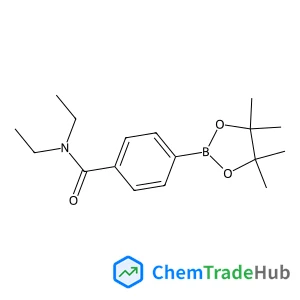
N,N-Diethyl-4-(4,4,5,5-tetramethyl-1,3,2-dioxaborolan-2-yl)benzamide
CAS Number:
325142-99-2
Molecular Formula:
C17H26BNO3
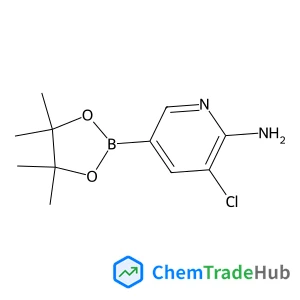
3-Chloro-5-(4,4,5,5-tetramethyl-1,3,2-dioxaborolan-2-yl)-2-pyridinamine
CAS Number:
1032758-99-8
Molecular Formula:
C11H16BClN2O2
Recommended Suppliers




Disclaimer
This page provides academic journal information for reference and research purposes only. We are not affiliated with any journal publishers and do not handle publication submissions. For publication-related inquiries, please contact the respective journal publishers directly.
If you notice any inaccuracies in the information displayed, please contact us at support@chemtradehub.com. We will promptly review and address your concerns.