













An abiotic analogue of the diiron(iv)oxo “diamond core” of soluble methane monooxygenase generated by direct activation of O2 in aqueous Fe(ii)/EDTA solutions: thermodynamics and electronic structure
Literature Information
Publication Date
2011-07-21
DOI
10.1039/C1CP21244C
Impact Factor
3.676
Authors
View Original
Abstract
We study the generation of a dinuclear Fe(IV)oxo species, [EDTAH·FeO·OFe·EDTAH]2−, in aqueous solution at room temperature using Density Functional Theory (DFT) and Ab Initio Molecular Dynamics (AIMD). This species has been postulated as an intermediate in the multi-step mechanism of autoxidation of Fe(II) to Fe(III) in the presence of atmospheric O2 and EDTA ligand in water. We examine the formation of [EDTAH·FeO·OFe·EDTAH]2− by direct cleavage of O2, and the effects of solvation on the spin state and O–O cleavage barrier. We also study the reactivity of the resulting dinuclear Fe(IV)oxo system in CH4 hydroxylation, and its tendency to decompose to mononuclear Fe(IV)oxo species. The presence of the solvent is shown to play a crucial role, determining important changes in all these processes compared to the gas phase. We show that, in water solution, [EDTAH·FeO·OFe·EDTAH]2− (as well as its precursor [EDTAH·Fe·O2·Fe·EDTAH]2−) exists as stable species in a S = 4 ground spin state when hydrogen-bonded to a single water molecule. Its structure comprises two facing Fe(IV)oxo groups, in an arrangement similar to the one evinced for the active centre of intermediate Q of soluble Methane Monooxygenase (sMMO). The inclusion of the water molecule in the complex decreases the overall symmetry of the system, and brings about important changes in the energy and spatial distribution of orbitals of the Fe(IV)oxo groups relative to the gas phase. In particular, the virtual 3σ* orbital of one of the Fe(IV)oxo groups experiences much reduced repulsive orbital interactions from ligand orbitals, and its consequent stabilisation dramatically enhances the electrophilic character of the complex, compared to the symmetrical non-hydrated species, and its ability to act as an acceptor of a H atom from the CH4 substrate. The computed free energy barrier for H abstraction is 28.2 kJ mol−1 (at the BLYP level of DFT), considerably below the gas phase value for monomeric [FeO·EDTAH]−, and much below the solution value for the prototype hydrated ferryl ion [FeO(H2O)5]2+.
Related Literature
Synthesis and σ receptor affinity of spiro[[2]benzopyran-1,1′-cyclohexanes] with an exocyclic amino moiety in the 3′-position
Elisabeth Kronenberg, Frauke Weber, Dirk Schepmann, Bernhard Wünsch
2020-12-09
Research Article
DOI: 10.1039/D0MD00307G
Metal oxide nanomaterial-based sensors for monitoring environmental NO2 and its impact on the plant ecosystem: a review
Shrestha Tyagi, Manika Chaudhary, Anit K. Ambedkar, Kavita Sharma, Yogendra K. Gautam, Beer Pal Singh
2021-12-11
Critical Review
DOI: 10.1039/D1SD00034A
Assessment of the rules related to gaining activity against Gram-negative bacteria
Eleonora Diamanti, Alexandra Siemens, Boris Illarionov, Jörg Haupenthal, Markus Fischer, Matthias Witschel
2021-03-03
Research Article
DOI: 10.1039/D0MD00409J
New imidazo[2,1-b]thiazole-based aryl hydrazones: unravelling their synthesis and antiproliferative and apoptosis-inducing potential
Sunitha Rani Routhu, C. Ganesh Kumar
2020-07-22
Research Article
DOI: 10.1039/D0MD00188K
An overview on the synthesis of carbohydrate-based molecules with biological activity related to neurodegenerative diseases
João Paulo B. Lopes, Luana Silva, Diogo S. Lüdtke
2021-09-08
Review Article
DOI: 10.1039/D1MD00217A
Normal breast epithelial MCF-10A cells to evaluate the safety of carbon dots
Diana M. A. Crista
2020-12-10
Research Article
DOI: 10.1039/D0MD00317D
Shifting the paradigm in treating multi-factorial diseases: polypharmacological co-inhibitors of HDAC6
Alexandria M. Chan
2020-12-11
Review Article
DOI: 10.1039/D0MD00286K
Exploring the chemical space of 1,2,3-triazolyl triclosan analogs for discovery of new antileishmanial chemotherapeutic agents
Julia Fernández de Luco, Alejandro I. Recio-Balsells, Diego G. Ghiano, Ana Bortolotti, Juán Manuel Belardinelli, Nina Liu, Pascal Hoffmann, Christian Lherbet, Peter J. Tonge, Babu Tekwani
2020-11-05
Research Article
DOI: 10.1039/D0MD00291G
You might also like
Compound Q&A
What are the main uses of 1-(3-Aminophenyl)-3-[(3R)-1-(3,3-dimethyl-2-oxobutyl)-2-oxo-5-(2-pyridinyl)-2,3-dihydro-1H-1,4-benzodiazepin-3-yl]urea (CAS: 155412-88-7)?
This compound is mainly used as an intermediate in the synthesis of antipsychoti...
155412-88-71-(3-Aminophenyl)-3-...
Compound Q&A
How should waste containing 1-(D-Ribofuranosyl)-1,4-dihydro-3-pyridinecarboxamide (CAS: 19132-12-8) be handled?
Waste containing 1-(D-Ribofuranosyl)-1,4-dihydro-3-pyridinecarboxamide (CAS: 191...
19132-12-81-(D-Ribofuranosyl)-...
Compound Q&A
What regulatory guidelines apply to 2-Methyl-2-propanyl 3-bromo-3-(hydroxymethyl)-1-azetidinecarboxylate (CAS: 2007919-81-3)?
2-Methyl-2-propanyl 3-bromo-3-(hydroxymethyl)-1-azetidinecarboxylate (CAS: 20079...
2007919-81-32-Methyl-2-propanyl ...
Compound Q&A
What is N-(4-Chloro-2-pyridinyl)acetamide (CAS: 245056-66-0)?
N-(4-Chloro-2-pyridinyl)acetamide (CAS: 245056-66-0) is a chemical compound with...
245056-66-0N-(4-Chloro-2-pyridi...
Compound Q&A
What is 5-Chloro-2-hydroxybenzoic acid (CAS: 321-14-2)?
5-Chloro-2-hydroxybenzoic acid, also known as 5-chlorosalicylic acid, is an arom...
321-14-25-Chloro-2-hydroxybe...
Compound Q&A
What precautions should be taken when handling 1,1-Dichloro-1-fluoroethane (CAS: 1717-00-6)?
When handling 1,1-Dichloro-1-fluoroethane (CAS: 1717-00-6), it is important to u...
1717-00-61,1-Dichloro-1-fluor...
Compound Q&A
What are the physical and chemical properties of Fmoc-(2S,3R)-3-phenylpyrrolidine-2-carboxylic acid (CAS: 281655-32-1)?
Fmoc-(2S,3R)-3-phenylpyrrolidine-2-carboxylic acid is a white crystalline solid ...
281655-32-1Fmoc-(2S,3R)-3-pheny...
Compound Q&A
What are the main uses of 4-Amino-5-bromo-2-pyridinecarboxylic acid (CAS: 1363381-01-4)?
4-Amino-5-bromo-2-pyridinecarboxylic acid is primarily used as a precursor in th...
1363381-01-44-Amino-5-bromo-2-py...
Compound Q&A
What precautions should be taken when handling (S)-tert-butyl 2-((2-(4-bromophenyl)-2-oxoethyl)carbamoyl)pyrrolidine-1-carboxylate (CAS: 1007881-98-2)?
Handling this compound should be done with personal protective equipment (PPE) i...
1007881-98-2(S)-tert-butyl 2-((2...
Compound Q&A
What precautions should be taken when handling 8-bromo-2,2-dimethyl-3,4-dihydro-2H-1,4-benzoxazin-3-one (CAS: 688363-73-7)?
When handling 8-bromo-2,2-dimethyl-3,4-dihydro-2H-1,4-benzoxazin-3-one, use prop...
688363-73-78-bromo-2,2-dimethyl...
Source Journal
Physical Chemistry Chemical Physics

CiteScore:
5.5
Self-citation Rate:
10.3%
Articles per Year:
3036
Physical Chemistry Chemical Physics (PCCP) is an international journal co-owned by 19 physical chemistry and physics societies from around the world. This journal publishes original, cutting-edge research in physical chemistry, chemical physics and biophysical chemistry. To be suitable for publication in PCCP, articles must include significant innovation and/or insight into physical chemistry; this is the most important criterion that reviewers and Editors will judge against when evaluating submissions. The journal has a broad scope and welcomes contributions spanning experiment, theory, computation and data science. Topical coverage includes spectroscopy, dynamics, kinetics, statistical mechanics, thermodynamics, electrochemistry, catalysis, surface science, quantum mechanics, quantum computing and machine learning. Interdisciplinary research areas such as polymers and soft matter, materials, nanoscience, energy, surfaces/interfaces, and biophysical chemistry are welcomed if they demonstrate significant innovation and/or insight into physical chemistry. Joined experimental/theoretical studies are particularly appreciated when complementary and based on up-to-date approaches.
Recommended Compounds

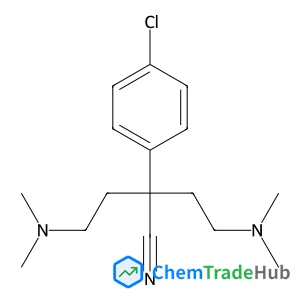
2-(4-Chlorophenyl)-4-(dimethylamino)-2-(2-(dimethylamino)ethyl)butanenitrile
CAS Number:
1246816-57-8
Molecular Formula:
C16H24ClN3
Recommended Suppliers






Disclaimer
This page provides academic journal information for reference and research purposes only. We are not affiliated with any journal publishers and do not handle publication submissions. For publication-related inquiries, please contact the respective journal publishers directly.
If you notice any inaccuracies in the information displayed, please contact us at support@chemtradehub.com. We will promptly review and address your concerns.