












Hollow hybrid spheres with silica inner shell for non-deformable, core exchangeable properties
Literature Information
Publication Date
2008-09-12
DOI
10.1039/B811724A
Impact Factor
6.222
Authors
Soon-Ryoung Hur, Yong Seok Kim, Jong Chan Won, Jae Heung Lee, Hyun Min Jung
View Original
Abstract
Core exchangeable polymer–silica hybrid capsules with solvent-selective permeability were fabricated, in which the internal silica layer, formed from pre-included precursors, has the role of a framework to prevent irreversible deformation of the hollow capsules.
Related Literature
Real-time observation of photoionization-induced water migration dynamics in 4-methylformanilide–water by picosecond time-resolved infrared spectroscopy and ab initio molecular dynamics simulations
Tairiku Kamiya, Matthias Wohlgemuth, Kuntal Chatterjee, Roland Mitrić
2021-10-01
Paper
DOI: 10.1039/D1CP03327A
The influence of the cation structure on the basicity-related polarity of ionic liquids
Nadine Weiß, Gabi Thielemann, Kevin Nagel, Caroline H. Schmidt, Andreas Seifert, Lysann Kaßner, Veronika Strehmel, Björn Corzilius, Christian Schröder, Stefan Spange
2021-11-17
Paper
DOI: 10.1039/D1CP03986E
Hydrogen-bond-dominated mechanical stretchability in PVA films: from phenomenological to numerical insights
Zhen-zhen Fu, Sheng-jie Guo, Chen-xi Li, Ke Wang, Qin Zhang, Qiang Fu
2021-12-22
Paper
DOI: 10.1039/D1CP03893A
Thermoelectric performance of ZrNX (X = Cl, Br and I) monolayers
Nina Ge, Xinzhong Wang
2021-11-29
Paper
DOI: 10.1039/D1CP01928G
Electronic relaxation and dissociation dynamics in formaldehyde: pump wavelength dependence
Simon P. Neville, Philippe Lassonde, Chen Qu, Hikaru Fujise, Mizuho Fushitani, Joel M. Bowman, François Légaré, Heide Ibrahim
2021-12-14
Paper
DOI: 10.1039/D1CP04264E
Emergence of carbon nanoscrolls from single walled carbon nanotubes: an oxidative route
S. Reshmi, Girish M. Gouda
2021-11-10
Paper
DOI: 10.1039/D1CP03945H
Exploration of chromophores for a VCD couplet in a spectrally transparent infrared region for biomolecules
Tohru Taniguchi, Mohamad Zarif Mohd Zubir, Nobuyuki Harada, Kenji Monde
2021-11-18
Paper
DOI: 10.1039/D1CP04074J
Remarkably high solvatochromism in the circular dichroism spectra of the polyproline-II conformation: limitations or new opportunities?
Vladimir Kubyshkin, Jochen Bürck, Oleg Babii
2021-11-22
Paper
DOI: 10.1039/D1CP04551B
Excited-state structure of copper phenanthroline-based photosensitizers
Alexander Guda, Johannes Windisch, Benjamin Probst, Roger Alberto, Maarten Nachtegaal, Grigory Smolentsev
2021-11-15
Paper
DOI: 10.1039/D1CP02823E
The dynamics of light-induced interfacial charge transfer of different dyes in dye-sensitized solar cells studied by ab initio molecular dynamics
Lanlan He, Yu Guo, Lars Kloo
2021-09-24
Paper
DOI: 10.1039/D1CP02412D
You might also like
Compound Q&A
What are the main uses of 1-(3-Aminophenyl)-3-[(3R)-1-(3,3-dimethyl-2-oxobutyl)-2-oxo-5-(2-pyridinyl)-2,3-dihydro-1H-1,4-benzodiazepin-3-yl]urea (CAS: 155412-88-7)?
This compound is mainly used as an intermediate in the synthesis of antipsychoti...
155412-88-71-(3-Aminophenyl)-3-...
Compound Q&A
How should waste containing 1-(D-Ribofuranosyl)-1,4-dihydro-3-pyridinecarboxamide (CAS: 19132-12-8) be handled?
Waste containing 1-(D-Ribofuranosyl)-1,4-dihydro-3-pyridinecarboxamide (CAS: 191...
19132-12-81-(D-Ribofuranosyl)-...
Compound Q&A
What regulatory guidelines apply to 2-Methyl-2-propanyl 3-bromo-3-(hydroxymethyl)-1-azetidinecarboxylate (CAS: 2007919-81-3)?
2-Methyl-2-propanyl 3-bromo-3-(hydroxymethyl)-1-azetidinecarboxylate (CAS: 20079...
2007919-81-32-Methyl-2-propanyl ...
Compound Q&A
What is N-(4-Chloro-2-pyridinyl)acetamide (CAS: 245056-66-0)?
N-(4-Chloro-2-pyridinyl)acetamide (CAS: 245056-66-0) is a chemical compound with...
245056-66-0N-(4-Chloro-2-pyridi...
Compound Q&A
What is 5-Chloro-2-hydroxybenzoic acid (CAS: 321-14-2)?
5-Chloro-2-hydroxybenzoic acid, also known as 5-chlorosalicylic acid, is an arom...
321-14-25-Chloro-2-hydroxybe...
Compound Q&A
What precautions should be taken when handling 1,1-Dichloro-1-fluoroethane (CAS: 1717-00-6)?
When handling 1,1-Dichloro-1-fluoroethane (CAS: 1717-00-6), it is important to u...
1717-00-61,1-Dichloro-1-fluor...
Compound Q&A
What are the physical and chemical properties of Fmoc-(2S,3R)-3-phenylpyrrolidine-2-carboxylic acid (CAS: 281655-32-1)?
Fmoc-(2S,3R)-3-phenylpyrrolidine-2-carboxylic acid is a white crystalline solid ...
281655-32-1Fmoc-(2S,3R)-3-pheny...
Compound Q&A
What are the main uses of 4-Amino-5-bromo-2-pyridinecarboxylic acid (CAS: 1363381-01-4)?
4-Amino-5-bromo-2-pyridinecarboxylic acid is primarily used as a precursor in th...
1363381-01-44-Amino-5-bromo-2-py...
Compound Q&A
What precautions should be taken when handling (S)-tert-butyl 2-((2-(4-bromophenyl)-2-oxoethyl)carbamoyl)pyrrolidine-1-carboxylate (CAS: 1007881-98-2)?
Handling this compound should be done with personal protective equipment (PPE) i...
1007881-98-2(S)-tert-butyl 2-((2...
Compound Q&A
What precautions should be taken when handling 8-bromo-2,2-dimethyl-3,4-dihydro-2H-1,4-benzoxazin-3-one (CAS: 688363-73-7)?
When handling 8-bromo-2,2-dimethyl-3,4-dihydro-2H-1,4-benzoxazin-3-one, use prop...
688363-73-78-bromo-2,2-dimethyl...
Source Journal
Chemical Communications

CiteScore:
8.6
Self-citation Rate:
4.7%
Articles per Year:
2458
ChemComm publishes urgent research which is of outstanding significance and interest to experts in the field, while also appealing to the journal’s broad chemistry readership. Our communication format is ideally suited to short, urgent studies that are of such importance that they require accelerated publication. Our scope covers all topics in chemistry, and research at the interface of chemistry and other disciplines (such as materials science, nanoscience, physics, engineering and biology) where there is a significant novelty in the chemistry aspects. Major topic areas covered include: Analytical Chemistry Catalysis Chemical Biology and medicinal chemistry Computational Chemistry and Machine Learning Energy and sustainable chemistry Environmental Chemistry Green Chemistry Inorganic Chemistry Materials Chemistry Nanoscience Organic Chemistry Physical Chemistry Polymer Chemistry Supramolecular Chemistry
Recommended Compounds
![tert-Butyl N-[(2-chloropyridin-4-yl)methyl]carbamate structure](https://static.chemtradehub.com/structs/916/916210-27-0-9f95.webp "tert-Butyl N-[(2-chloropyridin-4-yl)methyl]carbamate structure")
tert-Butyl N-[(2-chloropyridin-4-yl)methyl]carbamate
CAS Number:
916210-27-0
Molecular Formula:
C11H15ClN2O2
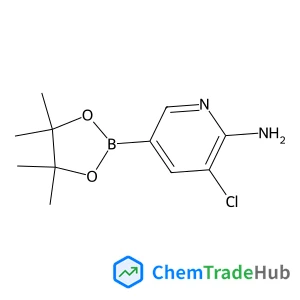
3-Chloro-5-(4,4,5,5-tetramethyl-1,3,2-dioxaborolan-2-yl)-2-pyridinamine
CAS Number:
1032758-99-8
Molecular Formula:
C11H16BClN2O2
Recommended Suppliers





Disclaimer
This page provides academic journal information for reference and research purposes only. We are not affiliated with any journal publishers and do not handle publication submissions. For publication-related inquiries, please contact the respective journal publishers directly.
If you notice any inaccuracies in the information displayed, please contact us at support@chemtradehub.com. We will promptly review and address your concerns.