













Theoretical aspects in structural distortion and the electronic properties of lithium peroxide under high pressure
Literature Information
Publication Date
2018-02-12
DOI
10.1039/C7CP07293G
Impact Factor
3.676
Authors
Komsilp Kotmool, Suttichai Assabumrungrat
View Original
Abstract
The structural phase transition and electronic properties of Li2O2 under pressures up to 500 GPa have been investigated using first-principles calculations. Two new structural phase transitions have been proposed at pressures around 75 GPa from the P63/mmc structure to the P21 structure and around 136 GPa from the P21 structure to the P21/c structure. The calculated phonon spectra have confirmed the dynamical stability of these structures. The pressure dependence of the lattice dynamics, O–O bond length, and band gaps in Li2O2 have also been reported. The band gaps of the P63/mmc, P21, and P21/c structures calculated by PBE and HSE06 have shown increasing trends with increasing pressure. Interestingly, the P63/mmc band gap and c/a ratio have significantly decreased with the increasing O–O bond length and ELF value around 11 and 40 GPa. At these pressures, the phonon frequency of the O–O stretching modes has softened. This finding reveals the effects of structural distortion in three phases of Li2O2. Our study provides structural understanding and the electronic properties of Li2O2 under high pressure, which might be useful for investigating the charge transport through Li2O2 in lithium–air batteries and CO2 capture.
Related Literature
Rational design of hierarchical ZnO superstructures for efficient charge transfer: mechanistic and photovoltaic studies of hollow, mesoporous, cage-like nanostructures with compacted 1D building blocks
Tridip Ranjan Chetia, Mohammad Shaad Ansari, Mohammad Qureshi
2016-01-19
Paper
DOI: 10.1039/C5CP07687K
In situ characterization of the decomposition behavior of Mg(BH4)2 by X-ray Raman scattering spectroscopy
Simon Kujawski, Arndt Remhof, Yigang Yan, Nicholas P. Stadie, Ali Al-Zein, Metin Tolan, Simo Huotari, Michael Krisch, Christian Sternemann
2016-01-06
Paper
DOI: 10.1039/C5CP06571B
Defect structure and optical phonon confinement in ultrananocrystalline BixSn1−xO2 (x = 0, 0.03, 0.05, and 0.08) synthesized by a sonochemical method
L. Aswaghosh, Divinah Manoharan, N. Victor Jaya
2016-01-18
Paper
DOI: 10.1039/C5CP06214D
Aminophenol isomers unraveled by conformer-specific far-IR action spectroscopy
Daniël J. Bakker, Raimund Feifel, Anouk M. Rijs, Vitali Zhaunerchyk
2016-02-01
Paper
DOI: 10.1039/C5CP07426F
Oxygen vacancies as active sites for H2S dissociation on the rutile TiO2(110) surface: a first-principles study
Shiqian Wei, Zhi Zhang, Great R. Patzke
2016-02-03
Paper
DOI: 10.1039/C5CP06835E
Theoretical predictions of structures in dispersions containing charged colloidal particles and non-adsorbing polymers
Fei Xie, Martin Turesson, Clifford E. Woodward, Kitty van Gruijthuijsen, Anna Stradner, Jan Forsman
2016-03-30
Paper
DOI: 10.1039/C5CP07814H
Effect of environment on iodine oxidation state and reactivity with aluminum
Dylan K. Smith, Jena McCollum, Michelle L. Pantoya
2016-03-30
Paper
DOI: 10.1039/C5CP06998J
Global optimization of small bimetallic Pd–Co binary nanoalloy clusters: a genetic algorithm approach at the DFT level
Mikail Aslan, Jack B. A. Davis, Roy L. Johnston
2016-02-04
Paper
DOI: 10.1039/C6CP00342G
CdSe-sensitized branched CdS hierarchical nanostructures for efficient photoelectrochemical solar hydrogen generation
Zonghu Han, Meng Wang, Xiangyan Chen, Shaohua Shen
2016-03-29
Paper
DOI: 10.1039/C6CP00692B
The O, OH and OOH-assisted selective coupling of methanol on Au–Ag(111)
Wenhui Zhong, Jinxia Liang, Wei Hu, Xinrui Cao, Chuanyi Jia, Jun Jiang
2016-02-26
Paper
DOI: 10.1039/C6CP00336B
You might also like
Compound Q&A
What are the main uses of 1-(3-Aminophenyl)-3-[(3R)-1-(3,3-dimethyl-2-oxobutyl)-2-oxo-5-(2-pyridinyl)-2,3-dihydro-1H-1,4-benzodiazepin-3-yl]urea (CAS: 155412-88-7)?
This compound is mainly used as an intermediate in the synthesis of antipsychoti...
155412-88-71-(3-Aminophenyl)-3-...
Compound Q&A
How should waste containing 1-(D-Ribofuranosyl)-1,4-dihydro-3-pyridinecarboxamide (CAS: 19132-12-8) be handled?
Waste containing 1-(D-Ribofuranosyl)-1,4-dihydro-3-pyridinecarboxamide (CAS: 191...
19132-12-81-(D-Ribofuranosyl)-...
Compound Q&A
What regulatory guidelines apply to 2-Methyl-2-propanyl 3-bromo-3-(hydroxymethyl)-1-azetidinecarboxylate (CAS: 2007919-81-3)?
2-Methyl-2-propanyl 3-bromo-3-(hydroxymethyl)-1-azetidinecarboxylate (CAS: 20079...
2007919-81-32-Methyl-2-propanyl ...
Compound Q&A
What is N-(4-Chloro-2-pyridinyl)acetamide (CAS: 245056-66-0)?
N-(4-Chloro-2-pyridinyl)acetamide (CAS: 245056-66-0) is a chemical compound with...
245056-66-0N-(4-Chloro-2-pyridi...
Compound Q&A
What is 5-Chloro-2-hydroxybenzoic acid (CAS: 321-14-2)?
5-Chloro-2-hydroxybenzoic acid, also known as 5-chlorosalicylic acid, is an arom...
321-14-25-Chloro-2-hydroxybe...
Compound Q&A
What precautions should be taken when handling 1,1-Dichloro-1-fluoroethane (CAS: 1717-00-6)?
When handling 1,1-Dichloro-1-fluoroethane (CAS: 1717-00-6), it is important to u...
1717-00-61,1-Dichloro-1-fluor...
Compound Q&A
What are the physical and chemical properties of Fmoc-(2S,3R)-3-phenylpyrrolidine-2-carboxylic acid (CAS: 281655-32-1)?
Fmoc-(2S,3R)-3-phenylpyrrolidine-2-carboxylic acid is a white crystalline solid ...
281655-32-1Fmoc-(2S,3R)-3-pheny...
Compound Q&A
What are the main uses of 4-Amino-5-bromo-2-pyridinecarboxylic acid (CAS: 1363381-01-4)?
4-Amino-5-bromo-2-pyridinecarboxylic acid is primarily used as a precursor in th...
1363381-01-44-Amino-5-bromo-2-py...
Compound Q&A
What precautions should be taken when handling (S)-tert-butyl 2-((2-(4-bromophenyl)-2-oxoethyl)carbamoyl)pyrrolidine-1-carboxylate (CAS: 1007881-98-2)?
Handling this compound should be done with personal protective equipment (PPE) i...
1007881-98-2(S)-tert-butyl 2-((2...
Compound Q&A
What precautions should be taken when handling 8-bromo-2,2-dimethyl-3,4-dihydro-2H-1,4-benzoxazin-3-one (CAS: 688363-73-7)?
When handling 8-bromo-2,2-dimethyl-3,4-dihydro-2H-1,4-benzoxazin-3-one, use prop...
688363-73-78-bromo-2,2-dimethyl...
Source Journal
Physical Chemistry Chemical Physics

CiteScore:
5.5
Self-citation Rate:
10.3%
Articles per Year:
3036
Physical Chemistry Chemical Physics (PCCP) is an international journal co-owned by 19 physical chemistry and physics societies from around the world. This journal publishes original, cutting-edge research in physical chemistry, chemical physics and biophysical chemistry. To be suitable for publication in PCCP, articles must include significant innovation and/or insight into physical chemistry; this is the most important criterion that reviewers and Editors will judge against when evaluating submissions. The journal has a broad scope and welcomes contributions spanning experiment, theory, computation and data science. Topical coverage includes spectroscopy, dynamics, kinetics, statistical mechanics, thermodynamics, electrochemistry, catalysis, surface science, quantum mechanics, quantum computing and machine learning. Interdisciplinary research areas such as polymers and soft matter, materials, nanoscience, energy, surfaces/interfaces, and biophysical chemistry are welcomed if they demonstrate significant innovation and/or insight into physical chemistry. Joined experimental/theoretical studies are particularly appreciated when complementary and based on up-to-date approaches.
Recommended Compounds
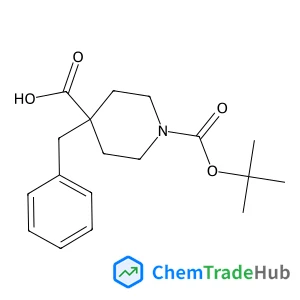
4-Benzyl-1-(tert-butoxycarbonyl)piperidine-4-carboxylic acid
CAS Number:
170838-87-6
Molecular Formula:
C18H25NO4

N,N-Diethyl-4-(4,4,5,5-tetramethyl-1,3,2-dioxaborolan-2-yl)benzamide
CAS Number:
325142-99-2
Molecular Formula:
C17H26BNO3

(3-Oxo-1,2,3,4-tetrahydro-2-quinoxalinyl)acetic acid
CAS Number:
136584-14-0
Molecular Formula:
C10H10N2O3
Recommended Suppliers




Disclaimer
This page provides academic journal information for reference and research purposes only. We are not affiliated with any journal publishers and do not handle publication submissions. For publication-related inquiries, please contact the respective journal publishers directly.
If you notice any inaccuracies in the information displayed, please contact us at support@chemtradehub.com. We will promptly review and address your concerns.