












7-Cyanoindole fluorescence as a local hydration reporter: application to probe the microheterogeneity of nine water-organic binary mixtures
Literature Information
Publication Date
2018-01-02
DOI
10.1039/C7CP07160D
Impact Factor
3.676
Authors
Debopreeti Mukherjee, Lilliana I. Ortiz Rodriguez, Mary Rose Hilaire
View Original
Abstract
Considerable efforts have been devoted to the development of spectroscopic probes that are sensitive to water and can be used to monitor, for example, biological and chemical processes involving dehydration or hydration. Continuing this line of research, herein we show that 7-cyanoindole can serve as a sensitive fluorescence probe of hydration as its fluorescence properties, including intensity, peak wavelength and lifetime, depend on the amount of water in nine water–organic solvent mixtures. Our results indicate that 7-cyanoindole is not only able to reveal the underlying microheterogeneity of these binary solvent systems, but also offers distinct advantages. These include: (1) its fluorescence intensity increases more than ten times upon going from a hydrated to a dehydrated environment; (2) its peak wavelength shifts as much as 35 nm upon dehydration; (3) its single-exponential fluorescence decay lifetime increases from 2.0 ns in water to 8–16 ns in water–organic binary mixtures, making it viable to distinguish between differently hydrated environments via fluorescence lifetime measurements; and (4) its absorption spectrum is significantly red-shifted from that of indole, making selective excitation of its fluorescence possible in the presence of naturally occurring amino-acid fluorophores. Moreover, we find that for seven binary mixtures the fluorescence lifetimes of 7-cyanoindole measured at solvent compositions where maximum microheterogeneity occurs correlate linearly with the peak wavenumbers of its fluorescence spectra obtained in the respective pure organic solvents. This suggests that the microheterogeneities of these binary mixtures bear certain similarity, a phenomenon that warrants further investigation.
Related Literature
Alternative approaches for the aqueous–organic biphasic hydroformylation of higher alkenes
Lorenz Obrecht, Paul C. J. Kamer, Wouter Laan
2012-09-14
Perspective
DOI: 10.1039/C2CY20538F
Acyl hydrazides as peptoid sub-monomers
Bani Kanta Sarma, Muhammed Yousufuddin, Thomas Kodadek
2011-09-05
Communication
DOI: 10.1039/C1CC12750K
Recent advances in hierarchically structured zeolites: synthesis and material performances
Zi Le Hua, Jian Zhou, Jian Lin Shi
2011-07-01
Feature Article
DOI: 10.1039/C1CC10261C
A gram scale synthesis of a multi-13C-labelled anthocyanin, [6,8,10,3′,5′-13C5]cyanidin-3-glucoside, for use in oral tracer studies in humans
Qingzhi Zhang, Nigel P. Botting, Colin Kay
2011-09-05
Communication
DOI: 10.1039/C1CC14323A
Formation of polypseudorotaxane networks by cross-linking the quadruple hydrogen bonded linear supramolecular polymersviabisparaquat molecules
Shao-Lu Li, Tangxin Xiao, Bingjie Hu, Yajie Zhang, Feng Zhao, Ya Ji, Yihua Yu, Chen Lin, Leyong Wang
2011-08-26
Communication
DOI: 10.1039/C1CC14559B
Welcome to the first issue of Catalysis Science & Technology
2011-02-08
Editorial
DOI: 10.1039/C1CY90001C
Direct spectroscopic evidence for binding of anastrozole to the iron heme of human aromatase. Peering into the mechanism of aromatase inhibition
Sara Maurelli, Mario Chiesa, Elio Giamello, Giovanna Di Nardo, Valentina E. V. Ferrero, Gianfranco Gilardi, Sabine Van Doorslaer
2011-08-22
Communication
DOI: 10.1039/C1CC13872C
Structure and bonding in three-coordinate N-heterocyclic carbene adducts of iron(ii) bis(trimethylsilyl)amide
Joseph J. W. McDouall, Manfred Scheer, Christoph Schwarzmaier, Floriana Tuna
2011-09-01
Communication
DOI: 10.1039/C1CC14576B
Synthesis of 2,4,6-trisubstituted pyridinesvia an olefin cross-metathesis/Heck–cyclisation–elimination sequence
Timothy J. Donohoe, John F. Bower, David B. Baker, José A. Basutto, Louis K. M. Chan, Peter Gallagher
2011-08-25
Communication
DOI: 10.1039/C1CC14257G
Selective Diels–Alder cycloaddition on semiconducting single-walled carbon nanotubes for potential separation application
Jiao-Tong Sun, Lu-Yang Zhao, Chun-Yan Hong, Cai-Yuan Pan
2011-09-05
Communication
DOI: 10.1039/C1CC13437J
You might also like
Compound Q&A
What industries use (1R,3S)-1,3-Cyclopentanediol (CAS: 16326-97-9)?
(1R,3S)-1,3-Cyclopentanediol finds applications in various industries. In the ph...
16326-97-9(1R,3S)-1,3-Cyclopen...
Compound Q&A
What precautions should be taken when handling N'-[4-(Dimethylamino)phenyl]-N,N-dimethyl-1,4-benzenediamine (CAS: 637-31-0)?
When handling N'-[4-(Dimethylamino)phenyl]-N,N-dimethyl-1,4-benzenediamine, it i...
637-31-0N'-[4-(Dimethylamino...
Compound Q&A
Are there alternatives to 5-(2,4-Difluorophenyl)-2-methoxypyrimidine (CAS: 1352318-16-1) in synthesis?
There are several alternatives to 5-(2,4-Difluorophenyl)-2-methoxypyrimidine in ...
1352318-16-15-(2,4-Difluoropheny...
Compound Q&A
What regulatory guidelines apply to 1-(3-Methoxyphenoxy)propan-2-ol (CAS: 382141-68-6)?
1-(3-Methoxyphenoxy)propan-2-ol (CAS: 382141-68-6) must comply with the Globally...
382141-68-61-(3-Methoxyphenoxy)...
Compound Q&A
Is Tetrodotoxin Citrate (CAS: 18660-81-6) safe?
Tetrodotoxin Citrate is extremely dangerous and should be handled with extreme c...
18660-81-6Tetrodotoxin Citrate
Compound Q&A
What are the main uses of 2-Methyl-2-propanyl [(1R,3S)-3-hydroxycyclopentyl]carbamate (CAS: 225641-84-9)?
2-Methyl-2-propanyl [(1R,3S)-3-hydroxycyclopentyl]carbamate (CAS: 225641-84-9) i...
225641-84-92-Methyl-2-propanyl ...
Compound Q&A
How should waste containing 4-(2-Hydroxyhexafluoroisopropyl)Benzoic Acid (CAS: 16261-80-6) be handled?
Waste containing 4-(2-Hydroxyhexafluoroisopropyl)Benzoic Acid (CAS: 16261-80-6) ...
16261-80-64-(2-Hydroxyhexafluo...
Compound Q&A
How is 2-Methyl-2-proanyl {(2S)-1-[(benzyloxy)amino]-3-hydroxy-3-methyl-1-oxo-2-butanyl}carbamate (CAS: 102507-19-7) typically synthesized?
2-Methyl-2-proanyl {(2S)-1-[(benzyloxy)amino]-3-hydroxy-3-methyl-1-oxo-2-butanyl...
102507-19-72-Methyl-2-propanyl ...
Compound Q&A
What is Benzeneethanamine, α-ethyl-, hydrochloride (1:1) (CAS: 20735-15-3)?
Benzeneethanamine, α-ethyl-, hydrochloride (1:1) is an organic compound with the...
20735-15-3Benzeneethanamine, α...
Compound Q&A
Are there alternatives to 3-{(E)-[4-(Dimethylamino)phenyl]diazenyl}benzoic acid (CAS: 20691-84-3) in synthesis?
In the synthesis of compounds similar to 3-{(E)-[4-(Dimethylamino)phenyl]diazeny...
20691-84-33-{(E)-[4-(Dimethyla...
Source Journal
Physical Chemistry Chemical Physics

CiteScore:
5.5
Self-citation Rate:
10.3%
Articles per Year:
3036
Physical Chemistry Chemical Physics (PCCP) is an international journal co-owned by 19 physical chemistry and physics societies from around the world. This journal publishes original, cutting-edge research in physical chemistry, chemical physics and biophysical chemistry. To be suitable for publication in PCCP, articles must include significant innovation and/or insight into physical chemistry; this is the most important criterion that reviewers and Editors will judge against when evaluating submissions. The journal has a broad scope and welcomes contributions spanning experiment, theory, computation and data science. Topical coverage includes spectroscopy, dynamics, kinetics, statistical mechanics, thermodynamics, electrochemistry, catalysis, surface science, quantum mechanics, quantum computing and machine learning. Interdisciplinary research areas such as polymers and soft matter, materials, nanoscience, energy, surfaces/interfaces, and biophysical chemistry are welcomed if they demonstrate significant innovation and/or insight into physical chemistry. Joined experimental/theoretical studies are particularly appreciated when complementary and based on up-to-date approaches.
Recommended Compounds
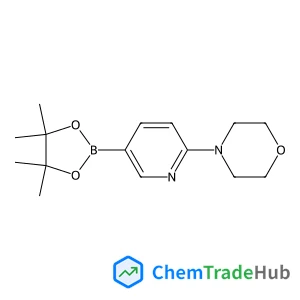
4-(5-(4,4,5,5-tetramethyl-1,3,2-dioxaborolan-2-yl)pyridin-2-yl)morpholine
CAS Number:
485799-04-0
Molecular Formula:
C15H23BN2O3
![N-[(9H-Fluoren-9-ylmethoxy)carbonyl]-beta-phenyl-L-phenylalanine structure](https://static.chemtradehub.com/structs/201/201484-50-6-c2fc.webp "N-[(9H-Fluoren-9-ylmethoxy)carbonyl]-beta-phenyl-L-phenylalanine structure")
N-[(9H-Fluoren-9-ylmethoxy)carbonyl]-beta-phenyl-L-phenylalanine
CAS Number:
201484-50-6
Molecular Formula:
C30H25NO4
Recommended Suppliers






Disclaimer
This page provides academic journal information for reference and research purposes only. We are not affiliated with any journal publishers and do not handle publication submissions. For publication-related inquiries, please contact the respective journal publishers directly.
If you notice any inaccuracies in the information displayed, please contact us at support@chemtradehub.com. We will promptly review and address your concerns.