












π-Stacking between Casiopeinas® and DNA bases
Literature Information
Publication Date
2011-07-12
DOI
10.1039/C1CP20183B
Impact Factor
3.676
Authors
Rodrigo Galindo-Murillo, Joseelyne Hernandez-Lima, Mayra González-Rendón, Lena Ruíz-Azuara, Rafael Moreno-Esparza
View Original
Abstract
Casiopeínas® are copper complexes with the general formula [Cu(N–N)(N–O)]NO3 and [Cu(N–N)(O–O)]NO3 where N–N denotes a substituted bipyridine or phenanthroline, N–O indicates α-aminoacidate or peptide and O–O represents acetylacetonate or salicylaldehyde. This family of compounds has been evaluated in vitro and in vivo showing cytotoxic, genotoxic, and antineoplastic activity. The action mechanism is still not completely elucidated, but the possibility exists that these compounds interact with DNA by intercalation due to the aromatic moiety. In this work we found, using the properties of the electron density of a π-complex model base–Casiopeína®–base, that the stacking mechanism between Casiopeínas® and DNA bases is due to an electron density deficiency of the ligand of the Casiopeína® which is compensated for by an electron transfer from adenines by a π–π interaction.
Related Literature
Gas phase reactions of iodide and bromide anions with ozone: evidence for stepwise and reversible reactions‡
Mahendra Bhujel, David L. Marshall, Alan T. Maccarone, Benjamin I. McKinnon, Adam J. Trevitt, Gabriel da Silva, Stephen J. Blanksby, Berwyck L. J. Poad
2020-04-27
Paper
DOI: 10.1039/D0CP01498B
Metal extraction from a deep eutectic solvent, an insight into activities
Peng Cen, Mikhail S. Tyumentsev, Mark R. St. J. Foreman
2020-04-28
Paper
DOI: 10.1039/C9CP05982B
Negative magnetization, complex magnetic ordering and applications of Cr-doped Co2TiO4
Q. S. Fu, X. H. Chen, C. Chakrabarti, C. L. Li, J. Zheng, P. J. Wang, H. X. Yin, Y. Qiu, B. Meng, S. L. Yuan
2020-02-28
Paper
DOI: 10.1039/C9CP06444C
Solar-driven plasmonic heterostructure Ti/TiO2−x with gradient doping for sustainable plasmon-enhanced catalysis
Chaoqun Cheng, Muhammad Nadeem Akram, Ola Nilsen, Nini Pryds, Kaiying Wang
2020-03-16
Paper
DOI: 10.1039/D0CP00672F
The role of an unintentional carbon dopant in resolving the controversial conductivity aspects in BiFeO3
Shaan Ameer, Kajal Jindal, Monika Tomar, Pradip K. Jha, Vinay Gupta
2020-04-27
Paper
DOI: 10.1039/C9CP06614D
Semiconducting few-layer PdSe2 and Pd2Se3: native point defects and contacts with native metallic Pd17Se15
Xintong Xu, John Robertson, Huanglong Li
2020-03-18
Paper
DOI: 10.1039/C9CP06654C
Oxygen surface exchange kinetics of Ba0.5Sr0.5Co0.8Fe0.2O3−δ
V. A. Eremin, M. V. Ananyev, H. J. M. Bouwmeester, E. Kh. Kurumchin, Ch.-Y. Yoo
2020-04-29
Paper
DOI: 10.1039/C9CP06650K
Effect of the supramolecular interactions on the nanostructure of halloysite/biopolymer hybrids: a comprehensive study by SANS, fluorescence correlation spectroscopy and electric birefringence
Michael Gradzielski
2020-03-16
Paper
DOI: 10.1039/D0CP01076F
Unconventional deformation potential and half-metallicity in zigzag nanoribbons of 2D-Xenes
Jin-Lei Shi, Xing-Ju Zhao, Gotthard Seifert, Su-Huai Wei
2020-03-02
Paper
DOI: 10.1039/C9CP06416H
Prediction of aqueous free energies of solvation using coupled QM and MM explicit solvent simulations
J. Samuel Arey
2020-03-30
Paper
DOI: 10.1039/D0CP00582G
You might also like
Compound Q&A
What are the main uses of 1-(3-Aminophenyl)-3-[(3R)-1-(3,3-dimethyl-2-oxobutyl)-2-oxo-5-(2-pyridinyl)-2,3-dihydro-1H-1,4-benzodiazepin-3-yl]urea (CAS: 155412-88-7)?
This compound is mainly used as an intermediate in the synthesis of antipsychoti...
155412-88-71-(3-Aminophenyl)-3-...
Compound Q&A
How should waste containing 1-(D-Ribofuranosyl)-1,4-dihydro-3-pyridinecarboxamide (CAS: 19132-12-8) be handled?
Waste containing 1-(D-Ribofuranosyl)-1,4-dihydro-3-pyridinecarboxamide (CAS: 191...
19132-12-81-(D-Ribofuranosyl)-...
Compound Q&A
What regulatory guidelines apply to 2-Methyl-2-propanyl 3-bromo-3-(hydroxymethyl)-1-azetidinecarboxylate (CAS: 2007919-81-3)?
2-Methyl-2-propanyl 3-bromo-3-(hydroxymethyl)-1-azetidinecarboxylate (CAS: 20079...
2007919-81-32-Methyl-2-propanyl ...
Compound Q&A
What is N-(4-Chloro-2-pyridinyl)acetamide (CAS: 245056-66-0)?
N-(4-Chloro-2-pyridinyl)acetamide (CAS: 245056-66-0) is a chemical compound with...
245056-66-0N-(4-Chloro-2-pyridi...
Compound Q&A
What is 5-Chloro-2-hydroxybenzoic acid (CAS: 321-14-2)?
5-Chloro-2-hydroxybenzoic acid, also known as 5-chlorosalicylic acid, is an arom...
321-14-25-Chloro-2-hydroxybe...
Compound Q&A
What precautions should be taken when handling 1,1-Dichloro-1-fluoroethane (CAS: 1717-00-6)?
When handling 1,1-Dichloro-1-fluoroethane (CAS: 1717-00-6), it is important to u...
1717-00-61,1-Dichloro-1-fluor...
Compound Q&A
What are the physical and chemical properties of Fmoc-(2S,3R)-3-phenylpyrrolidine-2-carboxylic acid (CAS: 281655-32-1)?
Fmoc-(2S,3R)-3-phenylpyrrolidine-2-carboxylic acid is a white crystalline solid ...
281655-32-1Fmoc-(2S,3R)-3-pheny...
Compound Q&A
What are the main uses of 4-Amino-5-bromo-2-pyridinecarboxylic acid (CAS: 1363381-01-4)?
4-Amino-5-bromo-2-pyridinecarboxylic acid is primarily used as a precursor in th...
1363381-01-44-Amino-5-bromo-2-py...
Compound Q&A
What precautions should be taken when handling (S)-tert-butyl 2-((2-(4-bromophenyl)-2-oxoethyl)carbamoyl)pyrrolidine-1-carboxylate (CAS: 1007881-98-2)?
Handling this compound should be done with personal protective equipment (PPE) i...
1007881-98-2(S)-tert-butyl 2-((2...
Compound Q&A
What precautions should be taken when handling 8-bromo-2,2-dimethyl-3,4-dihydro-2H-1,4-benzoxazin-3-one (CAS: 688363-73-7)?
When handling 8-bromo-2,2-dimethyl-3,4-dihydro-2H-1,4-benzoxazin-3-one, use prop...
688363-73-78-bromo-2,2-dimethyl...
Source Journal
Physical Chemistry Chemical Physics

CiteScore:
5.5
Self-citation Rate:
10.3%
Articles per Year:
3036
Physical Chemistry Chemical Physics (PCCP) is an international journal co-owned by 19 physical chemistry and physics societies from around the world. This journal publishes original, cutting-edge research in physical chemistry, chemical physics and biophysical chemistry. To be suitable for publication in PCCP, articles must include significant innovation and/or insight into physical chemistry; this is the most important criterion that reviewers and Editors will judge against when evaluating submissions. The journal has a broad scope and welcomes contributions spanning experiment, theory, computation and data science. Topical coverage includes spectroscopy, dynamics, kinetics, statistical mechanics, thermodynamics, electrochemistry, catalysis, surface science, quantum mechanics, quantum computing and machine learning. Interdisciplinary research areas such as polymers and soft matter, materials, nanoscience, energy, surfaces/interfaces, and biophysical chemistry are welcomed if they demonstrate significant innovation and/or insight into physical chemistry. Joined experimental/theoretical studies are particularly appreciated when complementary and based on up-to-date approaches.
Recommended Compounds
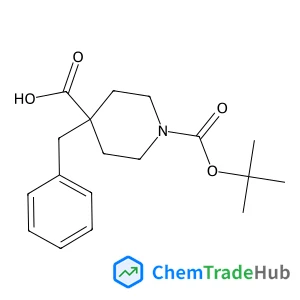
4-Benzyl-1-(tert-butoxycarbonyl)piperidine-4-carboxylic acid
CAS Number:
170838-87-6
Molecular Formula:
C18H25NO4
![1-[3-(4-Morpholinylsulfonyl)phenyl]methanamine structure](https://static.chemtradehub.com/structs/933/933989-32-3-51af.webp "1-[3-(4-Morpholinylsulfonyl)phenyl]methanamine structure")
Recommended Suppliers





Disclaimer
This page provides academic journal information for reference and research purposes only. We are not affiliated with any journal publishers and do not handle publication submissions. For publication-related inquiries, please contact the respective journal publishers directly.
If you notice any inaccuracies in the information displayed, please contact us at support@chemtradehub.com. We will promptly review and address your concerns.