












Nonequilibrium transport in quantum impurity models: exact path integral simulations
Literature Information
Publication Date
2011-06-15
DOI
10.1039/C1CP20702D
Impact Factor
3.676
Authors
Dvira Segal, Andrew J. Millis, David R. Reichman
View Original
Abstract
We simulate the nonequilibrium dynamics of two generic many-body quantum impurity models by employing the recently developed iterative influence-functional path integral method [Phys. Rev. B: Condens. Matter, 2010, 82, 205323]. This general approach is presented here in the context of quantum transport in molecular electronic junctions. Models of particular interest include the single impurity Anderson model and the related spinless two-state Anderson dot. In both cases we study the time evolution of the dot occupation and the current characteristics at finite temperature. A comparison to mean-field results is presented, when applicable.
Recommended Journals
Related Literature
The interaction of defects in a mayenite structure
Sergey N. Shkerin, Ekaterina S. Ulyanova, Sergey V. Naumov
2020-11-27
Paper
DOI: 10.1039/D0CP05107A
Hierarchical phenomena in multicomponent liquids: simulation methods, analysis, chemistry
Michael J. Servis, Ernesto Martinez-Baez
2020-03-05
Perspective
DOI: 10.1039/D0CP00164C
Different submicellar solubilization mechanisms revealed by 1H NMR and 2D diffusion ordered spectroscopy (DOSY)
Mengjian Wu, Zhaoxia Wu, Shangwu Ding, Zhong Chen, Xiaohong Cui
2020-04-20
Paper
DOI: 10.1039/D0CP00429D
Long-distance proton transfer induced by a single ammonia molecule: ion mobility mass spectrometry of protonated benzocaine reacted with NH3
Keijiro Ohshimo, Shun Miyazaki, Keigo Hattori, Fuminori Misaizu
2020-03-30
Paper
DOI: 10.1039/C9CP06923B
Interplay between aggregation number, micelle charge and hydration of catanionic surfactants
Žiga Medoš, Sergej Friesen, Richard Buchner, Marija Bešter-Rogač
2020-04-17
Paper
DOI: 10.1039/D0CP00877J
Low-index dielectric metasurfaces supported by metallic substrates for efficient second-harmonic generation in the blue-ultraviolet range
Kwang-Hyon Kim
2020-02-29
Paper
DOI: 10.1039/D0CP00150C
Orientation independent vibrational dynamics of lipid-bound interfacial water
Malte Deiseroth, Mischa Bonn
2020-04-02
Paper
DOI: 10.1039/D0CP01099E
Generation and direct EPR spectroscopic observation of triplet arylphosphinidenes: stabilisation versus internal rearrangements
Eugenii Ya. Misochko, Alexander V. Akimov, Denis V. Korchagin, Yulia S. Ganushevich, Egor A. Melnikov, Vasili A. Miluykov
2020-11-18
Paper
DOI: 10.1039/D0CP05254J
Yields of primary species in the low-linear energy transfer radiolysis of water in the temperature range of 25–700 °C
Abida Sultana, Jintana Meesungnoen, Jean-Paul Jay-Gerin
2020-03-18
Paper
DOI: 10.1039/D0CP00601G
Organometallic polymers synthesized from prochiral molecules by a surface-assisted synthesis on Ag(111)
Zhibo Ma
2020-03-09
Paper
DOI: 10.1039/C9CP06893G
You might also like
Compound Q&A
What are the main uses of 1-(3-Aminophenyl)-3-[(3R)-1-(3,3-dimethyl-2-oxobutyl)-2-oxo-5-(2-pyridinyl)-2,3-dihydro-1H-1,4-benzodiazepin-3-yl]urea (CAS: 155412-88-7)?
This compound is mainly used as an intermediate in the synthesis of antipsychoti...
155412-88-71-(3-Aminophenyl)-3-...
Compound Q&A
How should waste containing 1-(D-Ribofuranosyl)-1,4-dihydro-3-pyridinecarboxamide (CAS: 19132-12-8) be handled?
Waste containing 1-(D-Ribofuranosyl)-1,4-dihydro-3-pyridinecarboxamide (CAS: 191...
19132-12-81-(D-Ribofuranosyl)-...
Compound Q&A
What regulatory guidelines apply to 2-Methyl-2-propanyl 3-bromo-3-(hydroxymethyl)-1-azetidinecarboxylate (CAS: 2007919-81-3)?
2-Methyl-2-propanyl 3-bromo-3-(hydroxymethyl)-1-azetidinecarboxylate (CAS: 20079...
2007919-81-32-Methyl-2-propanyl ...
Compound Q&A
What is N-(4-Chloro-2-pyridinyl)acetamide (CAS: 245056-66-0)?
N-(4-Chloro-2-pyridinyl)acetamide (CAS: 245056-66-0) is a chemical compound with...
245056-66-0N-(4-Chloro-2-pyridi...
Compound Q&A
What is 5-Chloro-2-hydroxybenzoic acid (CAS: 321-14-2)?
5-Chloro-2-hydroxybenzoic acid, also known as 5-chlorosalicylic acid, is an arom...
321-14-25-Chloro-2-hydroxybe...
Compound Q&A
What precautions should be taken when handling 1,1-Dichloro-1-fluoroethane (CAS: 1717-00-6)?
When handling 1,1-Dichloro-1-fluoroethane (CAS: 1717-00-6), it is important to u...
1717-00-61,1-Dichloro-1-fluor...
Compound Q&A
What are the physical and chemical properties of Fmoc-(2S,3R)-3-phenylpyrrolidine-2-carboxylic acid (CAS: 281655-32-1)?
Fmoc-(2S,3R)-3-phenylpyrrolidine-2-carboxylic acid is a white crystalline solid ...
281655-32-1Fmoc-(2S,3R)-3-pheny...
Compound Q&A
What are the main uses of 4-Amino-5-bromo-2-pyridinecarboxylic acid (CAS: 1363381-01-4)?
4-Amino-5-bromo-2-pyridinecarboxylic acid is primarily used as a precursor in th...
1363381-01-44-Amino-5-bromo-2-py...
Compound Q&A
What precautions should be taken when handling (S)-tert-butyl 2-((2-(4-bromophenyl)-2-oxoethyl)carbamoyl)pyrrolidine-1-carboxylate (CAS: 1007881-98-2)?
Handling this compound should be done with personal protective equipment (PPE) i...
1007881-98-2(S)-tert-butyl 2-((2...
Compound Q&A
What precautions should be taken when handling 8-bromo-2,2-dimethyl-3,4-dihydro-2H-1,4-benzoxazin-3-one (CAS: 688363-73-7)?
When handling 8-bromo-2,2-dimethyl-3,4-dihydro-2H-1,4-benzoxazin-3-one, use prop...
688363-73-78-bromo-2,2-dimethyl...
Source Journal
Physical Chemistry Chemical Physics

CiteScore:
5.5
Self-citation Rate:
10.3%
Articles per Year:
3036
Physical Chemistry Chemical Physics (PCCP) is an international journal co-owned by 19 physical chemistry and physics societies from around the world. This journal publishes original, cutting-edge research in physical chemistry, chemical physics and biophysical chemistry. To be suitable for publication in PCCP, articles must include significant innovation and/or insight into physical chemistry; this is the most important criterion that reviewers and Editors will judge against when evaluating submissions. The journal has a broad scope and welcomes contributions spanning experiment, theory, computation and data science. Topical coverage includes spectroscopy, dynamics, kinetics, statistical mechanics, thermodynamics, electrochemistry, catalysis, surface science, quantum mechanics, quantum computing and machine learning. Interdisciplinary research areas such as polymers and soft matter, materials, nanoscience, energy, surfaces/interfaces, and biophysical chemistry are welcomed if they demonstrate significant innovation and/or insight into physical chemistry. Joined experimental/theoretical studies are particularly appreciated when complementary and based on up-to-date approaches.
Recommended Compounds
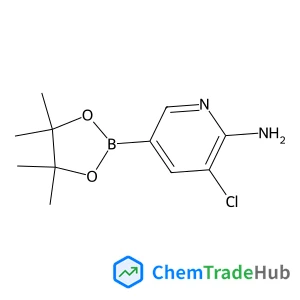
3-Chloro-5-(4,4,5,5-tetramethyl-1,3,2-dioxaborolan-2-yl)-2-pyridinamine
CAS Number:
1032758-99-8
Molecular Formula:
C11H16BClN2O2
![tert-Butyl N-[(2-chloropyridin-4-yl)methyl]carbamate structure](https://static.chemtradehub.com/structs/916/916210-27-0-9f95.webp "tert-Butyl N-[(2-chloropyridin-4-yl)methyl]carbamate structure")
tert-Butyl N-[(2-chloropyridin-4-yl)methyl]carbamate
CAS Number:
916210-27-0
Molecular Formula:
C11H15ClN2O2
Recommended Suppliers





Disclaimer
This page provides academic journal information for reference and research purposes only. We are not affiliated with any journal publishers and do not handle publication submissions. For publication-related inquiries, please contact the respective journal publishers directly.
If you notice any inaccuracies in the information displayed, please contact us at support@chemtradehub.com. We will promptly review and address your concerns.