



Magnetism-tuning strategies for graphene oxide based on magnetic oligoacene oxide patches model
Literature Information
Publication Date
2018-01-02
DOI
10.1039/C7CP06405E
Impact Factor
3.676
Authors
Yanjie Wen, Chia-Liang Yen, Linyin Yan, Hirohiko Kono, Sheng-Hsien Lin, Yong-Chien Ling
View Original
Abstract
Graphene oxide (GO) has wide application potential owing to its 2D structure and diverse modification sites for various targeted uses. The introduction of magnetism into GO structures has further advanced the controllability of the application of GO materials. Herein, the concept of modular design and modeling was applied to tune the magnetism of GO. To obtain desirable magnetic properties, diradical-structured GO patches were formed by the introduction of two functional groups to break the Kekule structure of the benzene ring. In these diradical GO patches, the energy of the triplet state was lower than those of the open-shell broken-symmetry singlet state and closed-shell singlet state. To create such multi-radical patches, a practical approach is to determine a substantial spatial separation of the α and β spin densities in the molecule. Thus, systematic design strategies and tests were evaluated. The first strategy was extending the distance between the distribution center of the α and β spin densities; the second was controlling the delocalization directions of the α and β electrons; the third was controlling the delocalization extension of the α and β electrons by oxidative modification, and finally introducing multi-radical structures into the molecular system and controlling the position of each radical. Herein, successful molecular models with a large magnetic coupling constant (∼3600 cm−1) were obtained. This study paves the way to explore ferromagnetic MGO guided by theoretical study, which may become reality soon.
Recommended Journals

Russian Journal of Organic Chemistry

Chemistry Education Research and Practice

Saudi Pharmaceutical Journal

Russian Journal of Bioorganic Chemistry

Acta Materialia

New Journal of Chemistry

Journal of Natural Medicines

Chemical Communications

Russian Journal of Applied Chemistry

Current Opinion in Solid State & Materials Science
Related Literature
Palladium catalysed cyclisation–carbonylation of enynes to give cyclic γ,δ-unsaturated acids
Varinder K. Aggarwal, Mike Butters, Paul W. Davies
2003-04-02
Communication
DOI: 10.1039/B300719G
Silica coated fullerenols: seeded growth of silica spheres under acidic conditions
Elizabeth A. Whitsitt, Andrew R. Barron
2003-04-04
Communication
DOI: 10.1039/B212808J
Synthesis of C-arylglycosides via Ru(ii)-catalyzed [2 + 2 + 2] cycloaddition
Yoshihiko Yamamoto, Tomoaki Saigoku, Takashige Ohgai, Hisao Nishiyama, Kenji Itoh
2004-10-07
Communication
DOI: 10.1039/B411442F
The role of isomorphism in synthetic analysis. Pruning the search tree by finding disjoint isomorphic substructures
Steven H. Bertz, Toby J. Sommer
2003-03-25
Communication
DOI: 10.1039/B300935A
Reduction of nitroaromatics to arylnitrenium ions by vinyl halide cations
Hao Chen, Xubin Zheng, Pengxiang Yang, R. Graham Cooks
2004-02-12
Communication
DOI: 10.1039/B314713D
Flexible enzymatic and chemo-enzymatic approaches to a broad range of uridine-diphospho-sugars
James C. Errey, Balaram Mukhopadhyay, K. P. Ravindranathan Kartha, Robert A. Field
2004-10-13
Communication
DOI: 10.1039/B410184G
Phase-transfer alkylation reactions using microreactors
Masaharu Ueno, Hideaki Hisamoto, Takehiko Kitamori, Shū Kobayashi
2003-03-27
Communication
DOI: 10.1039/B301638B
From atactic to isotactic CO/p-methylstyrenecopolymer by proper modification of Pd(ii) catalysts bearing achiral α-diimines
Barbara Binotti, Carla Carfagna, Cristiano Zuccaccia, Alceo Macchioni
2004-11-29
Communication
DOI: 10.1039/B411214H
A novel migrative addition reaction of hydrazines to the diketone derivative of C60
Sho-ichi Iwamatsu, Fumiaki Ono
2003-05-02
Communication
DOI: 10.1039/B302080K
You might also like
Compound Q&A
What industries use (1R,3S)-1,3-Cyclopentanediol (CAS: 16326-97-9)?
(1R,3S)-1,3-Cyclopentanediol finds applications in various industries. In the ph...
16326-97-9(1R,3S)-1,3-Cyclopen...
Compound Q&A
What precautions should be taken when handling N'-[4-(Dimethylamino)phenyl]-N,N-dimethyl-1,4-benzenediamine (CAS: 637-31-0)?
When handling N'-[4-(Dimethylamino)phenyl]-N,N-dimethyl-1,4-benzenediamine, it i...
637-31-0N'-[4-(Dimethylamino...
Compound Q&A
Are there alternatives to 5-(2,4-Difluorophenyl)-2-methoxypyrimidine (CAS: 1352318-16-1) in synthesis?
There are several alternatives to 5-(2,4-Difluorophenyl)-2-methoxypyrimidine in ...
1352318-16-15-(2,4-Difluoropheny...
Compound Q&A
What regulatory guidelines apply to 1-(3-Methoxyphenoxy)propan-2-ol (CAS: 382141-68-6)?
1-(3-Methoxyphenoxy)propan-2-ol (CAS: 382141-68-6) must comply with the Globally...
382141-68-61-(3-Methoxyphenoxy)...
Compound Q&A
Is Tetrodotoxin Citrate (CAS: 18660-81-6) safe?
Tetrodotoxin Citrate is extremely dangerous and should be handled with extreme c...
18660-81-6Tetrodotoxin Citrate
Compound Q&A
What are the main uses of 2-Methyl-2-propanyl [(1R,3S)-3-hydroxycyclopentyl]carbamate (CAS: 225641-84-9)?
2-Methyl-2-propanyl [(1R,3S)-3-hydroxycyclopentyl]carbamate (CAS: 225641-84-9) i...
225641-84-92-Methyl-2-propanyl ...
Compound Q&A
How should waste containing 4-(2-Hydroxyhexafluoroisopropyl)Benzoic Acid (CAS: 16261-80-6) be handled?
Waste containing 4-(2-Hydroxyhexafluoroisopropyl)Benzoic Acid (CAS: 16261-80-6) ...
16261-80-64-(2-Hydroxyhexafluo...
Compound Q&A
How is 2-Methyl-2-proanyl {(2S)-1-[(benzyloxy)amino]-3-hydroxy-3-methyl-1-oxo-2-butanyl}carbamate (CAS: 102507-19-7) typically synthesized?
2-Methyl-2-proanyl {(2S)-1-[(benzyloxy)amino]-3-hydroxy-3-methyl-1-oxo-2-butanyl...
102507-19-72-Methyl-2-propanyl ...
Compound Q&A
What is Benzeneethanamine, α-ethyl-, hydrochloride (1:1) (CAS: 20735-15-3)?
Benzeneethanamine, α-ethyl-, hydrochloride (1:1) is an organic compound with the...
20735-15-3Benzeneethanamine, α...
Compound Q&A
Are there alternatives to 3-{(E)-[4-(Dimethylamino)phenyl]diazenyl}benzoic acid (CAS: 20691-84-3) in synthesis?
In the synthesis of compounds similar to 3-{(E)-[4-(Dimethylamino)phenyl]diazeny...
20691-84-33-{(E)-[4-(Dimethyla...
Source Journal
Physical Chemistry Chemical Physics

CiteScore:
5.5
Self-citation Rate:
10.3%
Articles per Year:
3036
Physical Chemistry Chemical Physics (PCCP) is an international journal co-owned by 19 physical chemistry and physics societies from around the world. This journal publishes original, cutting-edge research in physical chemistry, chemical physics and biophysical chemistry. To be suitable for publication in PCCP, articles must include significant innovation and/or insight into physical chemistry; this is the most important criterion that reviewers and Editors will judge against when evaluating submissions. The journal has a broad scope and welcomes contributions spanning experiment, theory, computation and data science. Topical coverage includes spectroscopy, dynamics, kinetics, statistical mechanics, thermodynamics, electrochemistry, catalysis, surface science, quantum mechanics, quantum computing and machine learning. Interdisciplinary research areas such as polymers and soft matter, materials, nanoscience, energy, surfaces/interfaces, and biophysical chemistry are welcomed if they demonstrate significant innovation and/or insight into physical chemistry. Joined experimental/theoretical studies are particularly appreciated when complementary and based on up-to-date approaches.
Recommended Compounds
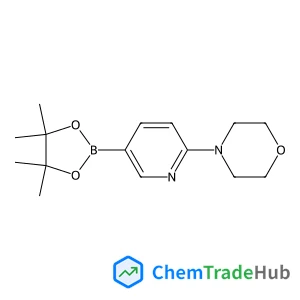
4-(5-(4,4,5,5-tetramethyl-1,3,2-dioxaborolan-2-yl)pyridin-2-yl)morpholine
CAS Number:
485799-04-0
Molecular Formula:
C15H23BN2O3

![N-[(9H-Fluoren-9-ylmethoxy)carbonyl]-beta-phenyl-L-phenylalanine structure](https://static.chemtradehub.com/structs/201/201484-50-6-c2fc.webp "N-[(9H-Fluoren-9-ylmethoxy)carbonyl]-beta-phenyl-L-phenylalanine structure")
N-[(9H-Fluoren-9-ylmethoxy)carbonyl]-beta-phenyl-L-phenylalanine
CAS Number:
201484-50-6
Molecular Formula:
C30H25NO4
Recommended Suppliers






Disclaimer
This page provides academic journal information for reference and research purposes only. We are not affiliated with any journal publishers and do not handle publication submissions. For publication-related inquiries, please contact the respective journal publishers directly.
If you notice any inaccuracies in the information displayed, please contact us at support@chemtradehub.com. We will promptly review and address your concerns.