












Proton relays in anomalous carbocations dictate spectroscopy, stability, and mechanisms: case studies on C2H5+ and C3H3+
Literature Information
Publication Date
2017-09-06
DOI
10.1039/C7CP05577C
Impact Factor
3.676
Authors
LeeAnn M. Sager, Srinivasan S. Iyengar
View Original
Abstract
We present a detailed analysis of the anomalous carbocations: C2H5+ and C3H3+. This work involves (a) probing electronic structural properties, (b) ab initio dynamics simulations over a range of internal energies, (c) analysis of reduced dimensional potential surfaces directed along selected conformational transition pathways, (d) dynamically averaged vibrational spectra computed from ab initio dynamics trajectories, and (e) two-dimensional time–frequency analysis to probe conformational dynamics. Key findings are as follows: (i) as noted in our previous study on C2H3+, it appears that these non-classical carbocations are stabilized by delocalized nuclear frameworks and “proton shuttles”. We analyze this nuclear delocalization and find critical parallels between conformational changes in C2H3+, C2H5+, and C3H3+. (ii) The vibrational signatures of C2H5+ are dominated by the “bridge-proton” conformation, but also show critical contributions from the “classical” configuration, which is a transition state at almost all levels of theory. This result is further substantiated through two-dimensional time–frequency analysis and is at odds with earlier explanations of the experimental spectra, where frequencies close to the classical region were thought to arise from an impurity. While this is still possible, our results here indicate an additional (perhaps more likely) explanation that involves the “classical” isomer. (iii) Finally, in the case of C3H3+ our explanation of the experimental result includes the presence of multiple, namely, “cyclic”, “straight”, and propargyl, configurations. Proton shuttles and nuclear delocalization, reminiscent of those seen in the case of C2H3+, were seen all through and have a critical role in all our observations.
Related Literature
Recovery of anthocyanins from Eugenia spp. fruit peels: a comparison between heat- and ultrasound-assisted extraction
M. Beatriz P. P. Oliveira
2023-10-30
Paper
DOI: 10.1039/D3FB00115F
Direct re-lithiation strategy for spent lithium iron phosphate battery in Li-based eutectic using organic reducing agents
Tanongsak Yingnakorn, Jennifer Hartley, Jason S. Terreblanche, Chunhong Lei, Andrew P. Abbott
2023-11-02
Paper
DOI: 10.1039/D3SU00237C
Nutritional quality analysis of high-moisture extrudates containing mixed proteins from soy and surimi
Anna Hu, Yujie Zhang, Jinchuang Zhang, Tongqing Li, Zhaojun Wang, Qiang Wang
2023-12-01
Paper
DOI: 10.1039/D3FB00171G
Storage stability assessment of guava fruit (Psidium guajava L.) cv. ‘Gola’ in response to different packaging materials
Ali Asad Yousaf, Kashif Sarfraz Abbasi, Muhammad Suhail Ibrahim, Asma Sohail, Mamoona Faiz, Mehwish Khadim
2023-11-28
Paper
DOI: 10.1039/D3FB00113J
Pulsed electric field assisted extraction of soluble proteins from nettle leaves (Urtica dioica L.): kinetics and optimization using temperature and specific energy
Ivan Shorstkii, Suse Botelho da Silva, Stefan Toepfl, Alica Lammerskitten, Claudia Siemer
2023-09-19
Paper
DOI: 10.1039/D3FB00053B
A green process for the specific decomposition of chicken feather keratin into polythiol building blocks
Julia Diener, Christian Bartsch, Florian Dietrich, Claudia Falcke, Iva Anic, Steffen Roth, Andreas Taden, Michael Richter
2023-12-07
Paper
DOI: 10.1039/D3SU00269A
You might also like
Compound Q&A
What industries use (1R,3S)-1,3-Cyclopentanediol (CAS: 16326-97-9)?
(1R,3S)-1,3-Cyclopentanediol finds applications in various industries. In the ph...
16326-97-9(1R,3S)-1,3-Cyclopen...
Compound Q&A
What precautions should be taken when handling N'-[4-(Dimethylamino)phenyl]-N,N-dimethyl-1,4-benzenediamine (CAS: 637-31-0)?
When handling N'-[4-(Dimethylamino)phenyl]-N,N-dimethyl-1,4-benzenediamine, it i...
637-31-0N'-[4-(Dimethylamino...
Compound Q&A
Are there alternatives to 5-(2,4-Difluorophenyl)-2-methoxypyrimidine (CAS: 1352318-16-1) in synthesis?
There are several alternatives to 5-(2,4-Difluorophenyl)-2-methoxypyrimidine in ...
1352318-16-15-(2,4-Difluoropheny...
Compound Q&A
What regulatory guidelines apply to 1-(3-Methoxyphenoxy)propan-2-ol (CAS: 382141-68-6)?
1-(3-Methoxyphenoxy)propan-2-ol (CAS: 382141-68-6) must comply with the Globally...
382141-68-61-(3-Methoxyphenoxy)...
Compound Q&A
Is Tetrodotoxin Citrate (CAS: 18660-81-6) safe?
Tetrodotoxin Citrate is extremely dangerous and should be handled with extreme c...
18660-81-6Tetrodotoxin Citrate
Compound Q&A
What are the main uses of 2-Methyl-2-propanyl [(1R,3S)-3-hydroxycyclopentyl]carbamate (CAS: 225641-84-9)?
2-Methyl-2-propanyl [(1R,3S)-3-hydroxycyclopentyl]carbamate (CAS: 225641-84-9) i...
225641-84-92-Methyl-2-propanyl ...
Compound Q&A
How should waste containing 4-(2-Hydroxyhexafluoroisopropyl)Benzoic Acid (CAS: 16261-80-6) be handled?
Waste containing 4-(2-Hydroxyhexafluoroisopropyl)Benzoic Acid (CAS: 16261-80-6) ...
16261-80-64-(2-Hydroxyhexafluo...
Compound Q&A
How is 2-Methyl-2-proanyl {(2S)-1-[(benzyloxy)amino]-3-hydroxy-3-methyl-1-oxo-2-butanyl}carbamate (CAS: 102507-19-7) typically synthesized?
2-Methyl-2-proanyl {(2S)-1-[(benzyloxy)amino]-3-hydroxy-3-methyl-1-oxo-2-butanyl...
102507-19-72-Methyl-2-propanyl ...
Compound Q&A
What is Benzeneethanamine, α-ethyl-, hydrochloride (1:1) (CAS: 20735-15-3)?
Benzeneethanamine, α-ethyl-, hydrochloride (1:1) is an organic compound with the...
20735-15-3Benzeneethanamine, α...
Compound Q&A
Are there alternatives to 3-{(E)-[4-(Dimethylamino)phenyl]diazenyl}benzoic acid (CAS: 20691-84-3) in synthesis?
In the synthesis of compounds similar to 3-{(E)-[4-(Dimethylamino)phenyl]diazeny...
20691-84-33-{(E)-[4-(Dimethyla...
Source Journal
Physical Chemistry Chemical Physics

CiteScore:
5.5
Self-citation Rate:
10.3%
Articles per Year:
3036
Physical Chemistry Chemical Physics (PCCP) is an international journal co-owned by 19 physical chemistry and physics societies from around the world. This journal publishes original, cutting-edge research in physical chemistry, chemical physics and biophysical chemistry. To be suitable for publication in PCCP, articles must include significant innovation and/or insight into physical chemistry; this is the most important criterion that reviewers and Editors will judge against when evaluating submissions. The journal has a broad scope and welcomes contributions spanning experiment, theory, computation and data science. Topical coverage includes spectroscopy, dynamics, kinetics, statistical mechanics, thermodynamics, electrochemistry, catalysis, surface science, quantum mechanics, quantum computing and machine learning. Interdisciplinary research areas such as polymers and soft matter, materials, nanoscience, energy, surfaces/interfaces, and biophysical chemistry are welcomed if they demonstrate significant innovation and/or insight into physical chemistry. Joined experimental/theoretical studies are particularly appreciated when complementary and based on up-to-date approaches.
Recommended Compounds
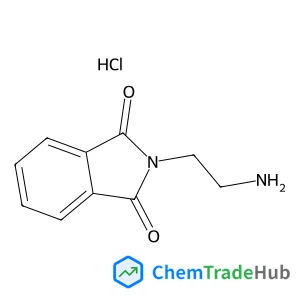
2-(2-Aminoethyl)-1H-isoindole-1,3(2H)-dione hydrochloride (1:1)
CAS Number:
30250-67-0
Molecular Formula:
C10H11ClN2O2
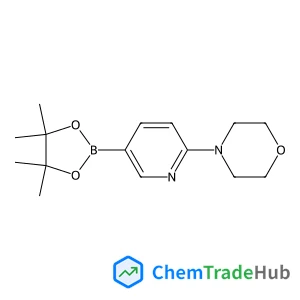
4-(5-(4,4,5,5-tetramethyl-1,3,2-dioxaborolan-2-yl)pyridin-2-yl)morpholine
CAS Number:
485799-04-0
Molecular Formula:
C15H23BN2O3

Recommended Suppliers







Disclaimer
This page provides academic journal information for reference and research purposes only. We are not affiliated with any journal publishers and do not handle publication submissions. For publication-related inquiries, please contact the respective journal publishers directly.
If you notice any inaccuracies in the information displayed, please contact us at support@chemtradehub.com. We will promptly review and address your concerns.