












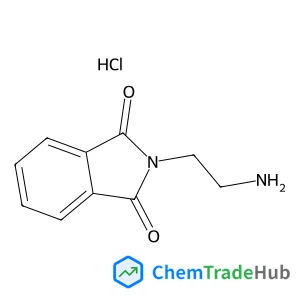
2-(2-Aminoethyl)-1H-isoindole-1,3(2H)-dione hydrochloride (1:1)
CAS Number:
30250-67-0
Molecular Formula:
C10H11ClN2O2
Jason T. A. Gall, Javix Thomas, Fan Xie, Zhibo Wang, Wolfgang Jäger, Yunjie Xu
Methyl glycidate is a chiral epoxy ester whose structure and characteristic functional groups can be used to model biological events involving much larger chiral esters on the molecular scale. Since biological molecules function in aqueous solution, it is of interest to obtain detailed knowledge of the initial few steps of solvation using high resolution spectroscopy. In the current study, rotational spectra of methyl glycidate monohydrate were investigated by using a chirped-pulse and a cavity-based Fourier transform microwave spectrometer. Quantum theory of atoms in molecules and non-covalent interaction analyses were performed for the observed monohydrate to characterize non-covalent interactions in the system. In the observed monohydrate, methyl glycidate takes on its most stable monomeric form, while water serves as a hydrogen bond donor to the carbonyl group and as a hydrogen bond acceptor to the hydrogen atom of the CH2 group on the epoxide ring, and additionally forms a close contact to the epoxide oxygen atom. Unexpectedly, water tunnelling splittings on the order of tens to hundreds of kHz were detected. A water tunnelling path was proposed and a surprisingly low tunnelling barrier of about 2 kJ mol−1 was calculated. The proposed tunnelling path is asymmetric in the forward and backward tunnelling directions, demonstrating the complicated dynamics of water motions in the system. In addition, splittings due to the methyl internal rotation were observed and analyzed.
Barbara Binotti, Carla Carfagna, Cristiano Zuccaccia, Alceo Macchioni
DOI: 10.1039/B411214H
Seong Il Yoo, Byeong-Hyeok Sohn, Wang-Cheol Zin, Sung-Jin An, Gyu-Chul Yi
DOI: 10.1039/B409934F
Donald H. McCullough, III, Steven L. Regen
DOI: 10.1039/B410027C
Chengwei Gao, Xiaochun Tao, Yanlong Qian, Jiling Huang
DOI: 10.1039/B302890A
Luke E. Turner, Matthew G. Thorn, Phillip E. Fanwick, Ian P. Rothwell
DOI: 10.1039/B212724E
W. Matthew Leevy, Michelle E. Weber, Paul H. Schlesinger
DOI: 10.1039/B413588A
Robin B. Bedford, Duncan W. Bruce, Robert M. Frost, John W. Goodby, Michael Hird
DOI: 10.1039/B413790F
Sho-ichi Iwamatsu, Fumiaki Ono
DOI: 10.1039/B302080K
Ping Yin, Song Gao, Li-Min Zheng, Zheming Wang, Xin-Quan Xin
DOI: 10.1039/B212674E
Steven H. Bertz, Toby J. Sommer
DOI: 10.1039/B300935A
(1R,3S)-1,3-Cyclopentanediol finds applications in various industries. In the ph...
When handling N'-[4-(Dimethylamino)phenyl]-N,N-dimethyl-1,4-benzenediamine, it i...
There are several alternatives to 5-(2,4-Difluorophenyl)-2-methoxypyrimidine in ...
1-(3-Methoxyphenoxy)propan-2-ol (CAS: 382141-68-6) must comply with the Globally...
Tetrodotoxin Citrate is extremely dangerous and should be handled with extreme c...
2-Methyl-2-propanyl [(1R,3S)-3-hydroxycyclopentyl]carbamate (CAS: 225641-84-9) i...
Waste containing 4-(2-Hydroxyhexafluoroisopropyl)Benzoic Acid (CAS: 16261-80-6) ...
2-Methyl-2-proanyl {(2S)-1-[(benzyloxy)amino]-3-hydroxy-3-methyl-1-oxo-2-butanyl...
Benzeneethanamine, α-ethyl-, hydrochloride (1:1) is an organic compound with the...
In the synthesis of compounds similar to 3-{(E)-[4-(Dimethylamino)phenyl]diazeny...

Physical Chemistry Chemical Physics (PCCP) is an international journal co-owned by 19 physical chemistry and physics societies from around the world. This journal publishes original, cutting-edge research in physical chemistry, chemical physics and biophysical chemistry. To be suitable for publication in PCCP, articles must include significant innovation and/or insight into physical chemistry; this is the most important criterion that reviewers and Editors will judge against when evaluating submissions. The journal has a broad scope and welcomes contributions spanning experiment, theory, computation and data science. Topical coverage includes spectroscopy, dynamics, kinetics, statistical mechanics, thermodynamics, electrochemistry, catalysis, surface science, quantum mechanics, quantum computing and machine learning. Interdisciplinary research areas such as polymers and soft matter, materials, nanoscience, energy, surfaces/interfaces, and biophysical chemistry are welcomed if they demonstrate significant innovation and/or insight into physical chemistry. Joined experimental/theoretical studies are particularly appreciated when complementary and based on up-to-date approaches.
![Ethyl 3-((6-(4,5-dihydro-1H-benzo[d]azepin-3(2H)-yl)-2-(pyridin-2-yl)pyrimidin-4-yl)amino)propanoate structure](https://static.chemtradehub.com/structs/137/1373423-53-0-496a.webp "Ethyl 3-((6-(4,5-dihydro-1H-benzo[d]azepin-3(2H)-yl)-2-(pyridin-2-yl)pyrimidin-4-yl)amino)propanoate structure")
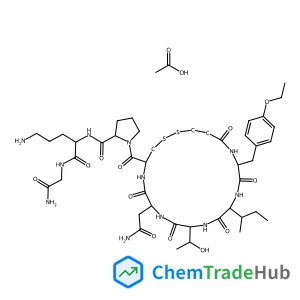
![N,N'-1,2-Ethanediylbis[2-(vinylsulfonyl)acetamide] structure](https://static.chemtradehub.com/structs/667/66710-66-5-b556.webp "N,N'-1,2-Ethanediylbis[2-(vinylsulfonyl)acetamide] structure")





