












Structure–property relationships in protic ionic liquids: a study of solvent–solvent and solvent–solute interactions
Literature Information
Publication Date
2017-10-12
DOI
10.1039/C7CP05076C
Impact Factor
3.676
Authors
Carlos E. S. Bernardes, Filipe Agapito, Filomena Martins, Seishi Shimizu, Manuel E. Minas da Piedade, Adam J. Walker
View Original
Abstract
The ionic nature of a functionalized protic ionic liquid cannot be rationalized simply through the differences in aqueous proton dissociation constants between the acid precursor and the conjugate acid of the base precursor. The extent of proton transfer, i.e. the equilibrium ionicity, of a tertiary ammonium acetate protic ionic liquid can be significantly increased by introducing an hydroxyl functional group on the cation, compared to the alkyl or amino-functionalized analogues. This increase in apparent ionic nature correlates well with variations in solvent–solute and solvent–solvent interaction parameters, as well as with physicochemical properties such as viscosity.
Related Literature
Oxygen tolerant, photoinduced controlled radical polymerization approach for the synthesis of giant amphiphiles
Alexis Theodorou, Petros Mandriotis, Athina Anastasaki, Kelly Velonia
2021-03-18
Paper
DOI: 10.1039/D0PY01608J
Structural design of pyrene-functionalized TEMPO-containing polymers for enhanced electrochemical storage performance
Hatice Mutlu, Hongjiao Li, Wolfgang Wenzel
2021-04-06
Paper
DOI: 10.1039/D0PY01421D
Supramolecular organogel formation behaviors of beads-on-string shaped poly(azomethine)s dependent on POSS structures in the main chains
Ayano Ishida, Shunichi Fujii, Akifumi Sumida, Tasuku Kamitani, Saori Minami, Kenji Urayama, Hiroaki Imoto
2021-05-03
Paper
DOI: 10.1039/D1PY00346A
Improved enantioselectivity in thiol–ene photopolymerization of sulphur-containing polymers with circularly polarized luminescence
Chen-Lu He, Zeyu Feng, Yan Li, Manman Zhou, Liyang Zhao, Sizhen Shan, Mengqiao Wang, Xin Chen, Xi-Sheng Wang, Gang Zou
2021-03-31
Paper
DOI: 10.1039/D1PY00082A
The synthesis of thermoresponsive POSS-based eight-arm star poly(N-isopropylacrylamide): A comparison between Z-RAFT and R-RAFT strategies
Bo Pang, Rui Liu, Guang Han, Wei Wang
2021-03-02
Paper
DOI: 10.1039/D1PY00087J
Synthesis of fully degradable cationic polymers with various topological structures via postpolymerization modification by using thio-bromo “click” reaction
Yunkai Dai, Zhitao Hu, Xiaoying Wang, Xingliang Liu, Yuanchao Li, Yi Shi, Yongming Chen
2021-04-05
Paper
DOI: 10.1039/D1PY00106J
Visible light-degradable supramolecular gels comprising cross-linked polyrotaxanes capped with trithiocarbonate groups
Tae Woong Kang, Atsushi Tamura, Yoshinori Arisaka, Nobuhiko Yui
2021-06-09
Paper
DOI: 10.1039/D1PY00569C
You might also like
Compound Q&A
How should waste containing 2-Ethyl-4-Methyl-1H-Imidazole-5-Carbaldehyde (CAS: 88634-80-4) be handled?
Waste containing 2-Ethyl-4-Methyl-1H-Imidazole-5-Carbaldehyde (CAS: 88634-80-4) ...
88634-80-42-Ethyl-4-Methyl-1H-...
Compound Q&A
What industries use Triethoxy(octyl)silane (CAS: 1385031-14-0)?
Triethoxy(octyl)silane (CAS: 1385031-14-0) is widely used in the pharmaceuticals...
1385031-14-0Triethoxy(octyl)sila...
Compound Q&A
Are there alternatives to 3-iodo-7-nitro-1H-indazole (CAS: 864724-64-1) in synthesis?
Several alternatives to 3-iodo-7-nitro-1H-indazole (CAS: 864724-64-1) exist in t...
864724-64-13-iodo-7-nitro-1H-in...
Compound Q&A
Are there alternatives to Benzene, bis[(trimethoxysilyl)ethyl] (CAS: 266317-71-9) in synthesis?
Yes, there are alternatives to Benzene, bis[(trimethoxysilyl)ethyl] (CAS: 266317...
266317-71-9Benzene, bis[(trimet...
Compound Q&A
Is Isothiazole-3-carbonitrile (CAS: 1452-17-1) safe?
Isothiazole-3-carbonitrile (CAS: 1452-17-1) is generally considered safe when us...
1452-17-1Isothiazole-3-carbon...
Compound Q&A
Is (3-Chlorophenyl)methanol (CAS: 873-63-2) safe?
(3-Chlorophenyl)methanol (CAS: 873-63-2) is considered low to moderately toxic. ...
873-63-2(3-Chlorophenyl)meth...
Compound Q&A
How is (2S,3S)-2-Hydroxy-3-({[(2-methyl-2-propanyl)oxy]carbonyl}amino)-3-(2-naphthyl)propanoic acid (CAS: 959583-98-3) typically synthesized?
(2S,3S)-2-Hydroxy-3-({[(2-methyl-2-propanyl)oxy]carbonyl}amino)-3-(2-naphthyl)pr...
959583-98-3(2S,3S)-2-Hydroxy-3-...
Compound Q&A
What precautions should be taken when handling Methyl 2-(bromomethyl)-5-methoxybenzoate (CAS: 788081-99-2)?
Proper handling of methyl 2-(bromomethyl)-5-methoxybenzoate requires the use of ...
788081-99-2Methyl 2-(bromomethy...
Compound Q&A
What is 6,8-Dibromoimidazo[1,2-a]pyridine-2-carboxylic acid (CAS: 904805-36-3)?
6,8-Dibromoimidazo[1,2-a]pyridine-2-carboxylic acid (CAS: 904805-36-3) is an aro...
904805-36-36,8-Dibromoimidazo[1...
Compound Q&A
Is 3-Amino-5-bromo-2-pyridinecarbonitrile (CAS: 573675-27-1) safe?
3-Amino-5-bromo-2-pyridinecarbonitrile is considered safe when handled under pro...
573675-27-13-Amino-5-bromo-2-py...
Source Journal
Physical Chemistry Chemical Physics

CiteScore:
5.5
Self-citation Rate:
10.3%
Articles per Year:
3036
Physical Chemistry Chemical Physics (PCCP) is an international journal co-owned by 19 physical chemistry and physics societies from around the world. This journal publishes original, cutting-edge research in physical chemistry, chemical physics and biophysical chemistry. To be suitable for publication in PCCP, articles must include significant innovation and/or insight into physical chemistry; this is the most important criterion that reviewers and Editors will judge against when evaluating submissions. The journal has a broad scope and welcomes contributions spanning experiment, theory, computation and data science. Topical coverage includes spectroscopy, dynamics, kinetics, statistical mechanics, thermodynamics, electrochemistry, catalysis, surface science, quantum mechanics, quantum computing and machine learning. Interdisciplinary research areas such as polymers and soft matter, materials, nanoscience, energy, surfaces/interfaces, and biophysical chemistry are welcomed if they demonstrate significant innovation and/or insight into physical chemistry. Joined experimental/theoretical studies are particularly appreciated when complementary and based on up-to-date approaches.
Recommended Compounds
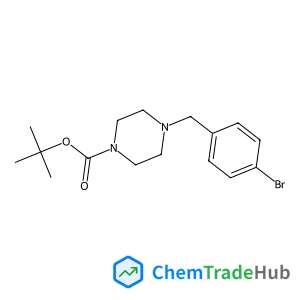
2-Methyl-2-propanyl 4-(4-bromobenzyl)-1-piperazinecarboxylate
CAS Number:
844891-10-7
Molecular Formula:
C16H23BrN2O2
![2,2'-[(Abieta-8,11,13-trien-18-ylimino)bis(2,1-ethanediyloxy)]diethanol structure](https://static.chemtradehub.com/structs/513/51344-62-8-8518.webp "2,2'-[(Abieta-8,11,13-trien-18-ylimino)bis(2,1-ethanediyloxy)]diethanol structure")
2,2'-[(Abieta-8,11,13-trien-18-ylimino)bis(2,1-ethanediyloxy)]diethanol
CAS Number:
51344-62-8
Molecular Formula:
C28H47NO4
Recommended Suppliers



Disclaimer
This page provides academic journal information for reference and research purposes only. We are not affiliated with any journal publishers and do not handle publication submissions. For publication-related inquiries, please contact the respective journal publishers directly.
If you notice any inaccuracies in the information displayed, please contact us at support@chemtradehub.com. We will promptly review and address your concerns.