












Supramolecular organogel formation behaviors of beads-on-string shaped poly(azomethine)s dependent on POSS structures in the main chains
Literature Information
Publication Date
2021-05-03
DOI
10.1039/D1PY00346A
Impact Factor
5.582
Authors
Ayano Ishida, Shunichi Fujii, Akifumi Sumida, Tasuku Kamitani, Saori Minami, Kenji Urayama, Hiroaki Imoto
View Original
Abstract
Beads-on-string-shaped polymers incorporating cage silsesquioxanes in the main chain, especially double-decker-shaped phenyl-substituted silsesquioxanes (DDSQ), have received significant attention in the past few decades. Difunctionalized isobutyl-substituted cage octasilsesquioxanes (T8) have also been generating this type of polymer architecture. However, direct comparisons between main-chain-type polymers comprising phenyl-substituted DDSQ and isobutyl-substituted T8 units have seldom been reported. In this study, we prepared bis(3-aminopropyl)-DDSQ (6) via the hydrosilylation of 3,13-dihydrooctaphenylhexacyclodecasiloxane (dihydro-DDSQ) with t-butyl N-allylcarbamate and deprotection with trifluoroacetic acid. Both para-bis(3-aminopropyl)hexaisobutyl-substituted T8 cage (1), which was developed by us, and 6 were polymerized with terephthalaldehyde (2a), isophthalaldehyde (2b), and 4,4′-oxydibenzaldehyde (2c) to produce the corresponding T8-poly(azomethine)s (3a–c) and DDSQ-poly(azomethine)s (7a–c), respectively. Although precipitates were observed when the polymerization solution of 7 was concentrated under reduced pressure, 3 underwent organogel formation. Solubility test results for heptaisobutyl–hydride–POSS (8) and dihydro-DDSQ (9) as model compounds for the POSS units in 3 and 7, respectively, suggested that the wider solubility spectrum of the isobutyl-substituted T8 moieties in 3 may provide a suitable balance for organogel formation, and the narrower spectrum of solubility for the phenyl-substituted DDSQ moieties in 7 may prevent the existence of a specific solvent region for suitable balanced gel formation. The concentration (c) dependences of zero shear relative viscosity (η0,r) for the polymerization solutions of 3a–c, containing various linker structures were well described by an equation with a single value of the characteristic exponent using different values of gelation threshold concentration.
Related Literature
High-efficiency hydrocracking of phenanthrene into BTX aromatics over a Ni-modified lamellar-crystal HY zeolite
Ting Fang, Yangli Xie, Lirong Li, Yao He, Xu Yang, Linjie Zhang, Wenzhi Jia, Hengbo Huang, Junhui Li, Zhirong Zhu
2022-03-15
Communication
DOI: 10.1039/D1CP05954H
Capillary bridges between unsaturated nano-mineral particles: a molecular dynamics study
Yubing Ouyang, Shujian Chen, Kwesi Sagoe-Crentsil, Wenhui Duan
2022-03-24
Paper
DOI: 10.1039/D1CP05041A
On standardised moments of force distribution in simple liquids
Jonathan Utterson, Radek Erban
2022-01-27
Paper
DOI: 10.1039/D1CP04056A
Critical size effect for the surface heat capacities of nano-CdS: theoretical and experimental studies
Shengjiang Zhang, Xiuniang Tan, Yan Zhou, Jinyang Liu, Xiangyao Liang, Xuehuan Ding, Guangmiao Lyu, Ying Wei, Junxin Chen, Yidan Mao, Jinmei Wu, Yushan Huang, Yusen Huang
2022-02-16
Paper
DOI: 10.1039/D1CP04619E
Thermal tuning of terahertz metamaterial absorber properties based on VO2
Zhipeng Zheng, Yao Luo, Hua Yang, Zao Yi, Jianguo Zhang, Qianjv Song, Wenxing Yang, Chao Liu, Xianwen Wu, Pinghui Wu
2022-03-23
Paper
DOI: 10.1039/D2CP01070D
Tuning the magnetic anisotropy energy by external electric fields of CoPt dimers deposited on graphene
P. Ruiz-Díaz, C. Núñez-Valencia, M. Muñoz-Navia, E. Urrutia-Bañuelos, J. Dorantes-Dávila
2022-04-11
Paper
DOI: 10.1039/D2CP00482H
Reply to the ‘Comment on “Can bulk nanobubbles be stabilized by electrostatic interaction?”’ by S. Koshoridze and Y. Levin, Phys. Chem. Chem. Phys., 2022, 24, DOI: 10.1039/D1CP04406K
Shuo Wang, Limin Zhou, Yongxiang Gao
2022-04-14
Comment
DOI: 10.1039/D2CP00852A
EDL structure of ionic liquid-MXene-based supercapacitor and hydrogen bond role on the interface: a molecular dynamics simulation investigation
Ziyi Wang, Junwu Chen, Yao Li, Kun Dong, Yinghao Yu
2022-02-10
Paper
DOI: 10.1039/D1CP05355H
You might also like
Compound Q&A
What precautions should be taken when handling lithium chloride hydrate (1:1:1) (CAS: 16712-20-2)?
When handling lithium chloride hydrate (1:1:1) (CAS: 16712-20-2), it is importan...
16712-20-2Lithium chloride hyd...
Compound Q&A
Is 4-(4H-1,2,4-Triazol-4-yl)piperidine (CAS: 690261-92-8) safe?
4-(4H-1,2,4-Triazol-4-yl)piperidine is generally considered safe for use in phar...
690261-92-84-(4H-1,2,4-Triazol-...
Compound Q&A
How should waste containing 1,3-Thiazole-2-carboxamide (CAS: 16733-85-0) be handled?
Waste containing 1,3-Thiazole-2-carboxamide (CAS: 16733-85-0) should be collecte...
16733-85-01,3-Thiazole-2-carbo...
Compound Q&A
What regulatory guidelines apply to 5-(Difluoromethyl)-2-fluorobenzonitrile (CAS: 934175-58-3)?
5-(Difluoromethyl)-2-fluorobenzonitrile (CAS: 934175-58-3) is subject to regulat...
934175-58-35-(Difluoromethyl)-2...
Compound Q&A
How is Methyl 3-acetamido-2-thiophenecarboxylate (CAS: 22288-79-5) typically synthesized?
Methyl 3-acetamido-2-thiophenecarboxylate can be synthesized by the reaction of ...
22288-79-5Methyl 3-acetamido-2...
Compound Q&A
What is 4-Isoquinolinecarbonitrile (CAS: 34846-65-6)?
4-Isoquinolinecarbonitrile is a chemical compound with the CAS number 34846-65-6...
34846-65-64-Isoquinolinecarbon...
Compound Q&A
How should Methyl 1H-1,2,3-triazole-4-carboxylate (CAS: 877309-59-6) be stored?
Store Methyl 1H-1,2,3-triazole-4-carboxylate (CAS: 877309-59-6) in a cool, dry p...
877309-59-6Methyl 1H-1,2,3-tria...
Compound Q&A
What regulatory guidelines apply to 6-Bromo[1,3]thiazolo[5,4-b]pyridin-2-amine (CAS: 1160791-13-8)?
6-Bromo[1,3]thiazolo[5,4-b]pyridin-2-amine (CAS: 1160791-13-8) is subject to the...
1160791-13-86-Bromo[1,3]thiazolo...
Compound Q&A
Is (2S,3S)-2-Ammonio-3-(3,4-dihydroxyphenyl)-3-hydroxypropanoate (CAS: 23651-95-8) safe?
(2S,3S)-2-Ammonio-3-(3,4-dihydroxyphenyl)-3-hydroxypropanoate (CAS: 23651-95-8) ...
23651-95-8(2S,3S)-2-Ammonio-3-...
Compound Q&A
What are the physical and chemical properties of 7-bromo-3-methyl-3,4-dihydroquinazolin-4-one (CAS: 1293987-84-4)?
7-Bromo-3-methyl-3,4-dihydroquinazolin-4-one is a solid with a crystalline form....
1293987-84-47-bromo-3-methyl-3,4...
Source Journal
Polymer Chemistry

CiteScore:
8.6
Self-citation Rate:
7.3%
Articles per Year:
457
Polymer Chemistry welcomes submissions in all areas of polymer science that have a strong focus on macromolecular chemistry. Manuscripts may cover a broad range of fields, yet no direct application focus is required.
Recommended Compounds
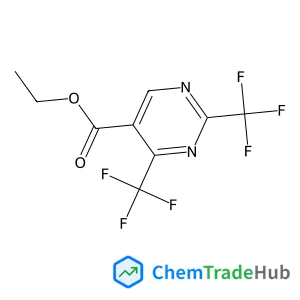
Ethyl 2,4-bis(trifluoromethyl)-5-pyrimidinecarboxylate
CAS Number:
188781-15-9
Molecular Formula:
C9H6F6N2O2
![Benzeneacetic acid, 2-bromo-α-[[(1,1-dimethylethoxy)carbonyl]amino]-, (αS)- structure](https://static.chemtradehub.com/structs/122/1228547-87-2-f296.webp "Benzeneacetic acid, 2-bromo-α-[[(1,1-dimethylethoxy)carbonyl]amino]-, (αS)- structure")
Benzeneacetic acid, 2-bromo-α-[[(1,1-dimethylethoxy)carbonyl]amino]-, (αS)-
CAS Number:
1228547-87-2
Molecular Formula:
C13H16BrNO4
Recommended Suppliers



Disclaimer
This page provides academic journal information for reference and research purposes only. We are not affiliated with any journal publishers and do not handle publication submissions. For publication-related inquiries, please contact the respective journal publishers directly.
If you notice any inaccuracies in the information displayed, please contact us at support@chemtradehub.com. We will promptly review and address your concerns.