












Effect of a single water molecule on the HO2 + ClO reaction
Literature Information
Publication Date
2017-09-12
DOI
10.1039/C7CP05008A
Impact Factor
3.676
Authors
Junyao Li, Narcisse T. Tsona, Lin Du
View Original
Abstract
The catalytic effect of a single water molecule on the HO2 + ClO reaction has been investigated at the CCSD(T)/aug-cc-pVTZ//B3LYP-D3/aug-cc-pVDZ level of theory. Four H-abstraction paths and two kinds of products, among which the paths for HOCl + O2 formation are dominant, have been found for the HO2 + ClO reaction without water. The rate constant of the most favorable path for the reaction without water is computed to be 4.53 × 10⁻¹² cm3 molecule−1 s−1 at room temperature, in good agreement with the experiment. In the presence of a water molecule, although the reaction becomes more complex, the dominant products do not change. Four main channels, starting from HO2⋯H2O + ClO, H2O⋯HO2 + ClO, ClO⋯H2O + HO2 and H2O⋯ClO + HO2, are investigated. The most favorable paths, reactions between H2O⋯HO2 and ClO, and between ClO⋯H2O and HO2, are 7–10 and 6–9 orders of magnitude slower than the reaction in the absence of water, respectively. It is concluded that the presence of a single water molecule does not play an important role in enhancing the HO2 + ClO reaction under tropospheric conditions.
Related Literature
Computational screening of a single transition metal atom supported on the C2N monolayer for electrochemical ammonia synthesis
Zhongxu Wang, Zhigang Yu, Jingxiang Zhao
2018-04-13
Paper
DOI: 10.1039/C8CP01215F
Collisional excitation of interstellar PO(X2Π) by He: new ab initio potential energy surfaces and scattering calculations
François Lique, Izaskun Jiménez-Serra, Serena Viti, Sarantos Marinakis
2017-09-25
Paper
DOI: 10.1039/C7CP05605B
Local crystal structure in the vicinity of Cr in doped AlN thin films studied by X-ray absorption spectroscopy
Padmalochan Panda, R. Ramaseshan, Madhusmita Sahoo, Nanda Gopala Krishna, A. K. Yadav, S. N. Jha, D. Bhattacharyya
2018-04-24
Paper
DOI: 10.1039/C8CP01686K
Thermal decomposition of FC(O)OCH3 and FC(O)OCH2CH3
M. Berasategui, G. A. Argüello, M. A. Burgos Paci
2018-03-29
Paper
DOI: 10.1039/C7CP08656C
Modulation of electronic and magnetic properties of edge hydrogenated armchair phosphorene nanoribbons by transition metal adsorption
Yong-Chao Rao, Peng Zhang, Shun-Fang Li, Xiang-Mei Duan, Su-Huai Wei
2018-04-13
Paper
DOI: 10.1039/C8CP00880A
Patterned polyaniline encapsulated in titania nanotubes for electrochromism
Haiming Lv, Yi Wang, Lei Pan, Leipeng Zhang, Hangchuan Zhang, Lei Shang, Huiying Qu, Na Li, Jiupeng Zhao, Yao Li
2018-01-25
Paper
DOI: 10.1039/C7CP07617G
Fundamental study of hydrogen-attachment-induced peptide fragmentation occurring in the gas phase and during the matrix-assisted laser desorption/ionization process
Daiki Asakawa, Hidenori Takahashi, Shinichi Iwamoto, Koichi Tanaka
2018-04-09
Paper
DOI: 10.1039/C8CP00733K
Untangling the methane chemistry in interstellar and solar system ices toward ionizing radiation: a combined infrared and reflectron time-of-flight analysis
2017-09-26
Paper
DOI: 10.1039/C7CP05882A
Dissociative ionisation of adamantane: a combined theoretical and experimental study
Alessandra Candian, Jordy Bouwman, Patrick Hemberger, Andras Bodi, Alexander G. G. M. Tielens
2017-11-17
Paper
DOI: 10.1039/C7CP05957D
Computational analysis of carbohydrate recognition based on hybrid QM/MM modeling: a case study of norovirus capsid protein in complex with Lewis antigen
2018-01-09
Paper
DOI: 10.1039/C7CP07701G
You might also like
Compound Q&A
What are the main uses of 1-(3-Aminophenyl)-3-[(3R)-1-(3,3-dimethyl-2-oxobutyl)-2-oxo-5-(2-pyridinyl)-2,3-dihydro-1H-1,4-benzodiazepin-3-yl]urea (CAS: 155412-88-7)?
This compound is mainly used as an intermediate in the synthesis of antipsychoti...
155412-88-71-(3-Aminophenyl)-3-...
Compound Q&A
How should waste containing 1-(D-Ribofuranosyl)-1,4-dihydro-3-pyridinecarboxamide (CAS: 19132-12-8) be handled?
Waste containing 1-(D-Ribofuranosyl)-1,4-dihydro-3-pyridinecarboxamide (CAS: 191...
19132-12-81-(D-Ribofuranosyl)-...
Compound Q&A
What regulatory guidelines apply to 2-Methyl-2-propanyl 3-bromo-3-(hydroxymethyl)-1-azetidinecarboxylate (CAS: 2007919-81-3)?
2-Methyl-2-propanyl 3-bromo-3-(hydroxymethyl)-1-azetidinecarboxylate (CAS: 20079...
2007919-81-32-Methyl-2-propanyl ...
Compound Q&A
What is N-(4-Chloro-2-pyridinyl)acetamide (CAS: 245056-66-0)?
N-(4-Chloro-2-pyridinyl)acetamide (CAS: 245056-66-0) is a chemical compound with...
245056-66-0N-(4-Chloro-2-pyridi...
Compound Q&A
What is 5-Chloro-2-hydroxybenzoic acid (CAS: 321-14-2)?
5-Chloro-2-hydroxybenzoic acid, also known as 5-chlorosalicylic acid, is an arom...
321-14-25-Chloro-2-hydroxybe...
Compound Q&A
What precautions should be taken when handling 1,1-Dichloro-1-fluoroethane (CAS: 1717-00-6)?
When handling 1,1-Dichloro-1-fluoroethane (CAS: 1717-00-6), it is important to u...
1717-00-61,1-Dichloro-1-fluor...
Compound Q&A
What are the physical and chemical properties of Fmoc-(2S,3R)-3-phenylpyrrolidine-2-carboxylic acid (CAS: 281655-32-1)?
Fmoc-(2S,3R)-3-phenylpyrrolidine-2-carboxylic acid is a white crystalline solid ...
281655-32-1Fmoc-(2S,3R)-3-pheny...
Compound Q&A
What are the main uses of 4-Amino-5-bromo-2-pyridinecarboxylic acid (CAS: 1363381-01-4)?
4-Amino-5-bromo-2-pyridinecarboxylic acid is primarily used as a precursor in th...
1363381-01-44-Amino-5-bromo-2-py...
Compound Q&A
What precautions should be taken when handling (S)-tert-butyl 2-((2-(4-bromophenyl)-2-oxoethyl)carbamoyl)pyrrolidine-1-carboxylate (CAS: 1007881-98-2)?
Handling this compound should be done with personal protective equipment (PPE) i...
1007881-98-2(S)-tert-butyl 2-((2...
Compound Q&A
What precautions should be taken when handling 8-bromo-2,2-dimethyl-3,4-dihydro-2H-1,4-benzoxazin-3-one (CAS: 688363-73-7)?
When handling 8-bromo-2,2-dimethyl-3,4-dihydro-2H-1,4-benzoxazin-3-one, use prop...
688363-73-78-bromo-2,2-dimethyl...
Source Journal
Physical Chemistry Chemical Physics

CiteScore:
5.5
Self-citation Rate:
10.3%
Articles per Year:
3036
Physical Chemistry Chemical Physics (PCCP) is an international journal co-owned by 19 physical chemistry and physics societies from around the world. This journal publishes original, cutting-edge research in physical chemistry, chemical physics and biophysical chemistry. To be suitable for publication in PCCP, articles must include significant innovation and/or insight into physical chemistry; this is the most important criterion that reviewers and Editors will judge against when evaluating submissions. The journal has a broad scope and welcomes contributions spanning experiment, theory, computation and data science. Topical coverage includes spectroscopy, dynamics, kinetics, statistical mechanics, thermodynamics, electrochemistry, catalysis, surface science, quantum mechanics, quantum computing and machine learning. Interdisciplinary research areas such as polymers and soft matter, materials, nanoscience, energy, surfaces/interfaces, and biophysical chemistry are welcomed if they demonstrate significant innovation and/or insight into physical chemistry. Joined experimental/theoretical studies are particularly appreciated when complementary and based on up-to-date approaches.
Recommended Compounds
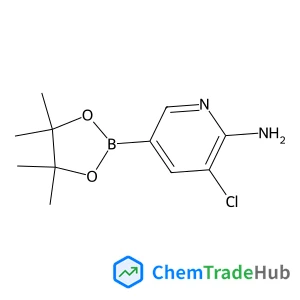
3-Chloro-5-(4,4,5,5-tetramethyl-1,3,2-dioxaborolan-2-yl)-2-pyridinamine
CAS Number:
1032758-99-8
Molecular Formula:
C11H16BClN2O2
![Methyl 4-({[(2-methyl-2-propanyl)oxy]carbonyl}amino)bicyclo[2.2.2]octane-1-carboxylate structure](https://static.chemtradehub.com/structs/943/943845-74-7-b7e5.webp "Methyl 4-({[(2-methyl-2-propanyl)oxy]carbonyl}amino)bicyclo[2.2.2]octane-1-carboxylate structure")
Methyl 4-({[(2-methyl-2-propanyl)oxy]carbonyl}amino)bicyclo[2.2.2]octane-1-carboxylate
CAS Number:
943845-74-7
Molecular Formula:
C15H25NO4
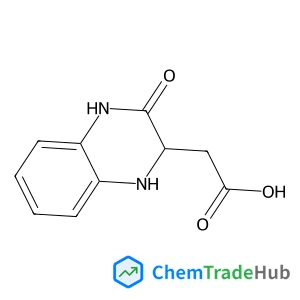
(3-Oxo-1,2,3,4-tetrahydro-2-quinoxalinyl)acetic acid
CAS Number:
136584-14-0
Molecular Formula:
C10H10N2O3
Recommended Suppliers






Disclaimer
This page provides academic journal information for reference and research purposes only. We are not affiliated with any journal publishers and do not handle publication submissions. For publication-related inquiries, please contact the respective journal publishers directly.
If you notice any inaccuracies in the information displayed, please contact us at support@chemtradehub.com. We will promptly review and address your concerns.