












Trapping and sensing of hazardous insecticides by chemically modified single walled carbon nanotubes
Literature Information
Publication Date
2017-08-16
DOI
10.1039/C7CP04980C
Impact Factor
3.676
Authors
Arkamita Bandyopadhyay, Dibyajyoti Ghosh
View Original
Abstract
The use of insecticides in agriculture is a common practice all over the world, but they are often known to be harmful towards the human body. This requires attention by experimentalists and theorists alike. In this work, using Born–Oppenheimer molecular dynamics (BOMD) and density functional theory (DFT) calculations, we have demonstrated the efficient trapping of several hazardous insecticide molecules on a carbon nanotube (CNT) surface. Our BOMD simulations suggest that under ambient conditions, though pristine CNTs are quite inefficient, transition metal atom (TM) incorporated nitrogen doped CNTs can trap the hazardous molecules at room temperature efficiently. Thorough investigations exhibit the presence of strong η6 bonding between the aromatic group of the pesticide and the TM adatom of the defective CNT, leading to the trapping of the molecules on the CNT surface. These CNTs are efficient trapping agents even in the presence of water and quite robust for any pesticides with aromatic group(s) in them. Furthermore, interestingly, the charge transfer interactions between the molecules and the defective CNTs lead to molecule specific optical absorption spectra of the composites, effectively developing defective CNTs as a detective optical sensor for pesticide molecules.
Related Literature
Effect of solvents on polymerization of N-propargylamide monomer and secondary structure of polymer
2010-08-27
Paper
DOI: 10.1039/C0PY00116C
Functional biorenewable polyesters from carvone-derived lactones
Jennifer R. Lowe, Mark T. Martello, William B. Tolman, Marc A. Hillmyer
2010-12-10
Paper
DOI: 10.1039/C0PY00283F
The role of responsive branched copolymer composition in controlling pH-triggered aggregation of “engineered” emulsion droplets: towards selective droplet assembly‡
Robert T. Woodward, Jonathan V. M. Weaver
2010-10-20
Paper
DOI: 10.1039/C0PY00277A
Mesh-size control and functionalization of reorganizable chemical gels by monomer insertion into their cross-linking points
Yoshifumi Amamoto, Hiroyasu Masunaga, Hiroki Ogawa, Sono Sasaki
2011-01-27
Paper
DOI: 10.1039/C0PY00304B
Synthesis and characterization of polythiophenes with alkenyl substituents
Nadia Hundt, Kumaranand Palaniappan, Prakash Sista, John W. Murphy, Jing Hao, Hien Nguyen, Eugene Stein, Michael C. Biewer, Bruce E. Gnade, Mihaela C. Stefan
2010-08-31
Paper
DOI: 10.1039/C0PY00176G
Nanomanufacturing of continuous composite nanofibers with confinement-induced morphologies
Marleen Kamperman, LaShanda T. J. Korley, Billy Yau, Kelly M. Johansen, Yong L. Joo, Ulrich Wiesner
2010-06-21
Communication
DOI: 10.1039/C0PY00146E
PMMA based soluble polymeric temperature sensors based on UCST transition and solvatochromic dyes
2010-06-12
Communication
DOI: 10.1039/C0PY00162G
In situ molecular composites of ladder polyphenylsilsesquioxane and polyisophthalamide and their electro-spinning fibers
Zhongjie Ren, Ye Tian, Ping Xie, Shouke Yan, Rongben Zhang
2010-05-28
Paper
DOI: 10.1039/C0PY00033G
You might also like
Compound Q&A
Is 6-(3-Fluorophenyl)picolinic acid (CAS: 887982-40-3) safe?
6-(3-Fluorophenyl)picolinic acid is generally considered safe for laboratory use...
887982-40-36-(3-Fluorophenyl)pi...
Compound Q&A
What industries use (3R)-3-Pyrrolidinol (CAS: 2799-21-5)?
(3R)-3-Pyrrolidinol is used in the pharmaceutical industry as a precursor for dr...
2799-21-5(3R)-3-Pyrrolidinol
Compound Q&A
What precautions should be taken when handling (4R,5R)-4,5-Diethoxycarbonyl-2,2-dimethyldioxolane (CAS: 59779-75-8)?
When handling (4R,5R)-4,5-Diethoxycarbonyl-2,2-dimethyldioxolane (CAS: 59779-75-...
59779-75-8(4R,5R)-4,5-Diethoxy...
Compound Q&A
How is 1-(6-Chloroimidazo[1,2-b]pyridazin-3-yl)ethanone (CAS: 90734-71-7) typically synthesized?
1-(6-Chloroimidazo[1,2-b]pyridazin-3-yl)ethanone is often synthesized via a mult...
90734-71-71-(6-Chloroimidazo[1...
Compound Q&A
What is the market or research trend for N-Ethyl-3,4-dimethylbenzylamine (CAS: 39180-83-1)?
The market for N-Ethyl-3,4-dimethylbenzylamine (CAS: 39180-83-1) remains steady,...
39180-83-1N-Ethyl-3,4-dimethyl...
Compound Q&A
What is Tert-butyl 3-(pyrrolidin-1-yl)azetidine-1-carboxylate (CAS: 1019008-21-9)?
Tert-butyl 3-(pyrrolidin-1-yl)azetidine-1-carboxylate is a chemical compound wit...
1019008-21-9Tert-butyl 3-(pyrrol...
Compound Q&A
What regulatory guidelines apply to 1-Bromo-3-chloro-2,4-dimethoxybenzene (CAS: 1228956-93-1)?
1-Bromo-3-chloro-2,4-dimethoxybenzene (CAS: 1228956-93-1) falls under the classi...
1228956-93-11-Bromo-3-chloro-2,4...
Compound Q&A
Is 8-Bromo-2-methyl-3,4-dihydroisoquinolin-1(2H)-one (CAS: 1368622-07-4) safe?
The safety of 8-Bromo-2-methyl-3,4-dihydroisoquinolin-1(2H)-one (CAS: 1368622-07...
1368622-07-48-Bromo-2-methyl-3,4...
Compound Q&A
Is Benzyl [(3S)-2,6-dioxo-3-piperidinyl]carbamate (CAS: 22785-43-9) safe?
Benzyl [(3S)-2,6-dioxo-3-piperidinyl]carbamate is generally safe when handled wi...
22785-43-9Benzyl [(3S)-2,6-dio...
Compound Q&A
How should 1-{[4-(4,4,5,5-Tetramethyl-1,3,2-dioxaborolan-2-yl)phenyl]sulfonyl}pyrrolidine (CAS: 928657-21-0) be stored?
1-{[4-(4,4,5,5-Tetramethyl-1,3,2-dioxaborolan-2-yl)phenyl]sulfonyl}pyrrolidine s...
928657-21-01-{[4-(4,4,5,5-Tetra...
Source Journal
Physical Chemistry Chemical Physics

CiteScore:
5.5
Self-citation Rate:
10.3%
Articles per Year:
3036
Physical Chemistry Chemical Physics (PCCP) is an international journal co-owned by 19 physical chemistry and physics societies from around the world. This journal publishes original, cutting-edge research in physical chemistry, chemical physics and biophysical chemistry. To be suitable for publication in PCCP, articles must include significant innovation and/or insight into physical chemistry; this is the most important criterion that reviewers and Editors will judge against when evaluating submissions. The journal has a broad scope and welcomes contributions spanning experiment, theory, computation and data science. Topical coverage includes spectroscopy, dynamics, kinetics, statistical mechanics, thermodynamics, electrochemistry, catalysis, surface science, quantum mechanics, quantum computing and machine learning. Interdisciplinary research areas such as polymers and soft matter, materials, nanoscience, energy, surfaces/interfaces, and biophysical chemistry are welcomed if they demonstrate significant innovation and/or insight into physical chemistry. Joined experimental/theoretical studies are particularly appreciated when complementary and based on up-to-date approaches.
Recommended Compounds

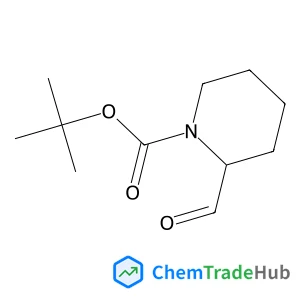
2-Methyl-2-propanyl (2R)-2-formyl-1-piperidinecarboxylate
CAS Number:
134526-69-5
Molecular Formula:
C11H19NO3
Recommended Suppliers





Disclaimer
This page provides academic journal information for reference and research purposes only. We are not affiliated with any journal publishers and do not handle publication submissions. For publication-related inquiries, please contact the respective journal publishers directly.
If you notice any inaccuracies in the information displayed, please contact us at support@chemtradehub.com. We will promptly review and address your concerns.