












Probing the solvation structure and dynamics in ionic liquids by time-resolved infrared spectroscopy of 4-(dimethylamino)benzonitrile
Literature Information
Publication Date
2017-09-04
DOI
10.1039/C7CP04961G
Impact Factor
3.676
Authors
Rômulo A. Ando, Samantha E. Brown-Xu, Lisa N. Q. Nguyen, Terry L. Gustafson
View Original
Abstract
In this work we demonstrate the use of the push–pull model system 4-(dimethylamino)benzonitrile (DMABN) as a convenient molecular probe to investigate the local solvation structure and dynamics by means of time-resolved infrared spectroscopy (TRIR). The photochemical features associated with this system provide several advantages due to the high charge separation between the ground and charge transfer states involving the characteristic nitrile bond, and an excited state lifetime that is long enough to observe the slow solvation dynamics in organic solvents and ionic liquids. The conversion from a locally excited state to an intramolecular charge transfer state (LE–ICT) in ionic liquids shows similar kinetic lifetimes in comparison to organic solvents. This similarity confirms that such conversion depends solely on the intramolecular reorganization of DMABN in the excited state, and not by the dynamics of solvation. In contrast, the relative shift of the ν(CN) vibration during the relaxation of the ICT state reveals two distinct lifetimes that are sensitive to the solvent environment. This study reveals a fast time component which is attributed to the dipolar relaxation of the solvent and a slower time component related to the rotation of the dimethylamino group of DMABN.
Recommended Journals
Related Literature
Ligand displacement induced morphologies in block copolymer/quantum dot hybrids and formation of core–shell hybrid nanoobjects
Sajan Singh, Pratick Samanta, Rajiv Srivastava, Andriy Horechyy, Uta Reuter, Hsin-Lung Chen, Bhanu Nandan
2017-09-28
Paper
DOI: 10.1039/C7CP04343K
Surface cleaning of artworks: structure and dynamics of nanostructured fluids confined in polymeric hydrogel networks
Rosangela Mastrangelo, Costanza Montis, Nicole Bonelli, Paolo Tempesti, Piero Baglioni
2017-06-05
Paper
DOI: 10.1039/C7CP02662E
Light-induced piston nanoengines: ultrafast shuttling of a styryl dye inside cucurbit[7]uril
Ekaterina Y. Chernikova, Yuri V. Fedorov, Olga A. Fedorova, François Maurel, Gediminas Jonusauskas
2017-09-08
Communication
DOI: 10.1039/C7CP04283C
Structural relaxation, viscosity, and network connectivity in a hydrogen bonding liquid
Georg Ehlers, Joerg C. Neuefeind, Souleymane O. Diallo, Christopher B. Stanley, Luke Daemen
2017-07-21
Paper
DOI: 10.1039/C7CP04013J
Electronic excitation induced hydrogen-bond adjustment and lattice control in organic–inorganic hybrid cubic perovskites: a fixed occupation molecular dynamics study
Mo-Ran Wang, Xiang-Yang Ren, Nian-Ke Chen, Hong-Bo Sun
2017-09-01
Paper
DOI: 10.1039/C7CP05034H
Trimethylsilyl hedgehogs – a novel class of super-efficient hydrocarbon surfactants
Adam Czajka, Christopher Hill, Jocelyn Peach, Jonathan C. Pegg, Isabelle Grillo, Frédéric Guittard, Sarah E. Rogers, Masanobu Sagisaka, Julian Eastoe
2017-07-06
Paper
DOI: 10.1039/C7CP02570J
Redistribution of valence and conduction band states depending on the method of modification of SiO2 structure
A. S. Konashuk, E. O. Filatova
2017-09-07
Paper
DOI: 10.1039/C7CP04914E
Molecular dynamics investigations of an indicator displacement assay mechanism in a liquid crystal sensor
Qingyu Liu, Fang Zuo, Zhigang Zhao, Junxian Chen, Dingguo Xu
2017-08-11
Paper
DOI: 10.1039/C7CP02292A
You might also like
Compound Q&A
What is 3-Fluoro-2-methylbenzylamine (CAS: 771573-36-5)?
3-Fluoro-2-methylbenzylamine is an organic compound with the CAS number 771573-3...
771573-36-53-Fluoro-2-methylben...
Compound Q&A
Is Tert-butyl 2-(oxetan-3-ylidene)acetate (CAS: 1207175-03-8) safe?
Tert-butyl 2-(oxetan-3-ylidene)acetate is considered safe for its intended uses ...
1207175-03-8Tert-butyl 2-(oxetan...
Compound Q&A
What precautions should be taken when handling 4-Acetyl-2-fluorobenzonitrile (CAS: 214760-18-6)?
Proper personal protective equipment (PPE) such as gloves, goggles, and a lab co...
214760-18-64-Acetyl-2-fluoroben...
Compound Q&A
How is 2-Ethyl-4-methyl-1,3-thiazole (CAS: 15679-12-6) typically synthesized?
2-Ethyl-4-methyl-1,3-thiazole is commonly synthesized via the reaction of thiour...
15679-12-62-Ethyl-4-methyl-1,3...
Compound Q&A
How should 5',5''-([2,2'-Bithiophene]-5,5'-diyl)bis(([1,1':3',1''-terphenyl]-4,4''-dicarboxylic acid)) (CAS: 1227780-71-3) be stored?
This compound should be stored in a cool, dry place away from direct sunlight an...
1227780-71-35',5''''-([2,2'-Bith...
Compound Q&A
What regulatory guidelines apply to L-Lysine Acetate Salt (CAS: 52315-92-1)?
L-Lysine Acetate Salt (CAS: 52315-92-1) is subject to various regulatory guideli...
52315-92-1L-LYSINE ACETATE SAL...
Compound Q&A
Is 6-Fluoro-3-hydroxy-2-pyrazinecarboxamide (CAS: 259793-96-9) safe?
6-Fluoro-3-hydroxy-2-pyrazinecarboxamide (CAS: 259793-96-9) is generally conside...
259793-96-96-Fluoro-3-hydroxy-2...
Compound Q&A
What are the physical and chemical properties of 1,1'-Sulfonylbis(1H-imidazole) (CAS: 7189-69-7)?
1,1'-Sulfonylbis(1H-imidazole) is a crystalline solid with a molecular weight of...
7189-69-71,1'-Sulfonylbis(1H-...
Compound Q&A
What industries use 4-methyl-7-nitro-1H-indole-3-carbonitrile (CAS: 289483-82-5)?
4-Methyl-7-nitro-1H-indole-3-carbonitrile (CAS: 289483-82-5) is primarily used i...
289483-82-54-methyl-7-nitro-1H-...
Compound Q&A
How should waste containing 5-Bromo-3-indolyl-beta-galactoside (CAS: 97753-82-7) be handled?
Waste containing 5-Bromo-3-indolyl-beta-galactoside (CAS: 97753-82-7) should be ...
97753-82-75-Bromo-3-indolyl-be...
Source Journal
Physical Chemistry Chemical Physics

CiteScore:
5.5
Self-citation Rate:
10.3%
Articles per Year:
3036
Physical Chemistry Chemical Physics (PCCP) is an international journal co-owned by 19 physical chemistry and physics societies from around the world. This journal publishes original, cutting-edge research in physical chemistry, chemical physics and biophysical chemistry. To be suitable for publication in PCCP, articles must include significant innovation and/or insight into physical chemistry; this is the most important criterion that reviewers and Editors will judge against when evaluating submissions. The journal has a broad scope and welcomes contributions spanning experiment, theory, computation and data science. Topical coverage includes spectroscopy, dynamics, kinetics, statistical mechanics, thermodynamics, electrochemistry, catalysis, surface science, quantum mechanics, quantum computing and machine learning. Interdisciplinary research areas such as polymers and soft matter, materials, nanoscience, energy, surfaces/interfaces, and biophysical chemistry are welcomed if they demonstrate significant innovation and/or insight into physical chemistry. Joined experimental/theoretical studies are particularly appreciated when complementary and based on up-to-date approaches.
Recommended Compounds
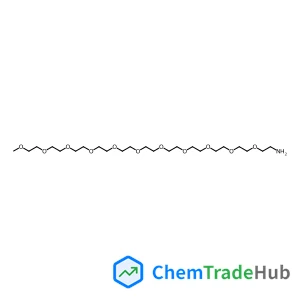
2,5,8,11,14,17,20,23,26,29,32-Undecaoxatetratriacontan-34-amine
CAS Number:
854601-60-8
Molecular Formula:
C23H49NO11
Recommended Suppliers






Disclaimer
This page provides academic journal information for reference and research purposes only. We are not affiliated with any journal publishers and do not handle publication submissions. For publication-related inquiries, please contact the respective journal publishers directly.
If you notice any inaccuracies in the information displayed, please contact us at support@chemtradehub.com. We will promptly review and address your concerns.