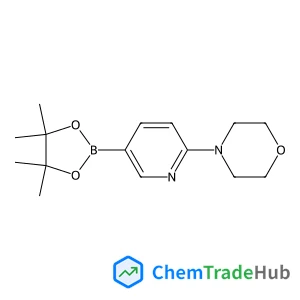
4-(5-(4,4,5,5-tetramethyl-1,3,2-dioxaborolan-2-yl)pyridin-2-yl)morpholine
CAS Number:
485799-04-0
Molecular Formula:
C15H23BN2O3
Yi-zhen Jia, Wei-xiao Ji, Chang-wen Zhang, Ping Li, Shu-feng Zhang, Pei-ji Wang, Sheng-shi Li, Shi-shen Yan
Topological phases, especially topological crystalline insulators (TCIs), have been intensively explored and observed experimentally in three-dimensional (3D) materials. However, two-dimensional (2D) films are explored much less than 3D TCIs, and even 2D topological insulators. Based on ab initio calculations, here we investigate the electronic and topological properties of 2D PbTe(001) few-layer films. The monolayer and trilayer PbTe are both intrinsic 2D TCIs with a large band gap reaching 0.27 eV, indicating a high possibility for room-temperature observation of quantized conductance. The origin of the TCI phase can be attributed to the px,y–pz band inversion, which is determined by the competition of orbital hybridization and the quantum confinement effect. We also observe a semimetal–TCI–normal insulator transition under biaxial strains, whereas a uniaxial strain leads to Z2 nontrivial states. In particular, the TCI phase of a PbTe monolayer remains when epitaxially grown on a NaI semiconductor substrate. Our findings on the controllable quantum states with sizable band gaps present an ideal platform for realizing future topological quantum devices with ultralow dissipation.
Yadong Zhang, Qi Shi, Yuzhen Liu, Aijun Du, Ruifeng Lu
DOI: 10.1039/C8CP01648H
Wei Wang, Ye Wang
DOI: 10.1039/C7CP06693G
Neerugatti KrishnaRao Eswar, Sangeeta Adhikari, Praveen C. Ramamurthy, Giridhar Madras
DOI: 10.1039/C7CP04888B
Natalie Gjerde, Kaizheng Zhu, Bo Nyström, Kenneth D. Knudsen
DOI: 10.1039/C7CP07240F
Yi Hu, Shaogang Xu, Kai Miao, Xinrui Miao, Wenli Deng
DOI: 10.1039/C8CP01308J
Miroslav Menšík, Petr Toman, Urszula Bielecka, Wojciech Bartkowiak, Jiří Pfleger, Bartosz Paruzel
DOI: 10.1039/C7CP06423C
Shumei Chen, Huabin Zhang, Jian Zhang
DOI: 10.1039/C8CP01986J
DOI: 10.1039/C7CP07420D
J. Matthias Kahk, Beng Hau Tan, Claus-Dieter Ohl
DOI: 10.1039/C8CP02697A
(1R,3S)-1,3-Cyclopentanediol finds applications in various industries. In the ph...
When handling N'-[4-(Dimethylamino)phenyl]-N,N-dimethyl-1,4-benzenediamine, it i...
There are several alternatives to 5-(2,4-Difluorophenyl)-2-methoxypyrimidine in ...
1-(3-Methoxyphenoxy)propan-2-ol (CAS: 382141-68-6) must comply with the Globally...
Tetrodotoxin Citrate is extremely dangerous and should be handled with extreme c...
2-Methyl-2-propanyl [(1R,3S)-3-hydroxycyclopentyl]carbamate (CAS: 225641-84-9) i...
Waste containing 4-(2-Hydroxyhexafluoroisopropyl)Benzoic Acid (CAS: 16261-80-6) ...
2-Methyl-2-proanyl {(2S)-1-[(benzyloxy)amino]-3-hydroxy-3-methyl-1-oxo-2-butanyl...
Benzeneethanamine, α-ethyl-, hydrochloride (1:1) is an organic compound with the...
In the synthesis of compounds similar to 3-{(E)-[4-(Dimethylamino)phenyl]diazeny...

Physical Chemistry Chemical Physics (PCCP) is an international journal co-owned by 19 physical chemistry and physics societies from around the world. This journal publishes original, cutting-edge research in physical chemistry, chemical physics and biophysical chemistry. To be suitable for publication in PCCP, articles must include significant innovation and/or insight into physical chemistry; this is the most important criterion that reviewers and Editors will judge against when evaluating submissions. The journal has a broad scope and welcomes contributions spanning experiment, theory, computation and data science. Topical coverage includes spectroscopy, dynamics, kinetics, statistical mechanics, thermodynamics, electrochemistry, catalysis, surface science, quantum mechanics, quantum computing and machine learning. Interdisciplinary research areas such as polymers and soft matter, materials, nanoscience, energy, surfaces/interfaces, and biophysical chemistry are welcomed if they demonstrate significant innovation and/or insight into physical chemistry. Joined experimental/theoretical studies are particularly appreciated when complementary and based on up-to-date approaches.