



How many surface atoms in Co3O4 take part in oxygen evolution? Isotope labeling together with differential electrochemical mass spectrometry
Literature Information
Publication Date
2017-08-29
DOI
10.1039/C7CP03914J
Impact Factor
3.676
Authors
Helmut Baltruschat
View Original
Abstract
Understanding the mechanism underlying the oxygen evolution reaction (OER) on oxides is crucial for the development of many energy storage systems. Here, the mechanism of OER on a Co3O4 spinel catalyst is investigated in alkaline media using 18O-labeling combined with differential electrochemical mass spectrometry (DEMS). This work unravels the role of surface oxygen of the oxide in the OER. It is shown that in H218O-containing electrolyte the amount of 18O16O evolved increases from cycle to cycle together with a concomitant decrease of the amount of 16O2 with each cycle before reaching a steady-state value. 18O16O is also evolved from a H216O solution on a Co3O4 electrode pre-treated in H218O-containing solution, indicating the formation of the 18O-labeled oxide in the previous step. Therefore, the oxide layer takes part in OER via an oxygen exchange mechanism. The total number of oxygen atoms of the oxide participating in OER is 0.1 to 0.2% of the total oxide loading, corresponding to about 10–30% of the surface atoms; these represent the catalytically active sites. Moreover, the real surface area of the catalyst is estimated using different methods (namely the ball model, double layer capacitance method, redox peak method, isotope exchange), and compared to the BET data. The surface areas calculated from the BET data, ball model and redox peak method are similar for small particles, which indicates their smooth surface; however they are smaller than that estimated from double-layer capacitance. For larger particles, the much larger surface area estimated from the redox peak in comparison to that expected from the ball model seems to be due to their roughness. Thus, this work highlights the importance of probing the mechanism when investigating the OER activity of a catalyst.
Recommended Journals

Current Opinion in Colloid & Interface Science

Current Opinion in Solid State & Materials Science

Nature Medicine

Organic Process Research & Development

Saudi Pharmaceutical Journal

Russian Journal of Applied Chemistry

Russian Chemical Bulletin

Crystallography Reports

Chemistry Education Research and Practice

Drug Discovery Today
Related Literature
Swelling of micro-hydrogels with a crosslinker gradient
Niels Boon, Peter Schurtenberger
2017-06-06
Paper
DOI: 10.1039/C7CP02434G
Beta transmutations in apatites with ferric iron as an electron acceptor – implication for nuclear waste form development
Ge Yao, Zelong Zhang, Jianwei Wang
2017-08-25
Paper
DOI: 10.1039/C7CP02846F
A first principles study of spinel ZnFe2O4 for electrode materials in lithium-ion batteries
Haoyue Guo, Yiman Zhang
2017-09-06
Paper
DOI: 10.1039/C7CP04590E
Self-assembly of a nanotube from a black phosphorus nanoribbon on a string of fullerenes at low temperature
Jiao Shi, Ling-Nan Liu, Qing-Hua Qin
2017-08-10
Paper
DOI: 10.1039/C7CP04427E
Molecular dynamics investigations of an indicator displacement assay mechanism in a liquid crystal sensor
Qingyu Liu, Fang Zuo, Zhigang Zhao, Junxian Chen, Dingguo Xu
2017-08-11
Paper
DOI: 10.1039/C7CP02292A
Revealing the correlation between charge carrier recombination and extraction in an organic solar cell under varying illumination intensity
Mihirsinh Chauhan, Vishal Bharti, Manoj Kumar, Suresh Chand, Brijesh Tripathi, J. P. Tiwari
2017-09-04
Paper
DOI: 10.1039/C7CP05235A
Electronic excitation induced hydrogen-bond adjustment and lattice control in organic–inorganic hybrid cubic perovskites: a fixed occupation molecular dynamics study
Mo-Ran Wang, Xiang-Yang Ren, Nian-Ke Chen, Hong-Bo Sun
2017-09-01
Paper
DOI: 10.1039/C7CP05034H
You might also like
Compound Q&A
What is 3-Fluoro-2-methylbenzylamine (CAS: 771573-36-5)?
3-Fluoro-2-methylbenzylamine is an organic compound with the CAS number 771573-3...
771573-36-53-Fluoro-2-methylben...
Compound Q&A
Is Tert-butyl 2-(oxetan-3-ylidene)acetate (CAS: 1207175-03-8) safe?
Tert-butyl 2-(oxetan-3-ylidene)acetate is considered safe for its intended uses ...
1207175-03-8Tert-butyl 2-(oxetan...
Compound Q&A
What precautions should be taken when handling 4-Acetyl-2-fluorobenzonitrile (CAS: 214760-18-6)?
Proper personal protective equipment (PPE) such as gloves, goggles, and a lab co...
214760-18-64-Acetyl-2-fluoroben...
Compound Q&A
How is 2-Ethyl-4-methyl-1,3-thiazole (CAS: 15679-12-6) typically synthesized?
2-Ethyl-4-methyl-1,3-thiazole is commonly synthesized via the reaction of thiour...
15679-12-62-Ethyl-4-methyl-1,3...
Compound Q&A
How should 5',5''-([2,2'-Bithiophene]-5,5'-diyl)bis(([1,1':3',1''-terphenyl]-4,4''-dicarboxylic acid)) (CAS: 1227780-71-3) be stored?
This compound should be stored in a cool, dry place away from direct sunlight an...
1227780-71-35',5''''-([2,2'-Bith...
Compound Q&A
What regulatory guidelines apply to L-Lysine Acetate Salt (CAS: 52315-92-1)?
L-Lysine Acetate Salt (CAS: 52315-92-1) is subject to various regulatory guideli...
52315-92-1L-LYSINE ACETATE SAL...
Compound Q&A
Is 6-Fluoro-3-hydroxy-2-pyrazinecarboxamide (CAS: 259793-96-9) safe?
6-Fluoro-3-hydroxy-2-pyrazinecarboxamide (CAS: 259793-96-9) is generally conside...
259793-96-96-Fluoro-3-hydroxy-2...
Compound Q&A
What are the physical and chemical properties of 1,1'-Sulfonylbis(1H-imidazole) (CAS: 7189-69-7)?
1,1'-Sulfonylbis(1H-imidazole) is a crystalline solid with a molecular weight of...
7189-69-71,1'-Sulfonylbis(1H-...
Compound Q&A
What industries use 4-methyl-7-nitro-1H-indole-3-carbonitrile (CAS: 289483-82-5)?
4-Methyl-7-nitro-1H-indole-3-carbonitrile (CAS: 289483-82-5) is primarily used i...
289483-82-54-methyl-7-nitro-1H-...
Compound Q&A
How should waste containing 5-Bromo-3-indolyl-beta-galactoside (CAS: 97753-82-7) be handled?
Waste containing 5-Bromo-3-indolyl-beta-galactoside (CAS: 97753-82-7) should be ...
97753-82-75-Bromo-3-indolyl-be...
Source Journal
Physical Chemistry Chemical Physics

CiteScore:
5.5
Self-citation Rate:
10.3%
Articles per Year:
3036
Physical Chemistry Chemical Physics (PCCP) is an international journal co-owned by 19 physical chemistry and physics societies from around the world. This journal publishes original, cutting-edge research in physical chemistry, chemical physics and biophysical chemistry. To be suitable for publication in PCCP, articles must include significant innovation and/or insight into physical chemistry; this is the most important criterion that reviewers and Editors will judge against when evaluating submissions. The journal has a broad scope and welcomes contributions spanning experiment, theory, computation and data science. Topical coverage includes spectroscopy, dynamics, kinetics, statistical mechanics, thermodynamics, electrochemistry, catalysis, surface science, quantum mechanics, quantum computing and machine learning. Interdisciplinary research areas such as polymers and soft matter, materials, nanoscience, energy, surfaces/interfaces, and biophysical chemistry are welcomed if they demonstrate significant innovation and/or insight into physical chemistry. Joined experimental/theoretical studies are particularly appreciated when complementary and based on up-to-date approaches.
Recommended Compounds
![(3R)-3-(3-Fluorophenyl)-3-({[(2-methyl-2-propanyl)oxy]carbonyl}amino)propanoic acid structure](https://static.chemtradehub.com/structs/500/500789-04-8-20dd.webp "(3R)-3-(3-Fluorophenyl)-3-({[(2-methyl-2-propanyl)oxy]carbonyl}amino)propanoic acid structure")
(3R)-3-(3-Fluorophenyl)-3-({[(2-methyl-2-propanyl)oxy]carbonyl}amino)propanoic acid
CAS Number:
500789-04-8
Molecular Formula:
C14H18FNO4
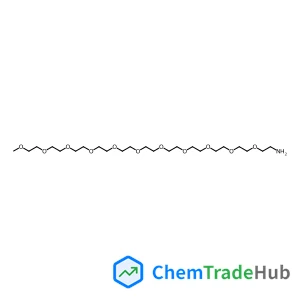
2,5,8,11,14,17,20,23,26,29,32-Undecaoxatetratriacontan-34-amine
CAS Number:
854601-60-8
Molecular Formula:
C23H49NO11
Recommended Suppliers





Disclaimer
This page provides academic journal information for reference and research purposes only. We are not affiliated with any journal publishers and do not handle publication submissions. For publication-related inquiries, please contact the respective journal publishers directly.
If you notice any inaccuracies in the information displayed, please contact us at support@chemtradehub.com. We will promptly review and address your concerns.